
Lumparn
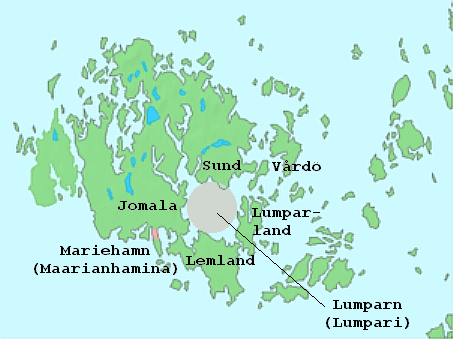
Lumparn is a large bay in the Åland Islands of Finland that largely fills a significant impact structure. Estimated to be around 1000 million years old, the crater's extraterrestrial origin was confirmed in 1993, making it one of the few locations in Finland where fossils have been found due to the presence of Paleozoic limestones within its sedimentary fill.
Key Facts
- ›The Lumparn impact structure is approximately 9 kilometers wide.
- ›The estimated age of the impact is about 1000 million years (Proterozoic).
- ›Extraterrestrial origin was first proposed in 1979.
- ›The impact structure was confirmed in 1993.
- ›Shatter cones have been found in the southwestern part of the bay.
- ›Ordovician limestones containing fossils are present within the crater's sedimentary fill.
About Lumparn
Lumparn is a notable impact structure located in the Åland Islands of Finland, primarily recognized as a large bay devoid of islands. The bay itself largely occupies the remnants of this ancient impact crater, which measures approximately nine kilometers in width. Its geological significance is amplified by its age, estimated to be around 1000 million years old, placing the impact event within the Proterozoic Eon.
Discovery and Confirmation
The extraterrestrial origin of the Lumparn structure was first hypothesized in 1979. However, it took until 1993 for the impact structure to be definitively confirmed through scientific investigation. This confirmation solidified its status as one of Finland's recognized impact craters.
Geological Features and Significance
Remnants of the crater's impact are evident through the discovery of long shatter cones in the southwestern portion of the bay. The depression formed by the impact is now filled with sediments. Notably, a layer of Paleozoic (Ordovician) limestones lies between Pleistocene sediments and the underlying crushed rapakivi granite bedrock. This geological layering makes Lumparn a rare site in Finland for the preservation and discovery of fossils, highlighting its importance for both impact research and paleontology.
Source: Wikipedia ↗
Frequently Asked Questions
What is Lumparn?
Lumparn is a large bay located in the main island of Åland, Finland. It largely fills a nine-kilometer-wide impact structure, making it a significant geological site.
How old is the Lumparn impact structure?
The Lumparn impact structure is estimated to be about 1000 million years old, dating back to the Proterozoic era. This makes it an ancient geological feature.
When was Lumparn confirmed as an impact crater?
While the extraterrestrial origin of the Lumparn structure was first proposed in 1979, it was not until 1993 that the impact structure was finally confirmed by scientific investigation.
What geological features are found at Lumparn?
Long shatter cones have been discovered in the southwestern part of the bay. The crater's remains are filled with sediments, including a layer of Ordovician limestones situated between Pleistocene sediments and crushed rapakivi granite bedrock.
Is Lumparn significant for paleontology in Finland?
Yes, Lumparn is one of the few places in Finland where fossils have been found. This is due to the presence of Paleozoic (Ordovician) limestones within the impact structure's sedimentary fill.
Related Impact Craters
Iso-Naakkima
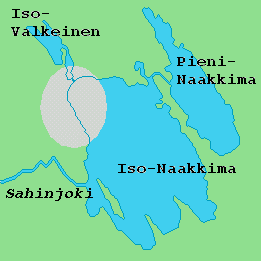
Iso-Naakkima is a lake in Southern Savonia, Finland, notable for concealing an eroded impact crater beneath its northwestern section. It is recognized as one of the oldest known impact structures on Earth, estimated at 1200 million years old, and is also among the smallest confirmed craters of its age, measuring approximately 3 km in diameter.
Summasjärvi
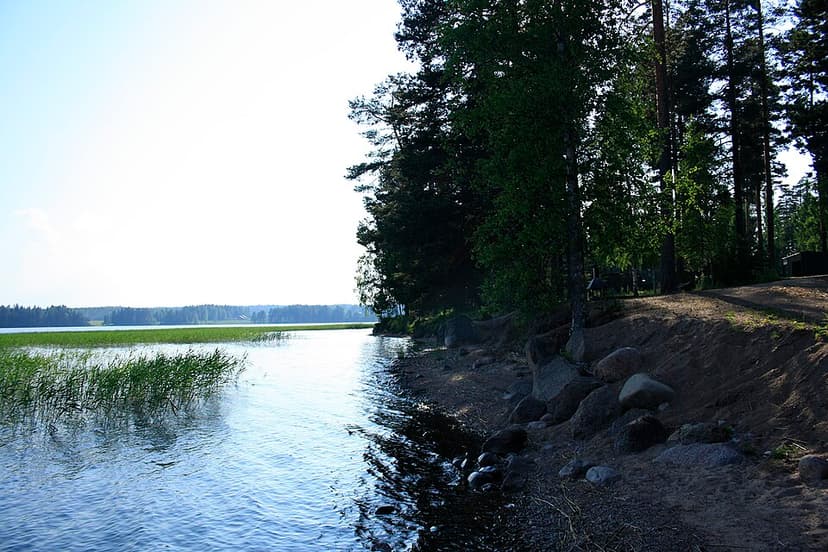
Summasjärvi, also known as Lake Summanen, is a medium-sized lake in Finland that contains the 12th identified impact crater in the country. This submerged crater, located at the lake's center, measures 2.6 kilometers in diameter and is largely buried beneath later sediments. Its formation predates the Quaternary glaciation but occurred after the Svecofennian orogeny.
Keurusselkä
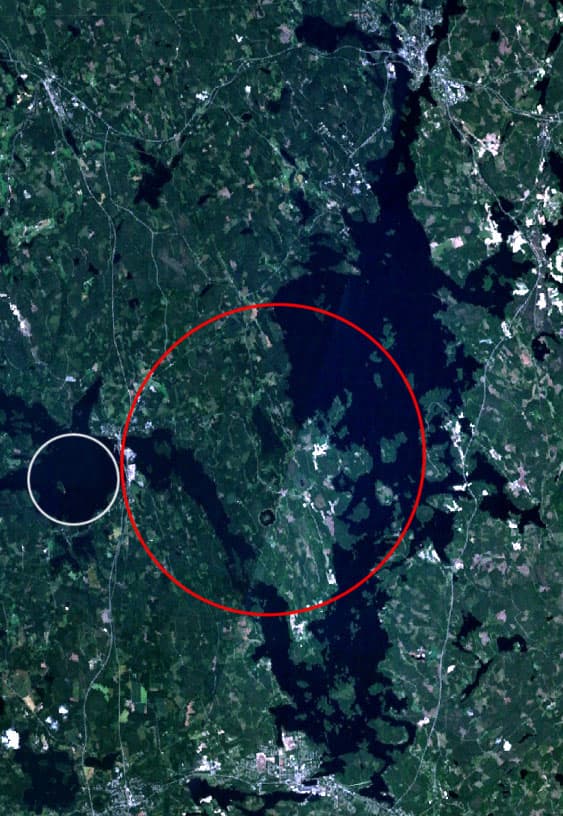
The Keurusselkä impact structure is a remnant of an ancient crater discovered in 2003 on the western shore of Lake Keurusselkä in Central Finland. Identified through shatter cones and shock metamorphic features in quartz, it is one of the oldest known impact structures in Europe, dating back approximately 1.14 to 1.15 billion years. Despite significant erosion, evidence suggests potential ring structures and a negative gravity anomaly, making it a subject of ongoing geological investigation.