
Summasjärvi
Summasjärvi, also known as Lake Summanen, is a medium-sized lake in Finland that contains the 12th identified impact crater in the country. This submerged crater, located at the lake's center, measures 2.6 kilometers in diameter and is largely buried beneath later sediments. Its formation predates the Quaternary glaciation but occurred after the Svecofennian orogeny.
Key Facts
- ›The impact crater is located at the center of Lake Summanen.
- ›It is the 12th impact crater identified in Finland.
- ›The crater has a diameter of 2.6 kilometers.
- ›It is approximately 200 meters deep and mostly buried under later sediments.
- ›The age of the crater is not precisely known but predates the Quaternary glaciation.
- ›Shatter cones and planar deformation features have been identified as evidence of the impact.
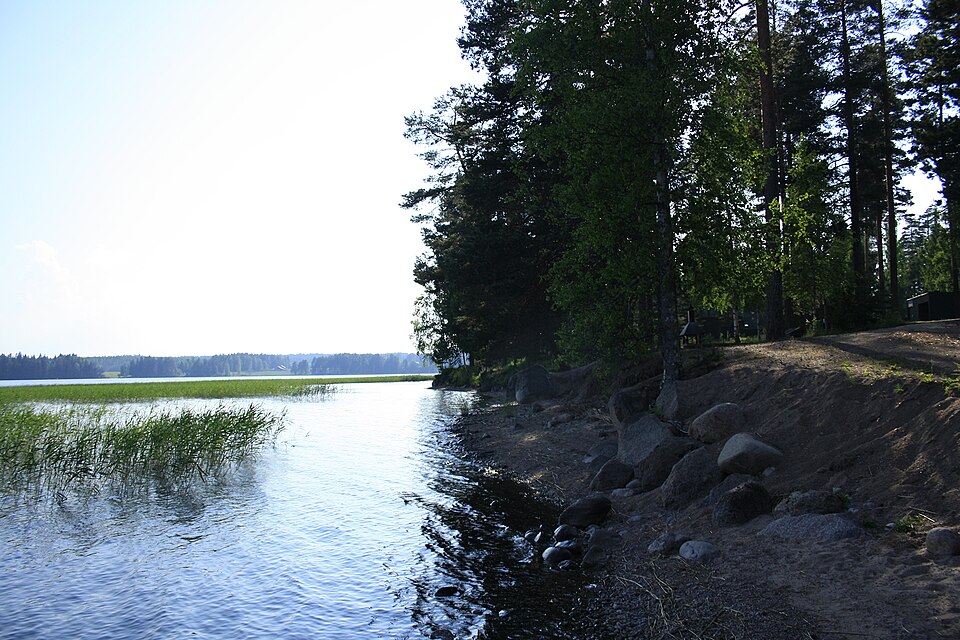
About Summasjärvi
Summasjärvi Impact Crater
The Summasjärvi impact crater, also recognized as the crater within Lake Summanen, is the twelfth impact structure to be identified in Finland. This significant geological feature is located at the center of the lake, which lies in Saarijärvi within the Keski-Suomi region of Finland. The crater itself measures 2.6 kilometers in diameter and possesses a depth of approximately 200 meters, though it is largely obscured by later sediment deposits.
Geological Context and Discovery
The precise age of the Summasjärvi impact is not definitively known. However, it is understood to have formed prior to the Quaternary glaciation, and subsequent to the formation of the surrounding host rock during the Svecofennian orogeny, an event that occurred 1910 million years ago. While some researchers have suggested a Phanerozoic impact, no supporting evidence has been presented in the historical record.
The submerged nature of the crater contributes to its scientific intrigue. The otherwise shallow Lake Summanen (less than 10 meters deep) exhibits a distinct 41-meter central deep or trench precisely at the crater's site. This location is also characterized by a notable circular electromagnetic anomaly, indicating the presence of more conductive materials beneath the surface. This anomaly is thought to be the result of a subsurface lens, likely composed of fractured rock saturated with saline liquids, measuring between 100 to 200 meters in thickness.
The confirmation of Summasjärvi as an impact structure was achieved through geological evidence. The initial inference from the anomaly and deep trench was substantiated by the identification of characteristic impact features: shatter cones and planar deformation features. These crucial indicators were discovered in glacial erratics found adjacent to the crater, providing irrefutable proof of its extraterrestrial origin.
Source: Wikipedia ↗
Frequently Asked Questions
Where is the Summasjärvi impact crater located?
The Summasjärvi impact crater is situated at the center of Lake Summanen, in Saarijärvi, within the Keski-Suomi region of Finland. The lake itself is a medium-sized body of water.
What is the size of the Summasjärvi impact crater?
The impact crater is 2.6 kilometers wide. It is also approximately 200 meters deep, though it is largely buried under later sediments.
When did the Summasjärvi impact event occur?
The exact age of the Summasjärvi impact crater is not known. It is established that the impact occurred before the Quaternary glaciation but after the host rock formed during the Svecofennian orogeny, which was 1910 million years ago.
What evidence confirms the Summasjärvi structure is an impact crater?
The impact origin was inferred from a significant circular electromagnetic anomaly and a deep trench at the crater site. This inference was later proven by the identification of shatter cones and planar deformation features found in glacial erratics near the crater.
What are the geological characteristics of the Summasjärvi impact site?
The site features a circular electromagnetic anomaly, likely caused by a subsurface lens of fractured rock with saline liquids. The otherwise shallow lake exhibits a 41-meter central deep or trench at the crater's location.
Related Impact Craters
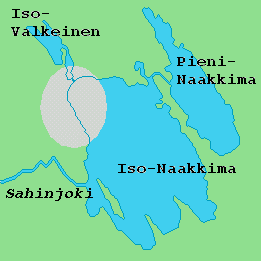
Iso-Naakkima
Iso-Naakkima is a lake in Southern Savonia, Finland, notable for concealing an eroded impact crater beneath its northwestern section. It is recognized as one of the oldest known impact structures on Earth, estimated at 1200 million years old, and is also among the smallest confirmed craters of its age, measuring approximately 3 km in diameter.
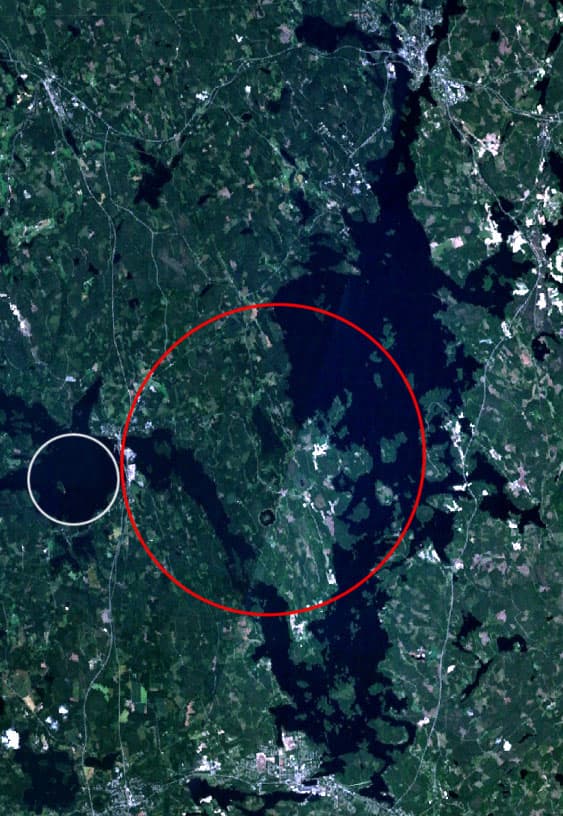
Keurusselkä
The Keurusselkä impact structure is a remnant of an ancient crater discovered in 2003 on the western shore of Lake Keurusselkä in Central Finland. Identified through shatter cones and shock metamorphic features in quartz, it is one of the oldest known impact structures in Europe, dating back approximately 1.14 to 1.15 billion years. Despite significant erosion, evidence suggests potential ring structures and a negative gravity anomaly, making it a subject of ongoing geological investigation.
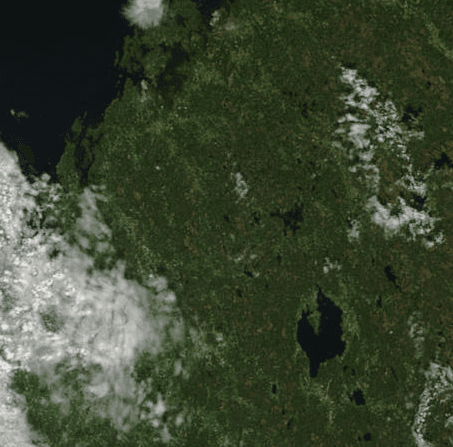
Lappajärvi
The Lappajärvi impact structure is a large, partly eroded meteorite crater in Finland, now occupied by a lake of the same name. It is one of the largest and youngest impact craters in Finland and is significant for scientific research, including projections for future landscapes. The area has also been recognized with a UNESCO Global Geopark application.