
Mistastin
Mistastin Crater is a significant impact structure located in Newfoundland and Labrador, Canada, characterized by the roughly circular Mistastin Lake. Discovered in 1968, it serves as a vital site for geological training for astronauts, including those from the Artemis II mission. The crater's formation provides insights into extreme geological conditions and has been a subject of extensive scientific study.
Key Facts
- ›The original crater diameter is estimated to be 28 km (17 MI).
- ›Mistastin Lake, within the crater, is approximately 16 km (9.9 MI) in diameter.
- ›The crater is dated to 36.6 ± 2 million years ago.
- ›It was first identified as a potential impact crater in 1968 after being observed from space.
- ›The crater is a training site for Canadian Space Agency and NASA astronauts.

Cubic Zirconia, Diaplectic Glass, Melt Rocks
About Mistastin
Mistastin Crater
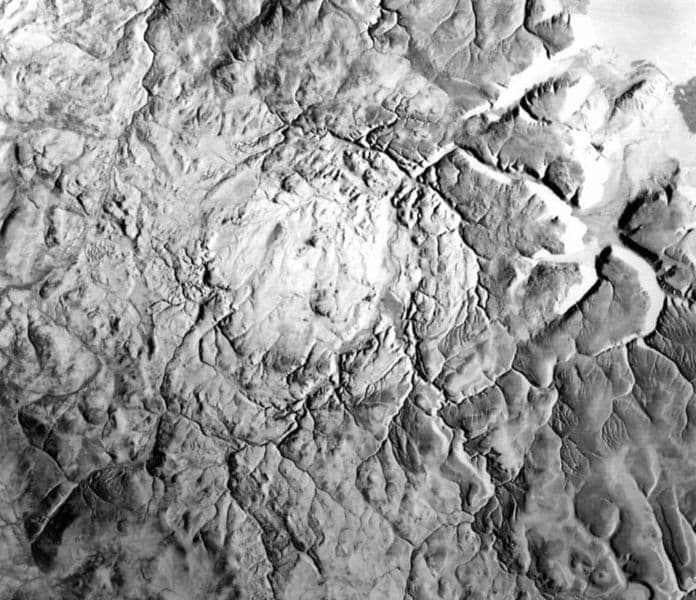
Mistastin Crater, also known as Kamestastin, is a significant impact structure located in the northwestern inland region of Labrador, Newfoundland and Labrador, Canada. The crater contains the roughly circular Mistastin Lake, which measures approximately 16 km (9.9 mi) in diameter, while the original impact structure is estimated to have been about 28 km (17 mi) across. Scientific calculations place the age of the Mistastin Impact event at 36.6 ± 2 million years ago.
Discovery and Recognition
The potential of Mistastin Lake as an impact crater was first identified in 1968, following its observation from space. This recognition marked the beginning of scientific investigation into its geological origins and characteristics.
Formation and Geological Significance
The formation of Mistastin Crater involved an impact that generated extreme temperatures, estimated to exceed 2,370 °C (4,300 °F), leading to the presence of cubic zirconia around the crater rim. These conditions suggest global changes that persisted for decades after the impact. The crater's geology is complex, with the arcuate central island, Mishta-minishtikᐡ, interpreted as the central uplift. The target rocks were part of a batholith composed of adamellite, mangerite, and anorthosite lenses. Abundant shock metamorphic features, including planar deformation features, diaplectic glass, melt rocks, and shatter cones, are present in the rocks of the island, underscoring the immense forces involved in its creation.
Astronaut Training Site
Mistastin Crater holds particular importance as a site for field geology training for astronauts. Both the Canadian Space Agency (CSA) and NASA utilize this location to prepare astronauts for extravehicular activities and geological fieldwork, including members of the Artemis II Moon mission crew. This training underscores the crater's value in simulating extraterrestrial exploration environments.
Location and Access
The crater is situated west of Natuashish and near the Quebec border, within the traditional hunting grounds of the Mushuau Innu First Nation. While not located within a declared reserve, visiting the site requires permission, reflecting its cultural and environmental sensitivity.
Source: Wikipedia ↗
Frequently Asked Questions
Where is Mistastin Crater located?
Mistastin Crater is situated in northwestern inland Labrador, Newfoundland and Labrador, Canada. It lies west of Natuashish and close to the border with Quebec, within the traditional hunting grounds of the Mushuau Innu First Nation.
How old is Mistastin Crater?
The impact event that formed Mistastin Crater occurred approximately 36.6 million years ago, with an age calculated as 36.6 ± 2 million years.
What is the size of Mistastin Crater?
The estimated diameter of the original Mistastin impact crater is 28 kilometers (17 miles). The Mistastin Lake, which fills a significant portion of the structure, is about 16 kilometers (9.9 miles) in diameter.
What is significant about the geology of Mistastin Crater?
The presence of cubic zirconia around the crater rim indicates extremely high temperatures, exceeding 2,370 °C, generated during the impact. The central island, Mishta-minishtikᐡ, is interpreted as the central uplift of the complex crater structure, exhibiting abundant shock metamorphic features.
Why is Mistastin Crater important for space missions?
Mistastin Crater is utilized as a field geology training site for astronauts from both the Canadian Space Agency and NASA. This includes training for crews participating in missions like Artemis II to the Moon.
Related Impact Craters

Carswell
Carswell is a large impact structure located in northern Saskatchewan, Canada, with a diameter of approximately 39 kilometers. Estimated to be 115 million years old, it formed during the Lower Cretaceous period and is significantly exposed at the surface, making it a valuable site for geological study. The structure features a complex central peak with distinctive geological evidence of a high-energy impact event.

Couture
Couture Crater is an 8 km wide impact structure located in Northern Quebec, Canada, near Hudson Bay. It is now filled with water, forming a lake, and is characterized by its depth of approximately 150 meters and a central uplift, indicating a complex morphology. The crater is estimated to have formed around 430 million years ago.
Haughton
The Haughton impact crater, located on Devon Island in far Northern Canada, is a significant geological site due to its well-preserved features resulting from its high-latitude, cold environment. Formed approximately 31-32 million years ago, it serves as a valuable terrestrial analogue for Martian impact craters, prompting extensive research by space exploration organizations.