
Carswell
Carswell is a large impact structure located in northern Saskatchewan, Canada, with a diameter of approximately 39 kilometers. Estimated to be 115 million years old, it formed during the Lower Cretaceous period and is significantly exposed at the surface, making it a valuable site for geological study. The structure features a complex central peak with distinctive geological evidence of a high-energy impact event.
Key Facts
- ›Diameter: 39 kilometers (24 MI)
- ›Estimated age: 115 ± 10 million years (Lower Cretaceous)
- ›Location: Athabasca Basin, Canadian Shield, northern Saskatchewan, Canada
- ›Morphology: Complex impact structure with a central peak complex
- ›Evidence of impact features: Shatter cones, planar deformation features, pseudotachylyte, impact melts and breccias
- ›Accessibility: Via Saskatchewan Highway 955, near the former Cluff Lake mine site

Shatter Cones, Planar Deformation Features, Pseudotachylyte, Impact Melts, Breccias
About Carswell
Carswell Impact Structure
The Carswell impact structure is a significant geological feature located within the Athabasca Basin of the Canadian Shield in northern Saskatchewan, Canada. With a diameter of approximately 39 kilometers, this structure is estimated to have formed around 115 million years ago, during the Lower Cretaceous epoch.
Geological Significance
Carswell is notable for being exposed at the surface, allowing for detailed study of its impact-related geology. The central peak complex is characterized by faulted metamorphic rocks that exhibit striking features such as shatter cones, planar deformation features (PDFs) within quartz grains, pseudotachylyte veins, and various forms of impact melts and breccias. Evidence of PDFs found far from the current ring of hills suggests that these hills may represent a peak ring within a much larger, original impact basin.
The Carswell Formation
A unique aspect of the Carswell structure is the presence of the Carswell Formation. This geological unit is composed of algal limestone and is believed to have formed on seamounts that were elevated to near-surface levels as a component of the impact structure's peak ring.
Accessibility
The Carswell impact structure is accessible by Saskatchewan Highway 955, a gravel road that extends from the village of La Loche to the site of the former Cluff Lake uranium mine, which lies within the crater. Visitors should be aware that the mine is closed and decommissioned, meaning there are no travel services or functional airstrips in the immediate vicinity. Travelers must carry sufficient fuel and supplies for the entire round trip to La Loche.
Source: Wikipedia ↗
Frequently Asked Questions
Where is the Carswell impact structure located?
The Carswell impact structure is situated in the Athabasca Basin of the Canadian Shield, in northern Saskatchewan, Canada. It can be accessed via Saskatchewan Highway 955.
How large is the Carswell impact structure?
The Carswell impact structure has an estimated diameter of 39 kilometers (24 miles). Its geological features suggest it may be part of an even larger structure.
What is the estimated age of the Carswell impact structure?
The age of the Carswell impact structure is estimated to be 115 ± 10 million years, placing its formation within the Lower Cretaceous geological period.
What geological features are found at Carswell?
The central peak complex of the Carswell structure displays characteristic impact features such as shatter cones, planar deformation features in quartz, pseudotachylyte veins, and impact melts and breccias.
Is the Carswell impact structure visible on the surface?
Yes, the Carswell impact structure is exposed at the surface, making its geological features accessible for study and observation.
What is the Carswell Formation?
The Carswell Formation, found at the impact site, is composed of algal limestone. It is theorized to have formed on elevated seamounts that were part of the peak ring of the impact structure.
Related Impact Craters
Rotmistrovka
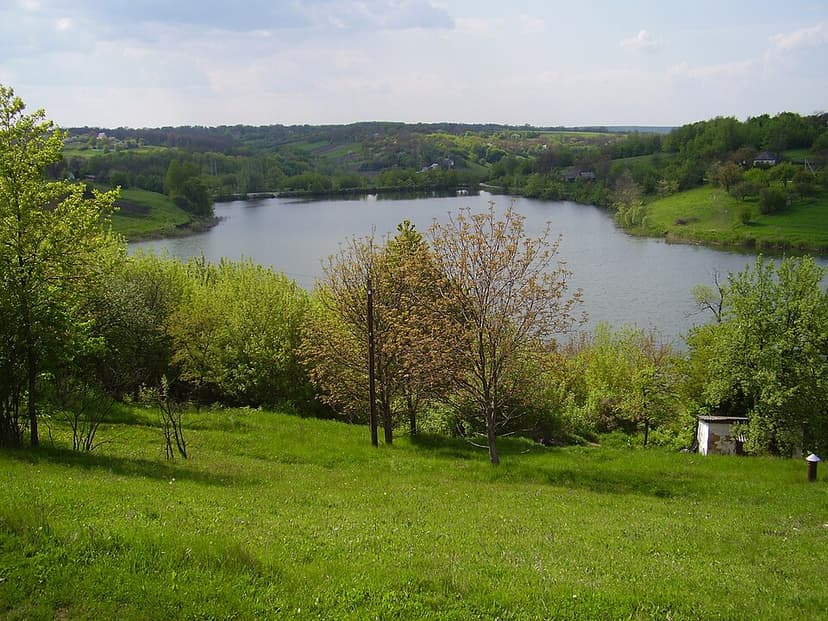
Rotmistrovka is a buried impact crater located in Cherkasy Oblast, Ukraine, near the village of the same name. Estimated to be 120 million years old, this crater is significant for its geological composition, featuring a brecciated granite lens and impact glass beneath sedimentary layers.
Deep Bay
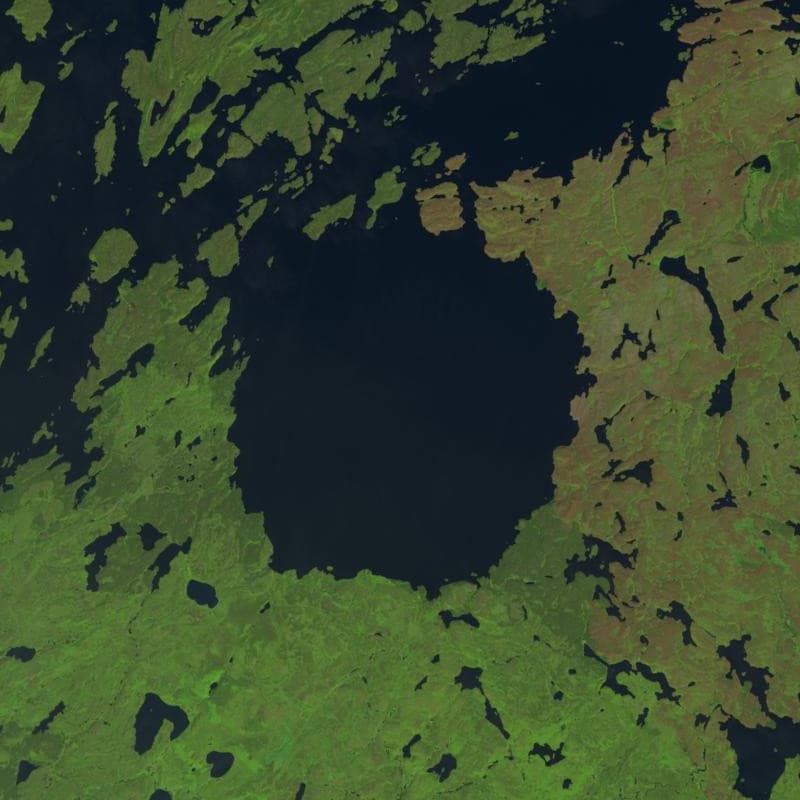
Deep Bay is a remarkably circular and deep bay located near the southwestern tip of Reindeer Lake in Saskatchewan, Canada. It is the deepest body of water in the province and was formed by a 13 km wide impact crater estimated to be 99 ± 4 million years old.

Manicouagan
Manicouagan Reservoir, located in Quebec, Canada, is a prominent annular lake formed by an ancient meteorite impact. This impact structure, once a large crater, is now largely submerged beneath the reservoir and is famously known as the "eye of Quebec" due to its distinctive appearance from space.