
Haughton
The Haughton impact crater, located on Devon Island in far Northern Canada, is a significant geological site due to its well-preserved features resulting from its high-latitude, cold environment. Formed approximately 31-32 million years ago, it serves as a valuable terrestrial analogue for Martian impact craters, prompting extensive research by space exploration organizations.
Key Facts
- ›Diameter of approximately 23 km.
- ›Formed 31–32 million years ago during the Early Oligocene.
- ›The impacting object was estimated to be about 2 km in diameter.
- ›Located at 75° north latitude, making it one of the highest-latitude impact craters known.
- ›Features significant geological preservation due to very little weathering.
- ›Contains the Haughton Formation, a post-impact sedimentary basin with fossils from the Early Miocene.
About Haughton
Haughton Impact Crater
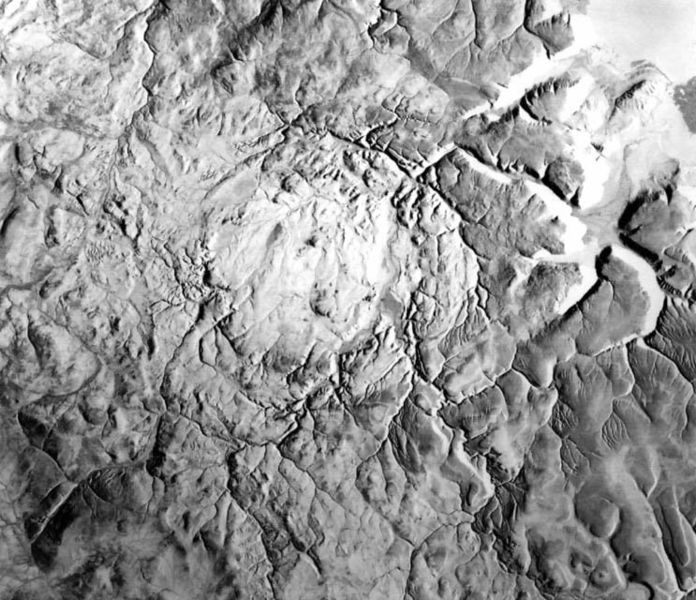
The Haughton impact crater is a significant geological feature located on Devon Island in far Northern Canada. It measures approximately 23 kilometers in diameter and was created by an impact event around 31 to 32 million years ago, during the Early Oligocene epoch. The celestial body responsible for the impact is estimated to have been about 2 kilometers across. The crater's location at 75 degrees north latitude means it experiences extremely cold temperatures and limited vegetation, resulting in minimal erosion and exceptional preservation of its geological features.
Recognized in 1955 as part of Operation Franklin by the Geological Survey of Canada, the structure was initially believed to be a 'piercement' feature. Field geologist H. R. Greiner later named it Haughton Dome, honoring Samuel Haughton for his geological work in the Arctic. The unique preservation of Haughton, coupled with its Mars-like climate and geology, has led scientists to dub the area "Mars on Earth." This has made it a prime location for research by organizations like the Mars Institute and the SETI Institute, which operate the Haughton–Mars Project to test challenges related to life and work on Mars. The Mars Society also runs the Flashline Mars Arctic Research Station (FMARS) at this site for similar research purposes.
Partially within the crater's western-central area lies the Haughton Formation, a post-impact sedimentary basin. This formation, composed of mudstone and siltstone, reaches a thickness of up to 48 meters and contains fossils from the Early Miocene, approximately 24 to 21 million years ago. During this period, the region possessed a cool temperate climate, with the Haughton Formation accumulating in a large lake surrounded by a diverse forest. The fossils found include ancient animals such as Puijila darwini (an early seal relative), various mammals, birds, and fish, providing valuable insights into the past environment of Devon Island.
Source: Wikipedia ↗
Frequently Asked Questions
Where is the Haughton impact crater located?
The Haughton impact crater is situated on Devon Island, Nunavut, in far Northern Canada. Its remote and high-latitude location contributes to its unique preservation.
How old is the Haughton impact crater?
The impact event that formed the Haughton crater occurred approximately 31 to 32 million years ago, during the Early Oligocene geological epoch.
What is the size of the Haughton impact crater?
The Haughton impact crater has an estimated diameter of about 23 kilometers (14 miles). The celestial body that caused the impact was likely around 2 kilometers in diameter.
Why is the Haughton impact crater significant for Mars research?
The Haughton crater's geology and cold, arid climate are very similar to conditions found on Mars. This makes it an ideal terrestrial analogue, often referred to as 'Mars on Earth,' for testing equipment and strategies for future Mars missions.
What kind of fossils have been found at Haughton?
The Haughton Formation, a sedimentary basin within the crater, contains fossils from the Early Miocene period. These include ancient animals like the seal-relative Puijila darwini, various mammals, birds, and fish, indicating a cool temperate climate with a large lake and surrounding forest.
Related Impact Craters

Manicouagan
Manicouagan Reservoir, located in Quebec, Canada, is a prominent annular lake formed by an ancient meteorite impact. This impact structure, once a large crater, is now largely submerged beneath the reservoir and is famously known as the "eye of Quebec" due to its distinctive appearance from space.
Chicxulub
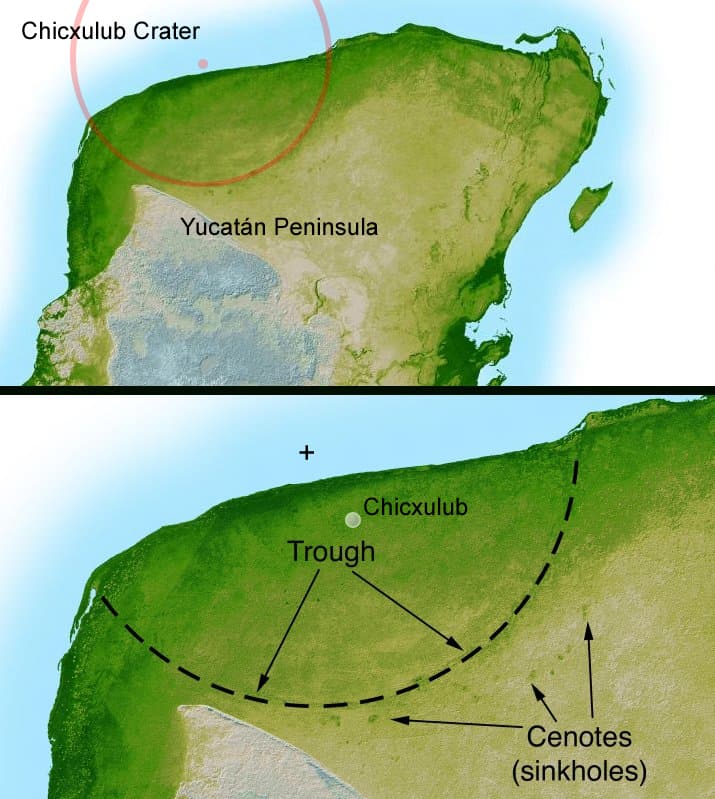
The Chicxulub crater, located beneath the Yucatán Peninsula in Mexico, is a massive impact structure formed approximately 66 million years ago by an asteroid impact. This event is widely recognized as the primary cause of the Cretaceous–Paleogene extinction event, which led to the demise of 75% of Earth's plant and animal species, including the non-avian dinosaurs.

Hiawatha
The Hiawatha impact structure is a large, probable impact crater discovered beneath the Hiawatha Glacier in northwest Greenland. Identified through airborne radar surveys and confirmed by shocked quartz and melt rock findings, it dates back approximately 57.99 million years to the late Paleocene epoch. Its discovery holds significant implications for understanding Earth's impact history.