
Mjølnir
Mjølnir is a significant impact crater located on the floor of the Barents Sea, off the coast of Norway. Estimated to be 40 kilometers in diameter, the impact event occurred approximately 142 million years ago during the Early Cretaceous period. The crater's name is derived from Thor's mythological hammer, reflecting the immense power of the celestial body that struck Earth.
Key Facts
- ›Diameter: 40 km (25 MI)
- ›Age: 142.0 ± 2.6 million years
- ›Geological Period: Early Cretaceous
- ›Bolide Size: Estimated 2 km (1.2 MI) wide
- ›Location: Barents Sea, off the coast of Norway
- ›Named after: Thor's mythological hammer, Mjølnir
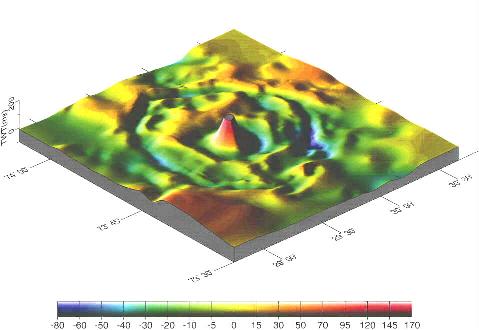
About Mjølnir
Mjølnir Impact Crater
Mjølnir is an impact crater situated on the floor of the Barents Sea, located off the coast of Norway. The crater has an estimated diameter of 40 kilometers (25 miles), and the impact event is dated to approximately 142.0 ± 2.6 million years ago, placing it within the Early Cretaceous period. The celestial body responsible for this impact is thought to have been about 2 kilometers (1.2 miles) wide.
Discovery and Naming
Indications of the Mjølnir impact were first noted in 2006 by a group of Swedish geologists who were investigating evidence of a tsunami that flooded the Swedish southern coast around 145 million years ago. It is speculated that this tsunami may have been associated with the Mjølnir impact. Similar evidence found in France in 2000 also potentially links to this event.
The crater was named Mjølnir, after the mythological hammer of the Norse god Thor. This naming choice presumably reflects the immense power of the impact event, evoking the destructive capabilities often attributed to Thor's legendary weapon, which was said to shatter and smash rocks.
Source: Wikipedia ↗
Frequently Asked Questions
Where is the Mjølnir impact crater located?
The Mjølnir impact crater is situated on the floor of the Barents Sea, off the coast of Norway.
How large is the Mjølnir impact crater?
The crater is estimated to be 40 kilometers (25 miles) in diameter.
When did the Mjølnir impact event occur?
The impact event that formed Mjølnir is estimated to have occurred 142.0 ± 2.6 million years ago, placing it in the Early Cretaceous geological period.
What is the estimated size of the bolide that created Mjølnir?
The celestial body, or bolide, that caused the impact is estimated to have been approximately 2 kilometers (1.2 miles) wide.
Why is the crater named Mjølnir?
The crater is named Mjølnir, the mythological hammer of Thor, likely as an allusion to the immense power of the weapon, which is often described as capable of breaking and smashing rocks.
Related Impact Craters
Gardnos
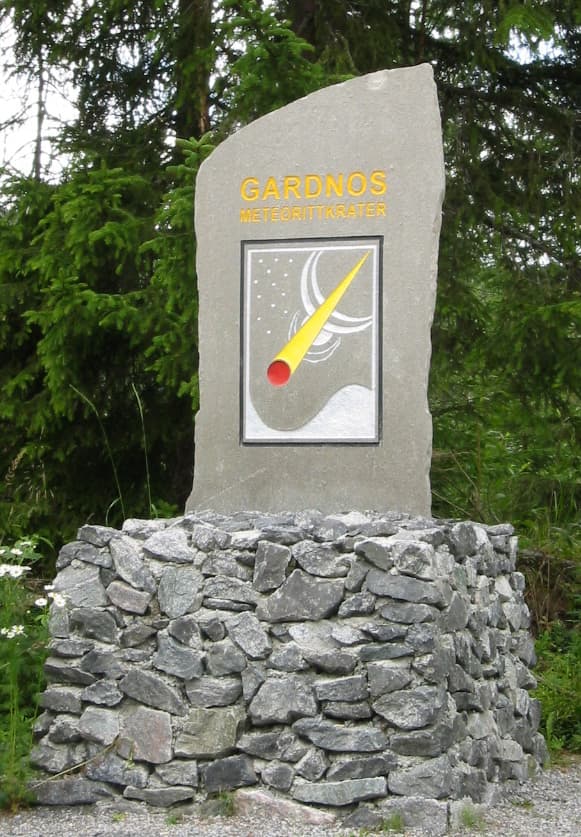
The Gardnos crater, located in Nesbyen, Norway, is a 5-kilometer-wide impact structure formed approximately 500 million years ago. Initially mistaken for volcanic in origin, its true nature as a meteorite impact site was confirmed in 1990 by geologists Johan Naterstad and Johannes A. Dons. It is distinguished by its accessibility and the unique brecciated rock resulting from the impact.
Mien
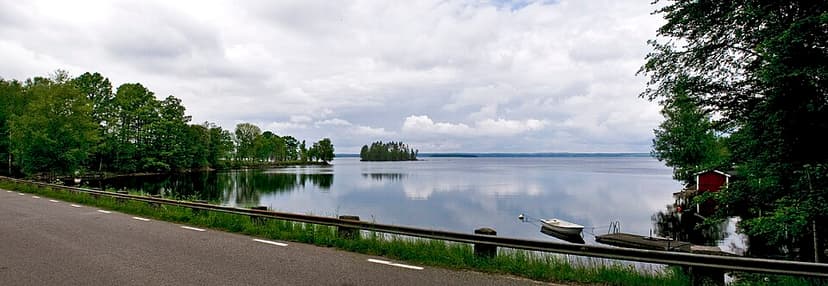
Mien is a lake in southern Sweden situated within a meteorite crater. The eroded crater is characterized by a circular lake, Lake Mien, with a diameter of 5.5 km. Its formation is attributed to an impact event estimated to have occurred in the Early Cretaceous period, approximately 121 million years ago.
Mount Toondina
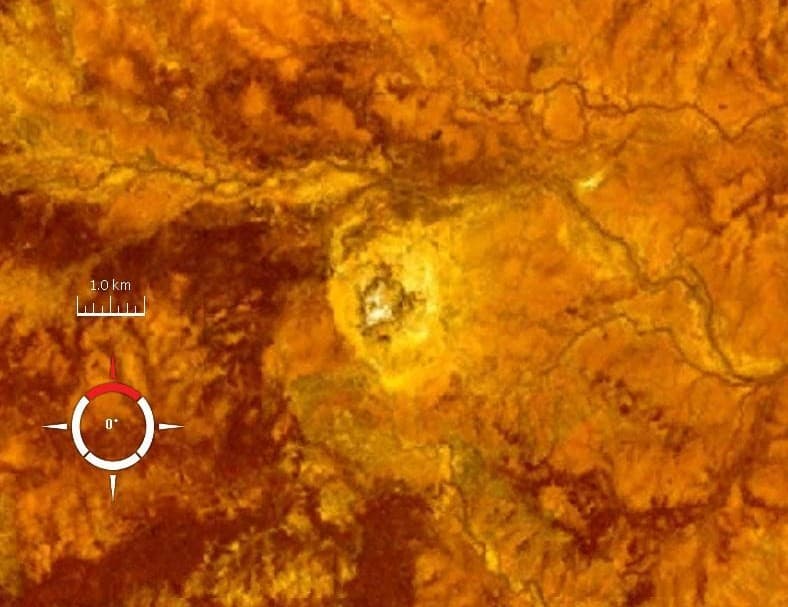
Mount Toondina is an eroded impact structure located in northern South Australia, characterized by a circular topographic feature rising from the desert landscape. Initially thought to be a salt dome, its impact origin was proposed in 1976 and subsequently supported by geophysical studies, revealing characteristics of a complex impact crater.