
Gardnos
The Gardnos crater, located in Nesbyen, Norway, is a 5-kilometer-wide impact structure formed approximately 500 million years ago. Initially mistaken for volcanic in origin, its true nature as a meteorite impact site was confirmed in 1990 by geologists Johan Naterstad and Johannes A. Dons. It is distinguished by its accessibility and the unique brecciated rock resulting from the impact.
Key Facts
- ›Diameter: 5 kilometers (3 MI)
- ›Age: Approximately 500 million years old
- ›Impacted by a meteorite estimated to be 200-300 meters in diameter
- ›Confirmed as an impact crater in 1990 by Johan Naterstad and Johannes a. Dons
- ›Located in Nesbyen municipality, Buskerud, Norway
- ›One of the world's most accessible meteorite craters
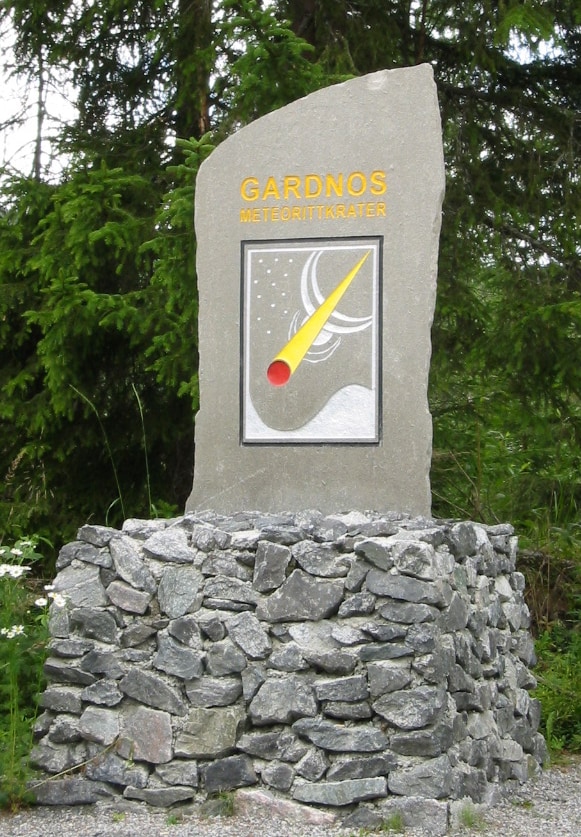
About Gardnos
Gardnos Crater
The Gardnos crater is a significant impact structure located in Nesbyen municipality, Buskerud, Norway. Situated within Meteorite Park (Meteorittparken) at Gardnos, approximately 10 kilometers north of the town of Nesbyen, this crater measures 5 kilometers in diameter. It was formed by the impact of a meteorite estimated to have been between 200 and 300 meters across, approximately 500 million years ago.
Discovery and Geology
Initially, the Gardnos site was believed to be of volcanic origin. However, in 1990, geologists Johan Naterstad and Johannes A. Dons conducted research that confirmed its formation through meteorite impact. The impact event caused extensive fracturing of the original bedrock, forcing a powder of crushed rocks into these fissures, resulting in a unique impact breccia that characterizes the area's geology. This geological peculiarity makes Gardnos a site of considerable scientific interest.
Accessibility and Significance
One of the notable features of the Gardnos crater is its accessibility; it is considered one of the world's most accessible meteorite craters. Visitors can drive into the center of the crater, and two trails wind through the surrounding natural landscape. These trails are equipped with informational signs that detail the unique geology and the story of the impact event, making it an educational destination for those interested in impact cratering and Earth sciences.
Source: Wikipedia ↗
Frequently Asked Questions
Where is the Gardnos crater located?
The Gardnos crater is located in Nesbyen municipality in Buskerud, Norway. It is situated within Meteorite Park (Meteorittparken) at Gardnos, about 10 kilometers north of the town of Nesbyen.
How large is the Gardnos crater?
The Gardnos crater has a diameter of 5 kilometers (3 miles). The celestial body that caused the impact is estimated to have been between 200 and 300 meters in diameter.
When was the Gardnos crater formed?
The Gardnos crater was created by a meteorite impact approximately 500 million years ago. This places the event during the Paleozoic Era.
How was the Gardnos crater discovered to be a meteorite impact site?
Initially, the Gardnos site was thought to be a volcanic crater. However, in 1990, geologists Johan Naterstad and Johannes A. Dons confirmed that it was indeed formed by a meteorite impact.
What is unique about the geology of the Gardnos crater?
The impact fractured the original bedrock and forced a powder of crushed rocks into all the fractures, creating an impact breccia. This process is the origin of the peculiar rock formations found in the area.
Related Impact Craters
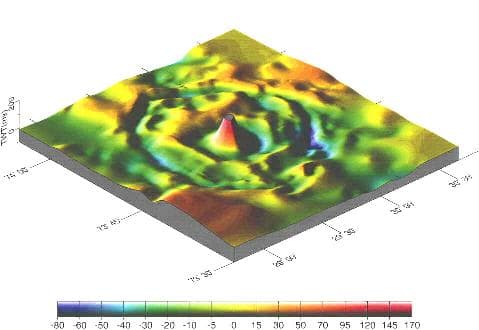
Mjølnir
Mjølnir is a significant impact crater located on the floor of the Barents Sea, off the coast of Norway. Estimated to be 40 kilometers in diameter, the impact event occurred approximately 142 million years ago during the Early Cretaceous period. The crater's name is derived from Thor's mythological hammer, reflecting the immense power of the celestial body that struck Earth.

Siljan Ring
The Siljan Ring is a large prehistoric impact structure located in central Sweden, and it is recognized as the largest impact crater in Europe. Formed by a meteorite impact during the Devonian period, the structure has significantly deformed the surrounding bedrock, which is rich in fossils. The area has also been a focus for prospecting for oil and natural gas.

Glasford
The Glasford crater, also known as the Glasford Disturbance, is a buried impact structure located in southern Peoria County, Illinois. Discovered in 1963, it is one of only two known meteor craters in Illinois and is significant for its potential connection to the Great Ordovician Meteor Shower and its possible influence on Earth's climate.