
Shoemaker
The Shoemaker impact structure, formerly known as Teague Ring, is the eroded remnant of a significant impact crater located in central Western Australia. Named in honor of planetary geologist Eugene Shoemaker, its prominent ring-like feature is visible in satellite imagery and lies on the boundary of the Earaheedy Basin and the Yilgarn craton.
Key Facts
- ›Located approximately 100 km north-northeast of Wiluna, Western Australia.
- ›Features a central uplifted region of Archaean Granite (Teague Granite) approximately 12 km in diameter.
- ›Surrounded by a downwarped ring of sedimentary rocks, with an outer limit of disturbance at about 30 km diameter.
- ›Evidence for its impact origin includes shatter cones and shocked quartz.
- ›The age of the impact event is uncertain, with suggested ages ranging from approximately 1630 million years ago to as young as 568 million years ago.

Shatter Cones, Shocked Quartz
About Shoemaker
Shoemaker Impact Structure
The Shoemaker impact structure, formerly recognized as Teague Ring, represents the deeply eroded remnants of a significant impact crater situated in the arid interior of Western Australia. It is located approximately 100 kilometers (62 miles) north-northeast of the town of Wiluna, marking its position on the geological boundary between the Palaeoproterozoic Earaheedy Basin and the Archaean Yilgarn craton. The structure is named in tribute to Eugene Shoemaker, a pivotal figure in planetary geology and the study of impact phenomena.
Description and Evidence
A prominent, ring-like topographic feature characterizes the Shoemaker structure, readily discernible in satellite imagery. This formation lies on the geological frontier between two ancient rock formations. The area itself is dotted with seasonal salt lakes, the most extensive of which is Lake Teague. The initial hypothesis suggesting the ring-like topography might be of impact origin was put forth in 1974. Subsequent scientific investigations provided compelling evidence supporting this classification. Key indicators of an impact event found at the site include shatter cones and shocked quartz, both diagnostic geological features of hypervelocity impacts.
Geological Features and Age Uncertainty
The Shoemaker structure exhibits a central circular region of uplifted Archaean Granite, known as Teague Granite, which spans about 12 kilometers (7.5 miles) in diameter. This central uplift is encircled by a downwarped ring, or ring syncline, composed of sedimentary rocks. The outer limit of disturbance is estimated to be around 30 kilometers (19 miles) in diameter, serving as a minimum approximation of the original crater's extent. The precise age of the impact event remains a subject of scientific debate. It is certain that the impact occurred after the formation of the Teague Granite, which has been dated at 2648 ± 8 million years ago. The most frequently cited age of approximately 1630 million years ago is linked to a re-heating event affecting the granite, which may or may not correspond to the impact itself, as it could also be indicative of regional tectonic activity. More recent dating using Potassium-Argon (K-Ar) methods has yielded ages as young as 568 ± 20 million years ago, a date that could potentially align with the impact event or also reflect tectonic processes.
Source: Wikipedia ↗
Frequently Asked Questions
Where is the Shoemaker impact structure located?
The Shoemaker impact structure is situated in arid central Western Australia, about 100 kilometers (62 miles) north-northeast of Wiluna. It lies on the boundary between the Palaeoproterozoic Earaheedy Basin and the Archaean Yilgarn craton.
What is the size of the Shoemaker impact structure?
The feature has a central circular region of uplifted Archaean Granite approximately 12 kilometers (7.5 miles) in diameter. This is surrounded by a downwarped ring of sedimentary rocks, with an outer limit of disturbance at about 30 kilometers (19 miles) in diameter, which is considered a minimum estimate of the original crater size.
What evidence suggests Shoemaker is an impact structure?
Subsequent research revealed definitive evidence for the impact hypothesis, including the presence of shatter cones and shocked quartz. These are geological indicators commonly found at impact sites.
When did the impact event that formed Shoemaker occur?
The age of the impact event is uncertain. It must be younger than the Teague Granite in the center, dated at 2648 ± 8 million years ago. Commonly cited ages include about 1630 million years ago or, more recently, ages as young as 568 ± 20 million years ago, though these younger dates could also represent tectonic activity.
Why is the Shoemaker impact structure named after Eugene Shoemaker?
The impact structure is named in honor of planetary geologist Eugene Shoemaker. He was a pioneer in the study of impact craters and their geological significance.
Related Impact Craters
Mount Toondina
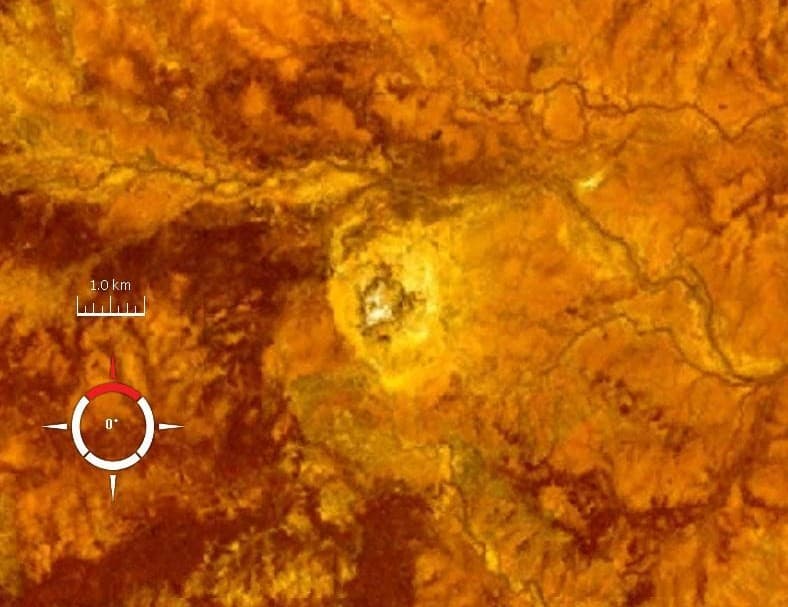
Mount Toondina is an eroded impact structure located in northern South Australia, characterized by a circular topographic feature rising from the desert landscape. Initially thought to be a salt dome, its impact origin was proposed in 1976 and subsequently supported by geophysical studies, revealing characteristics of a complex impact crater.

Connolly Basin
Connolly Basin is a 9 km-diameter impact crater situated in the remote Gibson Desert of central Western Australia. Initially mistaken for a diapir, its impact origin was identified in 1985. The crater features a distinct topographic rim and a central uplift exposing deformed bedrock, with surrounding sedimentary rocks dating from the Early Cretaceous to Paleogene and uplifted central rocks likely from the Early Permian.
Cleanskin
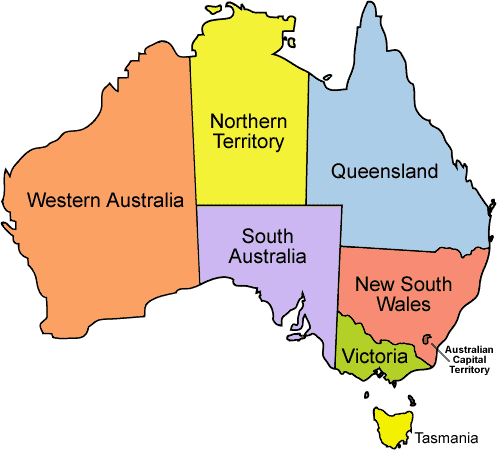
The Cleanskin crater is an eroded impact structure in Australia, straddling the border between the Northern Territory and Queensland. With a diameter of 15 kilometers, its polygonal shape is attributed to pre-existing regional faults. The crater formed during the late Mesoproterozoic to Neoproterozoic eras and became eroded and buried by the Cambrian and Cretaceous periods respectively.