
Suvasvesi South
Suvasvesi South is a confirmed impact crater located in the Haapaselkä basin of Lake Suvasvesi in Eastern Finland. Resembling its northern counterpart, this crater is estimated to be significantly older, with dating suggesting an age of over 700 million years. Its confirmation as an impact structure adds to the geological significance of the Suvasvesi lake system.
Key Facts
- ›Suvasvesi South is a confirmed impact crater in Eastern Finland.
- ›It is located within the Haapaselkä basin of Lake Suvasvesi.
- ›The crater's age is estimated to be older than 700 million years, potentially around 710–720 Ma.
- ›Its diameter is similar in size to the Suvasvesi North crater.
- ›Impact melt rocks found near the southeastern shore of Lake Haapaselkä provided dating evidence.

Suvasvesi North
About Suvasvesi South
Suvasvesi South Impact Crater
Suvasvesi South is a confirmed impact crater situated within the Haapaselkä basin of Lake Suvasvesi in Eastern Finland. This geological feature is part of a pair of circular lake basins, with Suvasvesi North being its counterpart. The confirmation of Suvasvesi South as an impact structure underscores the geological interest of the Suvasvesi lake region.
Age and Confirmation
The age of the Suvasvesi South crater is a subject of ongoing study, with estimates varying. Argon-argon dating of impact melt rocks discovered near the southeastern shore of Lake Haapaselkä suggests an age of over 700 million years, potentially around 710–720 million years. However, the Earth Impact Database provides a broader age range of approximately 250 million years. The crater has recently been confirmed as an impact structure, adding to the known impact sites in Finland.
Source: Wikipedia ↗
Frequently Asked Questions
Where is the Suvasvesi South impact crater located?
The Suvasvesi South impact crater is located in the Haapaselkä basin of Lake Suvasvesi, in Eastern Finland, near the city of Kuopio. It is one of two impact structures found within the Suvasvesi lake system.
How old is the Suvasvesi South impact crater?
The age of the Suvasvesi South crater is estimated to be older than 700 million years, with specific dating suggesting an age of approximately 710–720 million years based on argon-argon dating of impact melt rocks. However, the Earth Impact Database provides a broader estimate of around 250 million years.
What is the size of the Suvasvesi South impact crater?
The Suvasvesi South impact crater is described as being similar in size to the Suvasvesi North crater. While an exact diameter is not specified for the southern crater, the northern crater measures approximately 3.5 kilometers in diameter.
How was the Suvasvesi South impact crater discovered or confirmed?
While the Haapaselkä basin was suspected to be an impact crater, it has recently been confirmed. This confirmation is partly based on the analysis of impact melt rocks found near the southeastern shore of Lake Haapaselkä, which provided evidence for the impact event.
Related Impact Craters
Iso-Naakkima
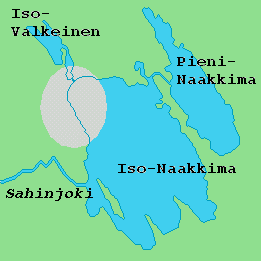
Iso-Naakkima is a lake in Southern Savonia, Finland, notable for concealing an eroded impact crater beneath its northwestern section. It is recognized as one of the oldest known impact structures on Earth, estimated at 1200 million years old, and is also among the smallest confirmed craters of its age, measuring approximately 3 km in diameter.

Söderfjärden
Söderfjärden is a polder in western Finland, recognized as an impact crater that formed over 640 million years ago. Despite its significant size and the buried central uplift, the crater is primarily visible today as a large, hexagonal cultivated field due to its filling with Cambrian sandstones. This unique surface visibility distinguishes it from other Finnish impact structures.
Summasjärvi
Summasjärvi, also known as Lake Summanen, is a medium-sized lake in Finland that contains the 12th identified impact crater in the country. This submerged crater, located at the lake's center, measures 2.6 kilometers in diameter and is largely buried beneath later sediments. Its formation predates the Quaternary glaciation but occurred after the Svecofennian orogeny.