
Vista Alegre
Brazil·Not specified in text·Not specified in text·Circular, relatively flat plain
The Vista Alegre crater is a large impact structure located in Paraná State, Brazil, measuring 9.5 kilometers in diameter. While initially dated to less than 65 million years old, more recent estimations suggest an age of around 115 million years, leading to speculation that it might have been part of a double impact event with the nearby Vargeão Dome.
Key Facts
- ›Diameter: 9.5 kilometers
- ›Estimated age: less than 65 million years (Paleocene or younger), with recent estimates suggesting around 115 million years.
- ›Location: Coronel Vivida, Paraná State, Brazil.
- ›Morphology: Appears as a circular, relatively flat plain within hilly terrain.
- ›Potential association: Proposed as a possible double impact event with Vargeão Dome.
- ›Parent body: Earth
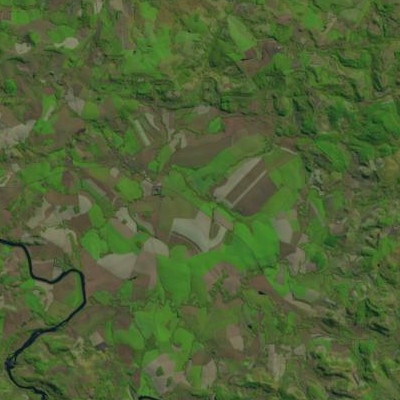
VargeãO Dome
About Vista Alegre
Vista Alegre Crater
The Vista Alegre crater is a significant impact structure located in Coronel Vivida, Paraná State, Brazil. It is characterized by its prominent circular, relatively flat plain that stands in contrast to the surrounding hilly terrain.
Description and Age
The crater measures 9.5 kilometers (5.9 miles) in diameter. Initial estimates for its age placed it at less than 65 million years old, suggesting formation during the Paleocene epoch or a later period. However, more recent scientific assessments have proposed a considerably older age, around 115 million years. This revised dating has led to intriguing hypotheses about its origin.
Potential Double Impact
Given its proximity to another known impact structure, the Vargeão Dome, and the closer age estimates, it has been proposed that Vista Alegre might have been formed as part of a double impact event. This theory is supported by similarities in location, age, and stratigraphic evidence between the two sites. Further research would be needed to confirm this complex impact scenario.
Source: Wikipedia ↗
Frequently Asked Questions
Where is the Vista Alegre crater located?
The Vista Alegre crater is situated in Coronel Vivida, within the state of Paraná, Brazil. It is characterized by a circular, flat plain contrasting with the surrounding hilly landscape.
How large is the Vista Alegre crater?
The Vista Alegre crater has a measured diameter of 9.5 kilometers (5.9 miles). This makes it a significant impact structure on Earth's surface.
What is the estimated age of the Vista Alegre crater?
Initial estimates placed the age of the Vista Alegre crater at less than 65 million years, suggesting it formed during the Paleocene epoch or later. However, more recent studies propose an age closer to 115 million years.
Is Vista Alegre related to other impact structures?
There is a proposal suggesting that Vista Alegre may have been part of a double impact event. This theory is based on its proximity, similar age estimates, and stratigraphic similarities to the Vargeão Dome, another known impact structure.
Related Impact Craters
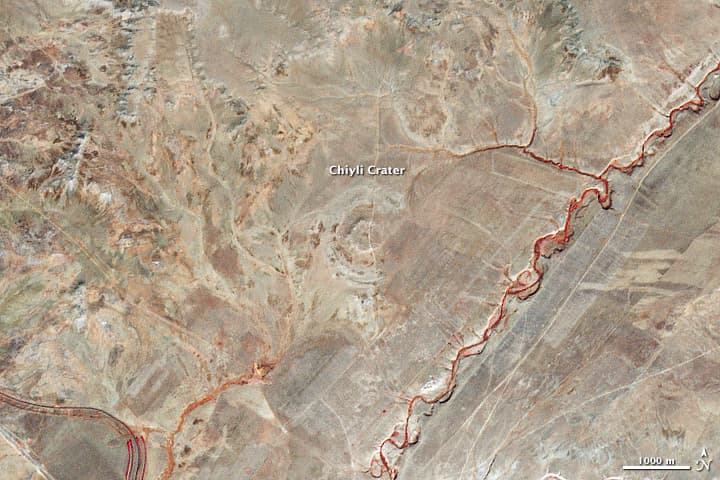
Chiyli
Chiyli Crater is a well-preserved impact structure located in Aktobe, Kazakhstan. With a diameter of 5.5 kilometers, its age is estimated to be around 46 million years, placing its formation in the Eocene epoch. The crater is notable for being exposed at the surface, making it accessible for geological study.
Colonia
The Colônia crater, located in São Paulo, Brazil, is a recently confirmed impact structure with a diameter of approximately 3.6 kilometers. Formed between 1 million and 20 million years ago, it is partially filled with peat, preserving a valuable environmental record. Its tentative identification as an impact crater is based on its geomorphology and faulting patterns, though definitive impact evidence like shocked quartz has not yet been found.

Serra da Cangalha
Serra da Cangalha is a significant impact crater located in Tocantins, Brazil, measuring between 12 and 13 kilometers in diameter. It is the second-largest known crater in Brazil and was formed approximately 220 million years ago during the Triassic period. The crater's name translates to "Pack-Saddle Mountains" in Portuguese, referencing its distinctive topography.