
Colonia
The Colônia crater, located in São Paulo, Brazil, is a recently confirmed impact structure with a diameter of approximately 3.6 kilometers. Formed between 1 million and 20 million years ago, it is partially filled with peat, preserving a valuable environmental record. Its tentative identification as an impact crater is based on its geomorphology and faulting patterns, though definitive impact evidence like shocked quartz has not yet been found.
Key Facts
- ›Diameter: Approximately 3.6 kilometers.
- ›Location: São Paulo, Brazil.
- ›Age: Estimated between 1 million and 20 million years ago (Earth Impact Database suggests 36 to 5 million years ago).
- ›Depth of sediment fill: up to 275 meters.
- ›Bolide size: Inferred to be about 200 meters in diameter.
- ›Geological context: Formed in crystalline basement rocks 600 to 700 million years old.
About Colonia
Colônia Crater
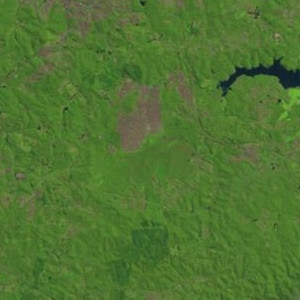
The Colônia crater is a recently confirmed impact structure situated in the municipality of São Paulo, Brazil. This round, bowl-shaped depression measures approximately 3.6 kilometers in diameter and is encircled by a ring of hills about 125 meters high. Its approximate coordinates are 23°52′S 46°42′W, placing it at an elevation of 770 meters above sea level.
Geology and Formation
Geologists hypothesize that the Colônia crater was formed by the impact of a meteorite approximately 200 meters in diameter. The event occurred between 1 million and 20 million years ago, impacting crystalline basement rocks that are 600 to 700 million years old. The Earth Impact Database suggests a slightly wider age range of 36 to 5 million years ago. This makes Colônia one of the youngest known impact craters in South America.
The crater is partially filled with peat, reaching a maximum depth of 275 meters. This sedimentary material has preserved a valuable record of ancient environments, with the upper 8 meters offering a detailed climate and ecological history of the last 130,000 years. The complete environmental record may extend back as far as 2.5 million years.
Seismic and other surveys indicate that beneath the peat are 50 to 65 meters of fragmented rock deposits, followed by another 50 meters of shocked or deformed basement rock. Sediment analysis suggests that a lake occupied the crater's central part until about 18,000 years ago, after which it transitioned into a swamp. The crater is drained eastward by the Vargem Grande creek, which flows into the adjacent Billings Reservoir.
The identification of Colônia as an impact crater is primarily based on its geomorphology and faulting patterns, as well as the exclusion of other geological formation mechanisms, such as karstic sinkholes (which would require carbonate rocks, absent here). As of 2011, definitive evidence such as shatter cones or shocked quartz had not been reported; their discovery would likely necessitate drilling through the sediment fill.
Location and Conservation
The Colônia crater lies within the Parelheiros region of the São Paulo metropolitan area, approximately 35 kilometers from the city center. The crater area contains remnants of the native Atlantic rainforest. Since 1989, the northern portion of the crater has been gradually encroached upon by informal housing, now forming the Vargem Grande neighborhood, which is home to an estimated 35,000 to 40,000 people.
To protect the site from further degradation, the crater has been designated a protected natural landmark, registered in 1995 by CONDEPHAAT. Its southern section was incorporated into the Capivari Monos Municipal Parkland in 1996.
Source: Wikipedia ↗
Frequently Asked Questions
Where is the Colônia crater located?
The Colônia crater is situated in the municipality of São Paulo, Brazil, specifically in the suburban Parelheiros region. It is about 35 kilometers from the city's center.
What is the size of the Colônia crater?
The crater is a round, bowl-shaped depression with a diameter of about 3.6 kilometers (2.2 miles). It is encircled by a ring of hills approximately 125 meters high.
How old is the Colônia crater?
The impact event that formed the Colônia crater is estimated to have occurred between 1 million and 20 million years ago. The Earth Impact Database provides a slightly different range of 36 to 5 million years ago.
What is the geological significance of the Colônia crater?
The Colônia crater is considered one of the youngest impact craters known in South America. Its sediment fill, particularly the upper layers, provides a detailed climate and ecological record spanning the last 130,000 years, potentially stretching back 2.5 million years.
Has definitive impact evidence been found at Colônia?
As of 2011, there were no reports of definite impact evidence such as shatter cones or shocked quartz. Such evidence would likely require drilling through the sediment fill to reach the deeper rock layers.
What type of celestial body is believed to have caused the impact?
Geologists believe the crater was created by the impact of a meteorite with an estimated diameter of about 200 meters.
Related Impact Craters

Serra da Cangalha
Serra da Cangalha is a significant impact crater located in Tocantins, Brazil, measuring between 12 and 13 kilometers in diameter. It is the second-largest known crater in Brazil and was formed approximately 220 million years ago during the Triassic period. The crater's name translates to "Pack-Saddle Mountains" in Portuguese, referencing its distinctive topography.

Araguainha
The Araguainha crater, located on the border of Mato Grosso and Goiás states in Brazil, is the largest known impact crater in South America, measuring 40 kilometers in diameter. Its age, estimated at 254.7 million years ago, closely overlaps with the Permian-Triassic extinction event, suggesting a potential, though indirect, role in this catastrophic global event.
Vargeao Dome
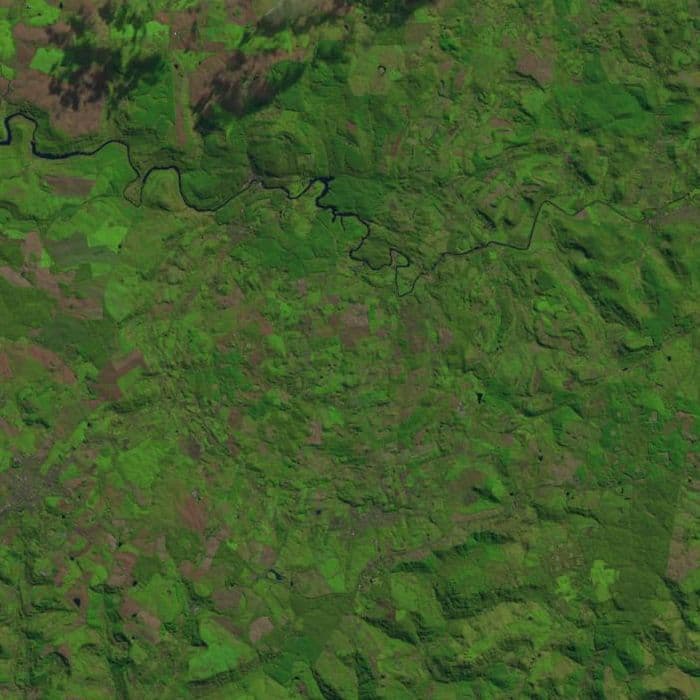
Vargeão Dome is a significant impact crater located in Santa Catarina, Brazil, with a near-perfectly circular depression spanning 12 kilometers in diameter. Formed approximately 123 million years ago during the Cretaceous period, its impact origin is confirmed by geological evidence such as shatter cones and shocked quartz.