
Agamura persica
The Persian spider gecko (Agamura persica) is a reptile found in the semidesert regions of Iran, Pakistan, and Afghanistan. Characterized by its long, slender legs and tail that give it a spider-like appearance, it is well-adapted to its rocky and stony habitats. This gecko is primarily nocturnal but can be observed basking during the day.
Key Facts
- ›Inhabits rocky and stony terrain in semidesert environments.
- ›Possesses long, slender legs and tail resembling a spider.
- ›Primarily nocturnal but may bask during daylight hours.
- ›Breeding occurs from March to may, with eggs laid in June.
- ›Juveniles typically appear in September.
- ›Males are distinguished by a hemipenal bulge and preanal pores.
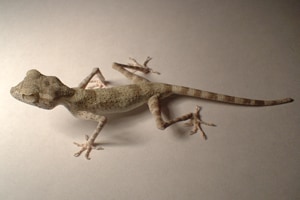
Persian Spider Gecko
Iran, Pakistan, Afghanistan
Semidesert, Rocky Terrain, Stony Terrain, Hill Slopes, Barren Plains
- Long, Slender Legs and Tail Giving A Spider-Like Impression.
- Slender, Clawed, and Angularly Bent Toes.
- Light-Grey Upper Body With Yellow Pigment.
- Five Dark Crossbars On the Body, Almost As Broad As the Interspaces.
- 9 To 10 Dark Crossbars On the Tail.
- Flecked Grey Belly.
- Females: 42-77 mm Svl, 34-59 mm Tail.
- Males: 35-65 mm Svl, 27-59 mm Tail.
- Primarily Nocturnal.
- Can Be Found Basking During the Day At Specific Temperatures.
- Active At Surface Temperatures As High As 44 °C.
- Well-Developed Upper Eyelid Acts As A Sunshade.
About Agamura persica
Persian Spider Gecko (Agamura persica)
The Persian spider gecko, scientifically known as Agamura persica, is a distinctive reptile native to the semidesert regions of Iran, Pakistan, and Afghanistan. Its common name is derived from its unique physical characteristics, particularly its long, slender legs and tail, which lend it a spider-like appearance and aid in navigating its rocky habitat. This adaptation allows it to climb effectively on the stony terrain it inhabits.
Natural History and Habitat
This gecko thrives in arid environments, specifically rocky and stony areas found on hill slopes and barren plains. While primarily a nocturnal species, the Persian spider gecko can be observed during the day, particularly when basking. It seeks out temperatures around 17.5 °C (air) and 15.5 °C (surface) for basking and can remain active at surface temperatures as high as 44 °C. A notable adaptation for its potential diurnal activity is its well-developed, though immovable, upper eyelid, which functions as a sunshade.
Physical Characteristics and Reproduction
Adult female Persian spider geckos typically range from 42 to 77 mm in snout-to-vent length (SVL), with a tail length of 34 to 59 mm. Males are slightly smaller, measuring between 35 to 65 mm SVL with a tail length of 27 to 59 mm. The gecko's coloration consists of a light-grey upper body accented with yellow pigment, featuring five dark crossbars that are nearly as wide as the spaces between them. The tail bears nine to ten similar crossbars, and the belly is a flecked grey. Sexual dimorphism is apparent; males possess a noticeable hemipenal bulge and two to four preanal pores, whereas females lack these features. The species reaches reproductive maturity at 18 to 24 months of age. The breeding season spans from March to May, with eggs laid in June, and the emergence of juveniles typically occurs in September.
Taxonomy
While Agamura persica is the accepted scientific name, two other species, Agamura femoralis and Agamura misonnei, were once placed in the same genus. However, taxonomic revisions by Anderson (1999) and Khan (2003) have reassigned these species to the genus Rhinogekko. Two subspecies are recognized: Agamura persica ssp. persica, found in eastern Iran and Afghanistan, and Agamura persica ssp. cruralis, prevalent in western Iran. The subspecies differ in the number and intensity of their dorsal crossbars.
Source: Wikipedia ↗
Frequently Asked Questions
Where does the Persian spider gecko live?
The Persian spider gecko is found in the semidesert regions of Iran, Pakistan, and Afghanistan. It prefers rocky and stony terrain, often found on hill slopes and barren plains.
What does the Persian spider gecko look like?
It has a light-grey upper body with yellow pigment and distinctive dark crossbars. Its long, slender legs and tail give it a spider-like appearance, and its toes are slender, clawed, and angularly bent.
Is the Persian spider gecko active at night?
Yes, the Persian spider gecko is primarily nocturnal. However, it can be observed during the day, particularly when basking in suitable temperatures.
How large do Persian spider geckos get?
Females range from 42 to 77 mm in snout-to-vent length (SVL), with a tail of 34 to 59 mm. Males range from 35 to 65 mm SVL, with a tail of 27 to 59 mm.
When do Persian spider geckos breed and reproduce?
The breeding period is from March to May, with eggs typically laid in June. Juveniles begin to appear in September, after an incubation period.
How can you tell the difference between male and female Persian spider geckos?
Male Persian spider geckos have an obvious hemipenal bulge visible from the side and usually possess two to four preanal pores. Females lack these features entirely.
Related Lizards

Argentine black and white tegu
The Argentine black and white tegu (Salvator merianae) is a large, omnivorous lizard native to South America, inhabiting tropical rainforests, savannas, and semideserts. Known for its intelligence and docile nature, this species is also notable for its unique partly endothermic behavior during the breeding season. It can reach lengths of up to 1.4 meters and is recognized by its distinctive black and white or green and black coloration.
Argentine giant tegu
The Argentine giant tegu (Salvator merianae), also known as the Argentine black and white tegu, is the largest species of tegu lizard, native to South America. These omnivorous reptiles inhabit tropical rainforests, savannas, and semi-deserts, and are notable for their intelligence, relatively gentle nature, and unique ability to exhibit partial endothermy during their breeding season. They are also a significant invasive species in parts of the United States.

Aspidoscelis gularis
The Texas spotted whiptail (Aspidoscelis gularis) is a long-tailed lizard native to the south-central and southwestern United States and northern Mexico. Characterized by its tan brown or green-brown coloration with seven distinct stripes and light spots, it is highly active and found in diverse habitats. This diurnal and insectivorous species is known for its quick movements and ability to shed its tail as a defense mechanism.