
Argentine giant tegu
The Argentine giant tegu (Salvator merianae), also known as the Argentine black and white tegu, is the largest species of tegu lizard, native to South America. These omnivorous reptiles inhabit tropical rainforests, savannas, and semi-deserts, and are notable for their intelligence, relatively gentle nature, and unique ability to exhibit partial endothermy during their breeding season. They are also a significant invasive species in parts of the United States.
Key Facts
- ›Largest species of tegu lizard.
- ›Omnivorous diet including vertebrates, invertebrates, fruits, and seeds.
- ›Exhibit partial endothermy during the breeding season.
- ›Can live 12-15 years in the wild and over 20 years in captivity.
- ›Males are larger than females, with males developing pronounced jowls.
- ›Known for their intelligence and relative docility, making them popular pets.

Argentine Giant Tegu, Black and White Tegu, Blue Tegu, Huge Tegu
Brazil, Uruguay, Paraguay, Bolivia, Argentina, United States
Tropical Rainforest, Savanna, Semidesert, Scrub, Flooded Savanna, Canals, Ponds, Streams
- Largest Species of 'Tegu' Lizard.
- Adult Males Can Exceed 120-140 cm Total Length; Females Up To 100 cm.
- Hatchlings Are Emerald-Green With Black Markings, Turning Mostly Black With Age.
- Tails Are Banded Yellow and Black In Juveniles, Fading With Age.
- Males Develop Significantly Developed Jowls.
- Females Have Beaded Skin and Stripes.
- Juveniles Have A Distinctive 'Singe Mark' On Their Noses If They Are A Blue Tegu Variant.
- Heavy-Bodied Animals, Weighing 3-5 kg Or More When Fully Grown.
- Omnivorous
- Juveniles Eat Vertebrates, Invertebrates, Fruits, and Seeds.
- Includes Insects, Annelids, Crustaceans, Spiders, Snails, Small Birds, Fish, Frogs, Other Lizards, Snakes, Rodents, Armadillos.
- Consume Fruits Such As Bananas, Grapes, Mangoes, and Papayas.
- Notorious Egg Predators of Birds and Other Reptiles.
- Adult Plant Consumption Increases; Diet Varies Seasonally.
- In Captivity, Fed High-Protein Diets Including Raw/Cooked Flesh, Dog Food, Crocodile Diet, Chicken, Eggs, Insects, and Rodents.
- Highly Intelligent.
- Relatively Gentle Nature.
- Enter Brumation In Autumn When Temperatures Drop.
- High Level of Activity During Wakeful Periods.
- Can Drop Tail Section As A Defense Mechanism.
- Tail Used As A Weapon.
- Can Be Aggressive When Provoked, With Bite Force Correlating To Aggression.
- Less Aggressive In Home Territories.
- Exhibit 'Pausing and Turning' Behavior When Trailing Chemical Cues For Mates.
- Females Exhibit Stronger Trailing Behavior Than Males.
- Burrowing Species, Especially During Winter.
- Scent-Marking Behaviors Observed In Males During Spring.
- Can Run Bipedally For Short Distances.
Cougars, Jaguars, Otters, Snakes, Caimans, Birds of Prey, Lesser Grison
Roads and Vehicles, Pet Trade
About Argentine giant tegu
The Argentine giant tegu, scientifically classified as Salvator merianae, is the largest species within the tegu lizard group, native to the diverse ecosystems of South America. Its natural habitat spans tropical rainforests, savannas, and semi-deserts across countries like Brazil, Uruguay, Paraguay, Bolivia, and Argentina. The species is distinguished by its omnivorous diet, consuming a wide array of prey from insects and small vertebrates to fruits and seeds, and it is also known for being a significant predator of eggs.
Key Characteristics and Behavior
Argentine giant tegus are recognized for their considerable intelligence and a generally gentle disposition, which has led to their popularity as pets. They exhibit a pronounced seasonal activity pattern, entering a state of brumation during colder months and displaying high activity levels when temperatures rise. Uniquely among nonavian reptiles, they demonstrate partial endothermy during their breeding season, allowing them to regulate their body temperature to a degree. Adult males are notably larger than females, often developing pronounced jowls, while females have a more streamlined appearance and beaded skin with stripes.
Life Cycle and Physiology
These lizards reproduce by laying eggs (oviparous). A clutch typically contains between 18 and 25 eggs, sometimes more, with incubation lasting approximately 64 days. Hatchlings are initially emerald-green and black, with their coloration darkening as they mature. Their lifespan in the wild is estimated at 12 to 15 years, but they can live over 20 years with adequate care in captivity. The Argentine giant tegu's physiology also makes it a successful invasive species in regions outside its native range, such as the southeastern United States, where escaped or released pets have established reproducing populations.
Source: Wikipedia ↗
Frequently Asked Questions
What is the Argentine giant tegu?
The Argentine giant tegu, scientifically known as Salvator merianae, is the largest species of tegu lizard. It is native to South America and is known for its omnivorous diet, intelligence, and unique physiological traits.
Where do Argentine giant tegus live?
Their native range includes south and southeastern Brazil, Uruguay, eastern Paraguay, Bolivia, and Argentina. They inhabit tropical rainforests, savannas, and semi-deserts. Invasive populations are also established in parts of the southeastern United States.
What do Argentine giant tegus eat?
They are omnivores, with juveniles consuming a wide variety of vertebrates, invertebrates, fruits, and seeds. Adult diets shift towards increased plant consumption but still include small vertebrates, especially in the spring. They are also known egg predators.
Are Argentine giant tegus venomous?
No, Argentine giant tegus are not venomous.
How long do Argentine giant tegus live?
In the wild, they are capable of living 12 to 15 years. With excellent care in captivity, their lifespan can exceed 20 years.
What are the physical characteristics of an Argentine giant tegu?
Adult males can exceed 120-140 cm in total length and have developed jowls. Females are smaller, reaching up to 100 cm, and have more streamlined jawlines. Hatchlings have an emerald-green coloration that turns black as they mature, and their tails are banded.
Do Argentine giant tegus have any special physiological traits?
Yes, a notable trait is their ability to be partly endothermic during the breeding season, meaning they can regulate their body temperature to some extent, which is unusual for reptiles.
Are they considered an invasive species?
Yes, Argentine giant tegus are considered a problematic invasive species in parts of the southern United States, particularly Florida and Georgia, due to escaped or released pets.
Related Lizards

Argentine black and white tegu
The Argentine black and white tegu (Salvator merianae) is a large, omnivorous lizard native to South America, inhabiting tropical rainforests, savannas, and semideserts. Known for its intelligence and docile nature, this species is also notable for its unique partly endothermic behavior during the breeding season. It can reach lengths of up to 1.4 meters and is recognized by its distinctive black and white or green and black coloration.

Asian water monitor
The Asian water monitor (Varanus salvator) is a large lizard native to South and Southeast Asia, recognized as the second-largest lizard species after the Komodo dragon. These semiaquatic reptiles are excellent swimmers and inhabit riparian areas, adapting well to environments near human civilization. They are carnivorous, with a diverse diet, and play a role in ecosystems by consuming carrion.
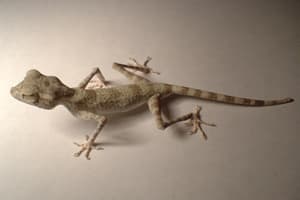
Agamura persica
The Persian spider gecko (Agamura persica) is a reptile found in the semidesert regions of Iran, Pakistan, and Afghanistan. Characterized by its long, slender legs and tail that give it a spider-like appearance, it is well-adapted to its rocky and stony habitats. This gecko is primarily nocturnal but can be observed basking during the day.