
Argentine black and white tegu
The Argentine black and white tegu (Salvator merianae) is a large, omnivorous lizard native to South America, inhabiting tropical rainforests, savannas, and semideserts. Known for its intelligence and docile nature, this species is also notable for its unique partly endothermic behavior during the breeding season. It can reach lengths of up to 1.4 meters and is recognized by its distinctive black and white or green and black coloration.
Key Facts
- ›Native to eastern and central South America, including Brazil, Uruguay, Paraguay, Bolivia, and Argentina.
- ›Omnivorous diet consisting of vertebrates, invertebrates, fruits, and seeds.
- ›Can grow up to 1.4 meters in total length, with males being larger than females.
- ›Exhibit a form of partial endothermy during their breeding season, a rare trait in reptiles.
- ›Known for their intelligence and are sometimes kept as pets.
- ›Can drop their tails as a defense mechanism.

Argentine Giant Tegu, Black and White Tegu, Blue Tegu, Huge Tegu
Brazil, Uruguay, Paraguay, Bolivia, Argentina
Tropical Rainforest, Savanna, Semidesert, Forested Environments, Open-Plain Environments, Scrub Habitats, Wet Habitats, Flooded Savannas
- Largest of the 'Tegu' Lizards.
- Hatchlings Have Emerald-Green Coloration On the Head and Neck With Black Markings, Which Turns Black Several Months After Shedding.
- Juveniles Have Yellow and Black Banded Tails, With Solid Yellow Bands Fading To Speckling With Age.
- Adult Males Are Larger and Can Exceed 120 cm In Total Length, With Developed Jowls.
- Adult Females Are Smaller, Reaching Up To 100 cm In Length, With Streamlined Jawlines and Beaded Skin.
- Sexual Dimorphism Is Evident By 8 Months of Age; Males Have A Bulging Vent, While Females Have A Flat Vent.
- Skulls Are Heavily Built With Large Facial Processes and Distinct Teeth, With Posterior Teeth Being Larger and More Rounded In Adults.
Insects, Annelids, Crustaceans, Spiders, Snails, Small Birds, Fish, Frogs, Other Lizards, Snakes, Rodents, Armadillos, Fruits, Seeds, Eggs, Carrion
- Exhibit A High Level of Activity During Their Wakeful Period.
- Enter Brumation In Autumn When Ambient Temperatures Drop.
- Can Drop A Section of Their Tail As A Defense Mechanism.
- Use Their Tail As A Weapon To Swipe At Aggressors.
- Generally Less Aggressive In Their Home Territories.
- Exhibit Chemical Cue Usage For Mate Searching, With Females Showing Stronger Trailing Behavior.
- Build Nests Out of Vegetation To Maintain Optimal Temperature and Humidity For Eggs.
- Capable of Running At High Speeds and Can Run Bipedally For Short Distances For Territorial Defense.
- Exhibit Seasonal Endothermic Behavior During the Reproductive Season.
Cougars, Jaguars, Otters, Snakes, Caimans, Birds of Prey, Lesser Grison
Hunting For Skins, Road-Kill, Habitat Loss, Invasive Species Prey On Native Wildlife
About Argentine black and white tegu
What is the Argentine Black and White Tegu?
The Argentine black and white tegu, scientifically known as Salvator merianae, is the largest species within the 'tegu' lizard group. This omnivorous reptile is native to the tropical rainforests, savannas, and semideserts of eastern and central South America, with established populations in countries like Brazil, Uruguay, Paraguay, Bolivia, and Argentina. It is recognized for its considerable size, intelligence, and a generally docile disposition, making it a popular choice in the pet trade. A distinctive characteristic of this species is its ability to exhibit partial endothermy during the breeding season, a rare trait among reptiles that allows them to internally regulate their body temperature to some extent.
Physical Characteristics and Life Cycle
Adult Argentine black and white tegus can reach impressive lengths, with males often exceeding 1.2 meters and potentially growing up to 1.4 meters. Females are typically smaller, reaching up to 1 meter. Hatchlings display a striking emerald-green coloration on their heads and necks, which gradually darkens to black as they mature. Their tails are banded in juvenile stages, with the yellow bands becoming less distinct with age. Males are distinguishable from females by their more developed jowls and a bulging vent at the base of the tail, a characteristic that becomes apparent around eight months of age.
These lizards have a lifespan of 12 to 15 years in the wild, with the potential to live over 20 years in captivity under proper care. Their life cycle is strongly influenced by seasonal changes; they are highly active during warmer months, engaging in behaviors such as reproduction and foraging, and enter a state of brumation during colder periods. They reproduce by laying eggs, with clutches typically ranging from 18 to 25 eggs, which incubate for an average of 64 days.
Diet and Behavior
The diet of the Argentine black and white tegu is highly varied, reflecting its omnivorous nature. Juveniles consume a wide range of invertebrates and small vertebrates, while adults incorporate more fruits and seeds into their diet. They are known predators of eggs from birds and other reptiles. Their behavior includes a high level of activity when awake, and they possess a defense mechanism where they can detach a portion of their tail to distract predators. While generally less aggressive in their established territories, they can display aggressive behavior, including biting, when threatened. Their ability to run at high speeds and even bipedally for short distances aids in territorial defense.
Ecological Role and Invasive Potential
In their native habitats, tegus play roles similar to monitor lizards, filling various ecological niches. However, their adaptability and broad diet have also made them a significant invasive species in some regions, particularly in Florida and Georgia in the United States. Here, they pose a threat to native wildlife, especially by preying on the eggs of vulnerable species like sea turtles, alligators, and crocodiles. Their ability to inhabit diverse environments, including scrub and wet habitats, contributes to their invasive success. Efforts to manage these invasive populations often focus on the removal of female tegus due to their role in population growth.
Human Interactions
Argentine black and white tegus are hunted for their skins, which are used in the international leather trade, making them one of the most exploited reptile species globally, although current trade is generally legal and overharvesting has not been widely observed. They are also a traditional food source in some parts of their native range. Their intelligence and relatively calm demeanor when handled have led to their popularity as exotic pets, though regulations regarding their ownership exist in some areas, such as South Carolina, which has banned their importation and breeding.
Source: Wikipedia ↗
Frequently Asked Questions
What is the scientific name for the Argentine black and white tegu?
The scientific name for the Argentine black and white tegu is Salvator merianae. It was previously classified under the genus Tupinambis but was reassigned to Salvator in 2012.
Where are Argentine black and white tegus found naturally?
These lizards are native to South America, specifically in south and southeastern Brazil, Uruguay, eastern Paraguay, Bolivia, and Argentina. They inhabit tropical rainforests, savannas, and semideserts.
What do Argentine black and white tegus eat?
They are omnivores, with their diet including a wide variety of foods such as insects, small vertebrates, fruits, seeds, and eggs. Their diet can vary seasonally, with more animal prey in spring and more plants in summer.
How large can an Argentine black and white tegu get?
Adult males can exceed 1.2 meters (4 ft) in total length and may grow up to 1.4 meters (4.5 ft). Females are smaller, typically reaching up to 1 meter (3 ft) in length.
Are Argentine black and white tegus venomous?
No, Argentine black and white tegus are not venomous. While they possess a strong bite, they do not inject venom.
What is unique about their physiology?
A notable physiological trait is their partial endothermy during the breeding season, meaning they can generate some of their own body heat. This is a rare characteristic among reptiles.
What are the main threats to Argentine black and white tegus?
In their native range, threats include being hunted for their skins for the international leather trade and road-kill. As an invasive species in places like Florida, they pose a threat to native ecosystems, particularly by preying on the eggs of other reptiles.
How long do Argentine black and white tegus live?
In the wild, they are capable of living 12 to 15 years. In captivity, with excellent care, they can survive for more than 20 years.
Related Lizards

Argentine giant tegu
The Argentine giant tegu (Salvator merianae), also known as the Argentine black and white tegu, is the largest species of tegu lizard, native to South America. These omnivorous reptiles inhabit tropical rainforests, savannas, and semi-deserts, and are notable for their intelligence, relatively gentle nature, and unique ability to exhibit partial endothermy during their breeding season. They are also a significant invasive species in parts of the United States.

Lacertinae
The Lacertidae, commonly known as wall lizards or true lizards, are a diverse family of reptiles native to Afro-Eurasia, representing the dominant reptilian group in Europe. These small to medium-sized lizards are characterized by slender bodies, long tails, and highly varied patterns and colors, with most species measuring under 9 cm excluding the tail. Primarily insectivorous, they inhabit a range of environments from forests and scrublands to deserts and rocky arid areas.
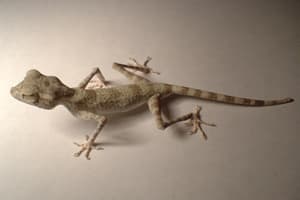
Agamura persica
The Persian spider gecko (Agamura persica) is a reptile found in the semidesert regions of Iran, Pakistan, and Afghanistan. Characterized by its long, slender legs and tail that give it a spider-like appearance, it is well-adapted to its rocky and stony habitats. This gecko is primarily nocturnal but can be observed basking during the day.