
Alsophylax boehmei
Alsophylax boehmei, formerly considered a subspecies of Altiphylax stoliczkai, is a species of gecko endemic to South Asia. It inhabits arid and mountainous regions, preferring deserts, grasslands, and rocky terrains. This species is oviparous, laying eggs as its primary method of reproduction.
Key Facts
- ›Alsophylax boehmei was historically recognized as a subspecies of Altiphylax stoliczkai.
- ›The species is native to South Asia, specifically found in regions of India and western China.
- ›Preferred natural habitats include desert, grassland, and rocky areas.
- ›It is found at significant altitudes, ranging from 2,300 to 3,700 meters.
- ›Alsophylax boehmei is oviparous, meaning it reproduces by laying eggs.

BöHme's Mountain Gecko
India, Western China
About Alsophylax boehmei
Alsophylax boehmei: A High-Altitude Gecko
Alsophylax boehmei, commonly known as Böhme's mountain gecko, is a species of lizard belonging to the family Gekkonidae. Historically, it was recognized as a subspecies of Altiphylax stoliczkai, a classification supported by most authorities in recent years, including a study by Bauer et al. in 2013. The species name honors the zoologist Böhme.
Geographic Range and Habitat
This gecko is endemic to South Asia, with documented occurrences in India, specifically within the regions of Kashmir, Karoo/Dras, and Ladakh. Its range also extends into western China. Alsophylax boehmei has adapted to challenging, high-altitude environments. Its preferred natural habitats include arid deserts, open grasslands, and rugged rocky areas. These geckos are typically found at significant elevations, ranging from 2,300 to 3,700 meters (approximately 7,500 to 12,100 feet) above sea level.
Reproduction
Alsophylax boehmei reproduces by laying eggs, a characteristic known as being oviparous. This method of reproduction is common among many lizard species and is crucial for the continuation of the species in its specialized habitat.
Source: Wikipedia ↗
Frequently Asked Questions
What are the common names for Alsophylax boehmei?
Alsophylax boehmei is also known by common names such as Böhme's mountain gecko. It was previously considered a subspecies of Altiphylax stoliczkai, which has other common names like the frontier bow-fingered gecko, Baltistan gecko, and Karakorum gecko.
Where is Alsophylax boehmei found?
This species is endemic to South Asia. Its geographic range includes parts of India, specifically Kashmir, Karoo/Dras, and Ladakh, as well as western China.
What kind of habitat does Alsophylax boehmei prefer?
Alsophylax boehmei thrives in harsh, high-altitude environments. Its preferred natural habitats are deserts, grasslands, and rocky areas, typically found at elevations between 2,300 and 3,700 meters (7,500 to 12,100 feet).
How does Alsophylax boehmei reproduce?
Alsophylax boehmei is oviparous. This means that the species reproduces by laying eggs, a common reproductive strategy among many reptile species.
What is the taxonomic history of Alsophylax boehmei?
Alsophylax boehmei was most recently classified as a subspecies of Altiphylax stoliczkai by most authorities, including a study by Bauer et al. in 2013. The specific name 'boehmei' honors the zoologist Böhme.
Related Lizards

Frontier bow-fingered gecko
The Frontier bow-fingered gecko, scientifically known as Altiphylax stoliczkai, is a species of lizard belonging to the Gekkonidae family, native to South Asia. This gecko inhabits arid and rocky environments at high altitudes, preferring deserts, grasslands, and stony areas. It is distinguished by its adaptations to these harsh conditions and its oviparous reproductive strategy.

Agama anchietae
Agama anchietae, commonly known as Anchieta's agama or the western rock agama, is a species of lizard native to southern Africa. It is characterized by its cryptic coloration, a wider head and longer tail in males due to sexual dimorphism, and a diet primarily consisting of insects, particularly ants. This species inhabits diverse environments including deserts, shrublands, and grasslands, and it reproduces by laying eggs.
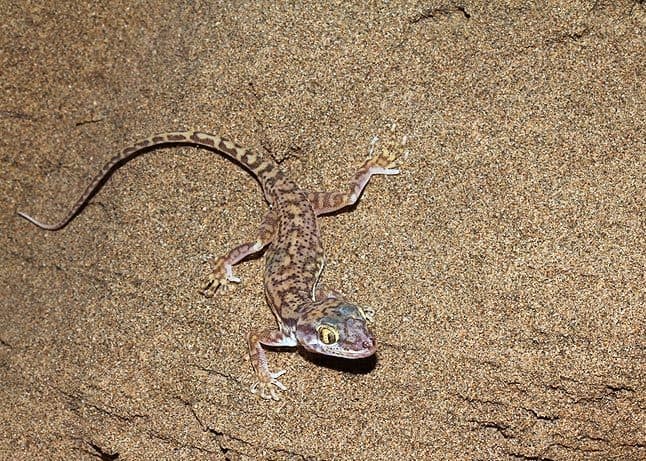
Crossobamon eversmanni
Crossobamon eversmanni, commonly known as the comb-toed gecko, is a species of Asian gecko found in desert, grassland, and shrubland habitats across Iran, Pakistan, and Central Asia. This terrestrial and nocturnal lizard is characterized by its burrowing behavior and oviparous reproduction, with females laying one to two eggs per clutch.