
Crossobamon eversmanni
Crossobamon eversmanni, commonly known as the comb-toed gecko, is a species of Asian gecko found in desert, grassland, and shrubland habitats across Iran, Pakistan, and Central Asia. This terrestrial and nocturnal lizard is characterized by its burrowing behavior and oviparous reproduction, with females laying one to two eggs per clutch.
Key Facts
- ›Native to Iran, Pakistan, and other Central Asian countries.
- ›Inhabits sandy desert, grassland, and shrubland environments.
- ›Primarily terrestrial and nocturnal, living in burrows.
- ›Reproduces by laying eggs (oviparous).
- ›Females can lay 1-2 eggs per clutch, potentially multiple clutches per year.
- ›Named in honor of entomologist Alexander Eduard Friedrich Eversmann.
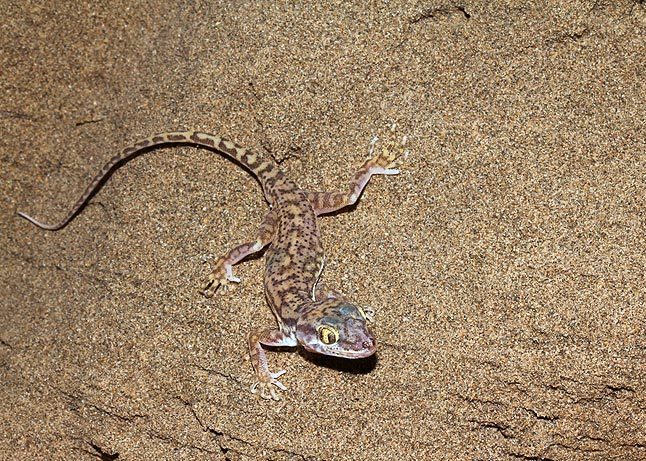
Comb-Toed Gecko
Iran, Pakistan, Central Asia
Terrestrial, Nocturnal, Lives In Burrows
About Crossobamon eversmanni
Crossobamon eversmanni, commonly referred to as the comb-toed gecko, is a species of Asian gecko belonging to the Gekkonidae family. Its scientific name, eversmanni, honors the Russian-German entomologist Alexander Eduard Friedrich Eversmann.
Geographic Range and Habitat
This lizard is naturally found in Iran, Pakistan, and several other nations across Central Asia. Its preferred habitat consists of sandy regions within desert, grassland, and shrubland environments, typically situated at altitudes ranging from 550 to 1,463 meters (1,804 to 4,800 feet).
Behavior and Reproduction
Crossobamon eversmanni exhibits terrestrial behavior, meaning it lives on the ground, and is nocturnal, being most active after dark. A notable characteristic is its habit of living in burrows. The species is oviparous, reproducing by laying eggs. Females that have reached sexual maturity may lay between two and three clutches annually, with each clutch containing one to two eggs.
Taxonomy
Two subspecies of Crossobamon eversmanni are recognized as valid: Crossobamon eversmanni eversmanni (described by Wiegmann in 1834) and Crossobamon eversmanni lumsdenii (described by Boulenger in 1887). Noteworthy is that when a subspecies' authority is in parentheses, it indicates that the subspecies was originally classified under a genus different from Crossobamon.
Source: Wikipedia ↗
Frequently Asked Questions
Where is Crossobamon eversmanni found?
Crossobamon eversmanni is found in Iran, Pakistan, and several other countries across Central Asia. Its natural range extends through these regions.
What kind of habitat does the comb-toed gecko prefer?
The preferred natural habitat of Crossobamon eversmanni consists of sandy areas within desert, grassland, and shrubland environments. These locations are often found at moderate altitudes.
Is Crossobamon eversmanni active during the day or night?
Crossobamon eversmanni is a nocturnal species, meaning it is primarily active during the night. It is also terrestrial, spending its time on the ground.
How does Crossobamon eversmanni reproduce?
This species is oviparous, which means it reproduces by laying eggs. A sexually mature female may produce multiple clutches throughout the year, with each clutch containing one or two eggs.
What is the significance of the name 'eversmanni'?
The specific name, eversmanni, was given in honor of the Russian-German entomologist Alexander Eduard Friedrich Eversmann. This naming convention is common in scientific classification.
Related Lizards
Acanthodactylus cantoris
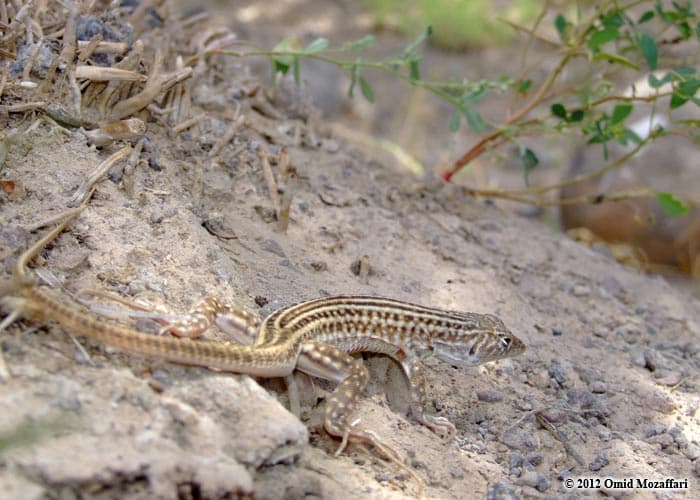
The Indian fringe-fingered lizard (Acanthodactylus cantoris) is a terrestrial species endemic to Asia, primarily found in sandy desert and shrubland habitats. It is characterized by its acutely pointed snout, keeled dorsal scales, and strong digital denticulations. This oviparous lizard burrows in the sand for protection and its young have distinctive white longitudinal lines on a blackish background.
Indian fringe-fingered lizard
The Indian fringe-fingered lizard (Acanthodactylus cantoris) is a species of lizard in the Lacertidae family, endemic to Asia. Characterized by its acutely pointed snout, keeled scales, and prominently fringed toes, this terrestrial lizard inhabits sandy desert and shrubland areas. It is known to burrow in the sand for protection and reproduces by laying eggs.

Ctenophorus fordi
The Mallee dragon (Ctenophorus fordi) is a small lizard native to the arid regions of southern Australia, characterized by its reddish-orange coloration and pale, black-bordered stripes. It inhabits shrubland and hummock grass environments, particularly in Mallee woodlands and spinifex areas, often near vegetated sand dunes. This species is primarily an ant specialist, employing a sit-and-wait strategy to ambush its prey.