
Amphisbaena alba
Amphisbaena alba, also known as the red worm lizard, is a species of amphisbaenian found across a large portion of South America. Despite its extensive range, much of its ecology remains poorly understood due to its secretive nature. This species exhibits a varied diet and possesses a unique defensive posture involving its horseshoe-shaped body and a tough, collagen-rich tail.
Key Facts
- ›Has the largest geographic range of all amphisbaenians, spanning much of South America.
- ›Feeds on a diverse diet including plant material, insects, spiders, and small vertebrates.
- ›Females can grow to over 80 cm, making them large for their species.
- ›Known to inhabit leafcutter ant nests, utilizing their refuse areas for shelter.
- ›Employs a defensive strategy of coiling into a horseshoe shape and raising both head and tail.
- ›Reproduction occurs during the dry season, with females laying a relatively large clutch of 8-16 eggs.

Red Worm Lizard, White Worm Lizard, White-Bellied Worm Lizard
South America, Eastern Venezuela, Trinidad, Amazon Basin, Northern Argentina
Body Is Snake-Like and Limbless., Females Can Reach Over 80 cm In Length., Possesses A Flexible Armor Covering the Body., Tail Is Composed of Tough Collagen Bundles.
Plant Material, Beetles, Ants, Spiders, Insect Larvae, Cockroaches, Hemipterans, Mole Crickets, Crickets, Grasshoppers, Termites, Scorpions, Pseudoscorpions, Annelids, Lizards and Their Eggs, Snakes, Mice, Other Rodents
- Secretive Habits
- Buries Itself In Leafcutter Ant Nests and Garbage Areas
- Defensive Posture Involves Coiling Into A Horseshoe Shape and Raising Head and Tail
- Epidermal Glands In the Cloacal Region Likely Used For Reproduction and Territory Marking
- Leaves Secretion Trails From Cloacal Glands
About Amphisbaena alba
Amphisbaena alba, commonly referred to as the red worm lizard, is a species of amphisbaenian with the most extensive geographic distribution among its relatives. This limbless reptile inhabits a wide range across South America, from eastern Venezuela and the island of Trinidad, through the entirety of the Amazon Basin, and extending to northern Argentina. Despite its broad reach, detailed knowledge of its ecological habits is limited due to its inherently secretive nature and subterranean lifestyle.
Physical Characteristics and Defense
Females of Amphisbaena alba can grow to be quite large for their kind, exceeding 80 centimeters in length. Their bodies are covered by a flexible armor, and their tails are reinforced with tough collagen bundles. When threatened, this species adopts a distinctive defensive posture, bending its body into a horseshoe shape and raising both its head and tail. This, combined with the robust tail, likely serves to deter predators.
Diet and Habitat
The diet of Amphisbaena alba is remarkably diverse, encompassing plant matter, small vertebrates such as lizards and rodents, and a wide array of invertebrates including beetles, ants, spiders, and scorpions. Notably, this species is known to inhabit leafcutter ant nests, often seeking refuge in their refuse areas. This behavior may serve multiple purposes, including avoiding detection by predators and potentially minimizing confrontation with the ants themselves.
Reproduction
Reproduction in Amphisbaena alba typically occurs during the dry season. Females lay a relatively large clutch of eggs, numbering between 8 and 16, which is considered a high number for amphisbaenians. Evidence suggests that these eggs may even be deposited within the living spaces or nests of leaf-cutting ants. The species exhibits minimal sexual dimorphism in terms of body measurements, likely an adaptation to their specialized burrowing existence.
Source: Wikipedia ↗
Frequently Asked Questions
What is Amphisbaena alba commonly known as?
Amphisbaena alba is commonly known as the red worm lizard. It is also less frequently referred to as the white or white-bellied worm lizard.
Where is Amphisbaena alba found geographically?
This species has a vast distribution across South America. It is found from eastern Venezuela and Trinidad, throughout the Amazon Basin, and down to northern Argentina.
What does Amphisbaena alba eat?
Amphisbaena alba has a diverse diet that includes plant material, small vertebrates like lizards and rodents, and a significant number of invertebrates such as beetles, ants, and spiders.
How does Amphisbaena alba defend itself?
When threatened, Amphisbaena alba bends its body into a horseshoe shape and raises both its head and tail. Its tail is protected by tough collagen bundles, and its body is covered by a flexible armor to resist bites.
What are the reproductive habits of Amphisbaena alba?
Reproduction takes place during the dry season. Females are known to lay a larger number of eggs (8-16) compared to other amphisbaenians, potentially due to their larger body size.
Does Amphisbaena alba live in ant nests?
Yes, Amphisbaena alba is known to bury itself in leafcutter ant nests. It often hides in the ants' garbage dump areas, which may help it avoid antagonizing the ants and provide protection from predators.
Related Lizards

Blanus cinereus
The Iberian worm lizard (Blanus cinereus) is a limbless reptile resembling a worm, characterized by its small, underdeveloped eyes and smooth scales. It inhabits a variety of Mediterranean habitats across Portugal and central and southern Spain, where it lives a subterranean life. This species relies heavily on chemosensory signaling to navigate, detect prey, and avoid predators, compensating for its near-complete inability to see.
Iberian worm lizard
The Iberian worm lizard, also known as the Mediterranean or European worm lizard, is a limbless reptile resembling a worm, found in Portugal and central and southern Spain. It possesses small, underdeveloped eyes and relies heavily on chemosensory signaling for navigation, prey detection, and predator avoidance. This fossorial species inhabits diverse Mediterranean environments, burrowing in loose soil and utilizing rocks for thermoregulation.
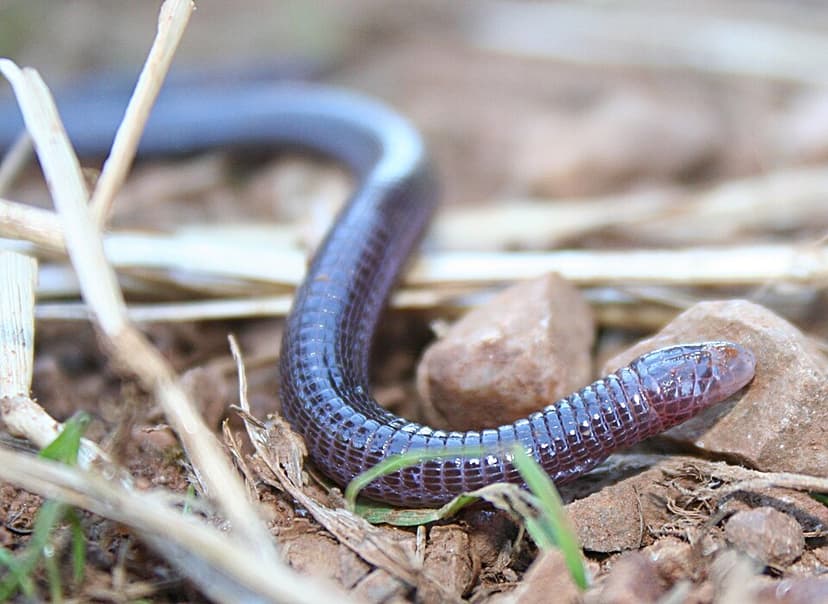
Blanidae
Blanus, commonly known as worm lizards, is a genus of amphisbaenians adapted for a subterranean lifestyle. These lizards are characterized by their long, slender bodies, reduced limbs, and powerful skulls designed for burrowing. They are found across the Mediterranean region of Europe and North Africa.