
Iberian worm lizard
The Iberian worm lizard, also known as the Mediterranean or European worm lizard, is a limbless reptile resembling a worm, found in Portugal and central and southern Spain. It possesses small, underdeveloped eyes and relies heavily on chemosensory signaling for navigation, prey detection, and predator avoidance. This fossorial species inhabits diverse Mediterranean environments, burrowing in loose soil and utilizing rocks for thermoregulation.
Key Facts
- ›Resembles a worm with a limbless, ringed body and small, underdeveloped eyes.
- ›Found in Portugal and central and southern Spain.
- ›Primarily inhabits subterranean environments within Mediterranean habitats.
- ›Relies on chemosensory signaling using its vomeronasal organ for navigation and detection.
- ›Diet consists mainly of insects and insect larvae, indicating an opportunistic feeding strategy.
- ›Adults typically measure around 150 mm (5.9 in) in total length, but can reach up to 300 mm (12 in).

Mediterranean Worm Lizard, European Worm Lizard, Cobra-Cega, Culebrilla Ciega, Colobreta Cega
Portugal, Spain
- Limbless, Ringed Body Resembling A Worm.
- Small, Underdeveloped Eyes Covered By Skin.
- Small, Smooth Scales.
- Possesses Vertebrate Characteristics: Vertebral Column, Lungs, Closed Circulatory System.
- Small, Blunt Head Adapted For Digging.
- Short Tail With Scales Matching the Body.
- Small Forked Tongue Used For Chemosensory Signaling.
- Small But Sharp Teeth.
- Coloration Can Be Fleshy-Pink, Violet, Or Brown Depending On the Region.
- Adults Typically 150 mm Total Length, Can Reach Up To 300 mm .
Insects, Insect Larvae
- Subterranean Lifestyle.
- Thermoregulator, Uses Soil Depth and Rocks For Temperature Control.
- Opportunistic Feeder With Some Prey Selection.
- Relies Heavily On Chemosensory Signaling For Navigation, Prey Detection, and Predator Avoidance.
- Exhibits Anti-Predatory Responses Including Defensive Biting and Burrowing.
- Uses Precloacal Secretions For Signaling and Navigation Within Tunnels.
- Sex Differentiation Signaling Via Pheromones.
Southern Smooth Snake, Scolopendromorph Centipede, Bedriaga's Skink
About Iberian worm lizard
The Iberian Worm Lizard
The Iberian worm lizard, scientifically known as Blanus cinereus, is a fascinating reptile often mistaken for a worm due to its limbless, ringed body. It is also referred to as the Mediterranean worm lizard or European worm lizard. This species is native to Portugal and central and southern Spain, where it leads a primarily subterranean life.
Habitat and Lifestyle
Blanus cinereus inhabits a variety of Mediterranean environments, preferring areas with loose, humus-rich soil and scattered rocks. Its subterranean nature makes population abundance difficult to ascertain, but studies indicate it can thrive at elevations between 400 and 1400 meters. These lizards are thermoregulators, skillfully using the depth of the soil and the presence of rocks to maintain their body temperature. They will move between soil depths of 0 to 10 cm and seek shelter under rocks ranging from 10 to 20 cm thick, adjusting their position to cool down or warm up as needed.
Morphology and Sensory Adaptations
Despite its worm-like appearance, the Iberian worm lizard is a vertebrate with a vertebral column, lungs, and a closed circulatory system. It possesses small, underdeveloped eyes that can only differentiate between light and dark, a common adaptation for fossorial species. To compensate for its limited vision, the species has developed a sophisticated chemosensory signaling system, with a highly sensitive vomeronasal organ used to detect chemical cues. Its head is blunt and suited for digging, and it has a small, forked tongue for sensing its surroundings.
Diet and Feeding Behavior
Studies suggest that the Iberian worm lizard is an opportunistic feeder, with its diet primarily consisting of insects and insect larvae, which are abundant in its habitat. While it generally consumes readily available prey, it exhibits some level of selectivity, instinctively hunting larger larvae and avoiding certain ant species. The species is believed to have low energy requirements and can adapt its feeding strategy based on the availability of scarce, energy-rich foods or more abundant, less energy-rich prey.
Communication and Reproduction
Chemosensory signaling plays a crucial role in the Iberian worm lizard's life, extending to predator detection and sex differentiation. They exhibit distinct responses to chemical signals from predators like snakes and centipedes, often displaying defensive behaviors. Pheromones are secreted by both males and females from precloacal glands, with specific compounds like squalene in males and tocopherol in females aiding in sex recognition. While reproduction methods are not detailed, these signaling mechanisms are vital for social interaction and finding mates in their underground environment.
Source: Wikipedia ↗
Frequently Asked Questions
What is the Iberian worm lizard commonly known as?
The Iberian worm lizard is locally known by names such as cobra-cega in Portuguese, culebrilla ciega in Spanish, and colobreta cega in Catalan, all of which translate to 'blind snake'.
Where is the Iberian worm lizard found?
This species is naturally found in Portugal and throughout most of central and southern Spain.
What kind of habitat does the Iberian worm lizard prefer?
The Iberian worm lizard is a subterranean species that thrives in a variety of Mediterranean habitats, preferring areas with high humus content and sporadic rocks. They utilize the depth of the soil and rocks for thermoregulation.
How does the Iberian worm lizard sense its environment given its poor eyesight?
Due to its underdeveloped eyes, which can only distinguish changes in light intensity, the Iberian worm lizard relies heavily on chemosensory signaling. It uses its sensitive vomeronasal organ and tongue flicks to detect prey, predators, and navigate its environment.
What does the Iberian worm lizard eat?
Its diet primarily consists of insects and insect larvae, making it an opportunistic feeder. While it generally consumes the most abundant food sources, it shows some prey distinction, avoiding certain ant species and instinctively hunting larger larvae.
How large do Iberian worm lizards get?
Adult Iberian worm lizards typically reach a total length of around 150 mm (5.9 inches), although they can grow up to 300 mm (12 inches) in length.
Are there different types of Iberian worm lizards?
Recent genetic studies suggest significant divergence between populations, leading some researchers to propose dividing the Iberian worm lizard into two distinct species. These proposed clades are differentiated genetically, with one found centrally on the peninsula and another on the southwestern side.
Related Lizards

Blanus cinereus
The Iberian worm lizard (Blanus cinereus) is a limbless reptile resembling a worm, characterized by its small, underdeveloped eyes and smooth scales. It inhabits a variety of Mediterranean habitats across Portugal and central and southern Spain, where it lives a subterranean life. This species relies heavily on chemosensory signaling to navigate, detect prey, and avoid predators, compensating for its near-complete inability to see.
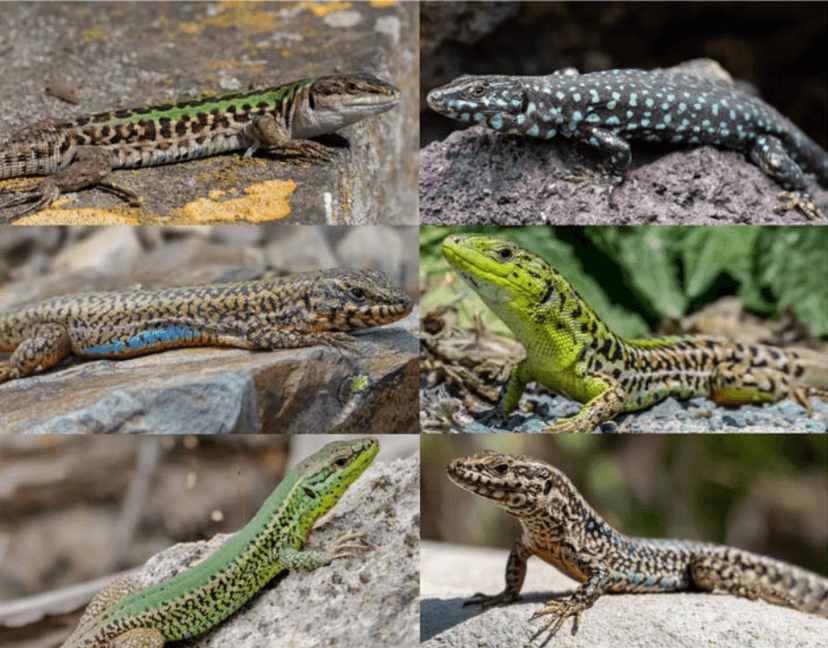
Podarcis
Podarcis, commonly known as wall lizards, are a genus of reptiles belonging to the Lacertidae family. Historically grouped with the genus Lacerta, they are distinguished by specific cranial and hemipenial structures, as well as caudal vertebral processes. These lizards are primarily found across Europe and North Africa, with a significant concentration in the Mediterranean region, and are known for their ecological similarities to Lacerta species.

Cyprus rock agama
The Cyprus rock agama is a species of agamid lizard endemic to the island of Cyprus. It inhabits a variety of rocky environments, from arid to Mediterranean habitats, and has adapted well to human presence in towns and agricultural areas. This diurnal lizard is primarily insectivorous but also consumes small vertebrates and fruits.