
Mole skink
The mole skink (Plestiodon egregius) is a small, cylindrical lizard found in the Southeastern United States, known for its shiny, brownish appearance and tendency to burrow. Juveniles often sport a distinctive blue tail, which may turn pinkish in adults or when regenerated. This species is of conservation concern, particularly certain subspecies, due to habitat loss.
Key Facts
- ›Endemic to the Southeastern United States.
- ›Juveniles typically have a blue tail, which can change color with age or regeneration.
- ›Prefers sandhill and scrub habitats, often burrowing underground.
- ›Feeds primarily on insects like cockroaches, spiders, and crickets.
- ›Some subspecies, like the bluetail mole skink, are federally protected.
- ›Threatened by habitat destruction and over-collection.

Mole Skink
Southeastern United States, Florida, Florida Keys, Cedar Key, Central Florida, Southern Alabama, Georgia
- Small, Shiny, Cylindrical Lizard.
- Brownish Coloration.
- Juveniles Usually Have A Blue Tail, Making Up Slightly More Than Half of the Total Length.
- Regenerated Tails and Tails of Older Individuals Are Typically Pinkish.
- Legs Are Somewhat Reduced In Size.
- Males Develop A Colorful Orange Pattern On Their Sides During the Breeding Season.
Cockroaches, Spiders, Crickets
- Tend To Be Buried Underground.
- Bask In the Upper Layers of Southeastern Pocket Gopher Mounds.
- Hunt On the Surface .
- When Threatened, Plays Presents Its Tail and If Refused, Plays Dead .
Habitat Destruction, Residential Development, Commercial Development, Agricultural Development, Over-Collection By Herpetological Enthusiasts
About Mole skink
Mole Skink (Plestiodon egregius)
The mole skink, scientifically known as Plestiodon egregius, is a small lizard species native to the Southeastern United States. Characterized by its shiny, cylindrical body and brownish hue, this species is notable for its fossorial habits, often burying itself in sandy soils.
Key Characteristics and Habitat
Mole skinks are typically found in sandhill and scrub environments. They exhibit a unique behavior of basking near or within the upper layers of Southeastern pocket gopher mounds. A distinctive feature, particularly in juveniles, is a blue tail which can comprise over half of their total body length; this tail may turn pinkish in adults or when regenerated. Adult bluetail mole skinks reach lengths between 9 to 15 cm (3.5 to 6 inches). During the breeding season, males develop striking orange patterns on their sides.
Diet and Behavior
The diet of the mole skink primarily consists of invertebrates, including cockroaches, spiders, and crickets. While some subspecies, like the bluetail mole skink, hunt on the surface, the species as a whole is adapted to burrowing. When faced with threats, the bluetail mole skink has been observed to present its tail and, if necessary, feign death.
Subspecies and Conservation
The species is divided into five subspecies, some of which face significant conservation challenges. The Florida Keys mole skink (P. e. egregius), Cedar Key mole skink (P. e. insularis), and the bluetail mole skink (P. e. lividus) are protected. The bluetail mole skink, in particular, has been classified as a federally-threatened species since 1987. The primary threats to these subspecies are habitat destruction driven by extensive development and over-collection. In contrast, the Peninsula mole skink (P. e. onocrepis) and Northern mole skink (P. e. similis) are considered more common, though they remain elusive.
Reproduction
Mole skinks attain sexual maturity after approximately one year. Mating occurs during the winter months, followed by egg-laying in the spring. Females deposit three to seven eggs in shallow nest cavities, typically less than 30 cm below the surface. The incubation period lasts between 31 and 51 days, during which the female actively tends to the nest.
Source: Wikipedia ↗
Frequently Asked Questions
What is the scientific name for the mole skink?
The scientific name for the mole skink is Plestiodon egregius. The species has been reassigned to the genus Plestiodon from Eumeces.
Where are mole skinks found?
Mole skinks are native to the Southeastern United States. Specific subspecies have more localized distributions within Florida, including the Florida Keys and Cedar Key.
What do mole skinks eat?
Mole skinks primarily feed on a diet of insects. This includes common prey items such as cockroaches, spiders, and crickets.
What are the main threats to mole skinks?
The primary threats to mole skinks are habitat destruction, largely due to residential, commercial, and agricultural development. Over-collection by enthusiasts also poses a significant risk to their populations.
Are all mole skink subspecies endangered?
No, not all subspecies are endangered. While the Florida Keys mole skink, Cedar Key mole skink, and bluetail mole skink are protected, the Peninsula mole skink and Northern mole skink are considered rather common, though they are elusive.
What is unique about the bluetail mole skink's tail?
Juveniles of the bluetail mole skink typically possess a vibrant blue tail, which constitutes more than half of their total body length. This tail can regenerate and may appear pinkish in older individuals or after regeneration.
Related Lizards
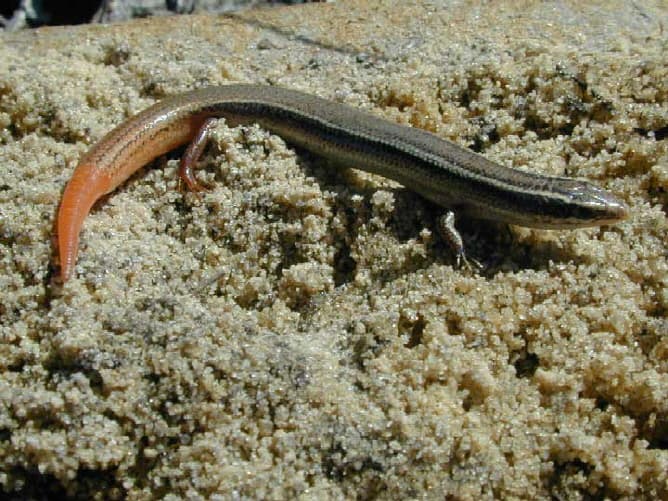
Plestiodon egregius
The mole skink (Plestiodon egregius) is a small, shiny lizard found in the Southeastern United States, known for its ability to burrow and its distinctive blue tail in juveniles. It inhabits sandy environments like sandhills and scrub, often burying itself in the upper layers of pocket gopher mounds. Several subspecies exist, with some facing conservation concerns due to habitat loss.
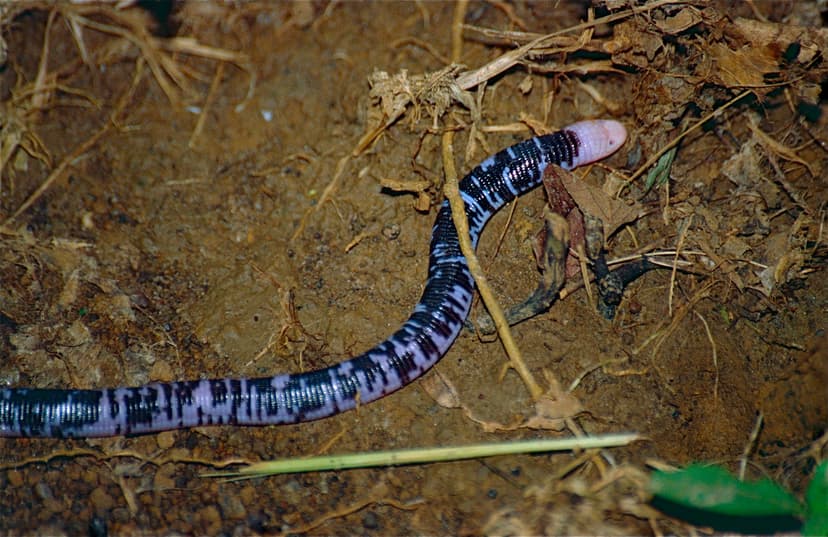
Amphisbaena fuliginosa
Amphisbaena fuliginosa, commonly known as the black-and-white worm lizard, is a fossorial species distinguished by its striking white and black mosaic pattern. It inhabits Amazonian forest areas in northern South America and is a burrowing, nocturnal predator of invertebrates and occasionally small vertebrates. This oviparous species plays a role in Yanomami mythology, where it is associated with warriors and the underworld.

Lacertilia
Lizards are a diverse group of reptiles, encompassing over 7,000 species found on every continent except Antarctica. They exhibit a wide range of sizes, from tiny chameleons to the massive Komodo dragon, and possess characteristics like scales, four limbs (though some are legless), and long tails. Lizards inhabit nearly every environment, from deserts to rainforests, and play crucial roles as both predators and prey within their ecosystems.