
Amphisbaena kingii
King's worm lizard (Amphisbaena kingii) is a species of amphisbaenian native to South America, specifically found in Argentina, Bolivia, Brazil, and Uruguay. It prefers savanna and grassland habitats and is characterized by its purplish-brown dorsal coloration and whitish underside, reaching an average snout-to-vent length of 21 cm.
Key Facts
- ›Endemic to South America, found in Argentina, Bolivia, Brazil, and Uruguay.
- ›Prefers savanna and grassland habitats.
- ›Dorsally purplish-brown and ventrally whitish.
- ›Can reach a snout-to-vent length of up to 21 cm.
- ›Reproduces by laying eggs (oviparous).

King's Worm Lizard
Argentina, Bolivia, Brazil, Uruguay
Dorsally Purplish-Brown., Ventrally Whitish., Snout-To-Vent Length Up To 21 cm ., Tail Approximately 2 cm Long.
About Amphisbaena kingii
King's Worm Lizard (Amphisbaena kingii)
King's worm lizard, scientifically known as Amphisbaena kingii, is a species of amphisbaenian native to the South American continent. It is a legless reptile belonging to the family Amphisbaenidae and is specifically found within the countries of Argentina, Bolivia, Brazil, and Uruguay.
Habitat and Distribution
The preferred natural habitats for A. kingii are savannas and grasslands. This species is endemic to South America, with its range encompassing the aforementioned nations.
Physical Characteristics
Amphisbaena kingii exhibits distinct coloration, being purplish-brown dorsally and whitish ventrally. Adult individuals can reach a snout-to-vent length of up to 21 centimeters (approximately 8.3 inches), complemented by a tail measuring about 2 centimeters (0.79 inches) in length.
Reproduction
This species is oviparous, meaning it reproduces by laying eggs. Further details regarding its reproductive cycle, such as clutch size or incubation periods, are not extensively documented in available records.
Taxonomy and Etymology
The specific name, kingii, was given in honor of Australian marine surveyor Philip Parker King. The species has also been referred to under different scientific combinations throughout its taxonomic history, including Anops kingii and Anopsibæna kingii.
Source: Wikipedia ↗
Frequently Asked Questions
What is Amphisbaena kingii?
Amphisbaena kingii, commonly known as King's worm lizard, is a species of amphisbaenian, which are legless reptiles. It belongs to the family Amphisbaenidae and is native to South America.
Where can King's worm lizard be found?
King's worm lizard has a geographic range that includes Argentina, Bolivia, Brazil, and Uruguay. These regions provide its preferred natural habitats.
What does Amphisbaena kingii look like?
This species typically displays a purplish-brown coloration on its dorsal side, contrasting with a whitish ventral side. Adult individuals can achieve a snout-to-vent length of approximately 21 cm, with a short tail of about 2 cm.
What kind of environment does Amphisbaena kingii inhabit?
The preferred natural habitats for Amphisbaena kingii are savannas and grasslands. These open environments are where the species is most commonly found.
How does Amphisbaena kingii reproduce?
Amphisbaena kingii is oviparous, meaning it reproduces by laying eggs. This is a common reproductive strategy among many reptile species.
Related Lizards
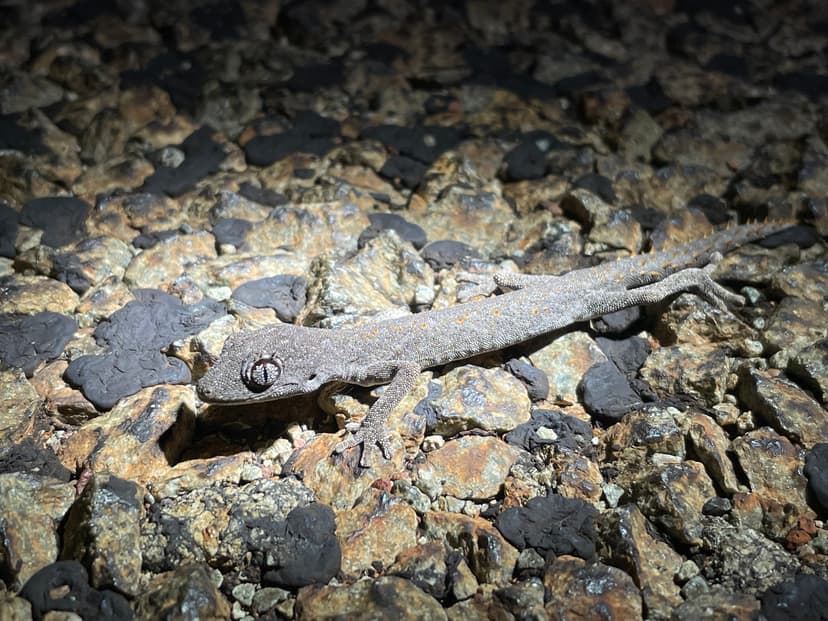
Diplodactylus wellingtonae
The Western Shield spiny-tailed gecko, scientifically known as Strophurus wellingtonae, is a species of lizard endemic to Australia. It is characterized by its large size within its genus and inhabits grasslands and savannas in western Western Australia. This gecko is oviparous, laying eggs as its primary method of reproduction.

Latastia johnstonii
Latastia johnstonii, also known as Johnston's long-tailed lizard, is a species found in East Africa, inhabiting grasslands and savannas. Adults typically reach a total length of 15-20 cm, with juveniles exhibiting a distinctive red tail that fades with age. This diurnal and fast-moving lizard primarily feeds on invertebrates.

Lygodactylus arnoulti
Pasteur's dwarf gecko (Lygodactylus arnoulti) is a species of gecko native to Madagascar. It is characterized by its preference for high-altitude grasslands and savannas. The species is oviparous, meaning it reproduces by laying eggs.