
Anaimalai spiny lizard (Salea anamallayana)
Salea anamallayana·Agamidae
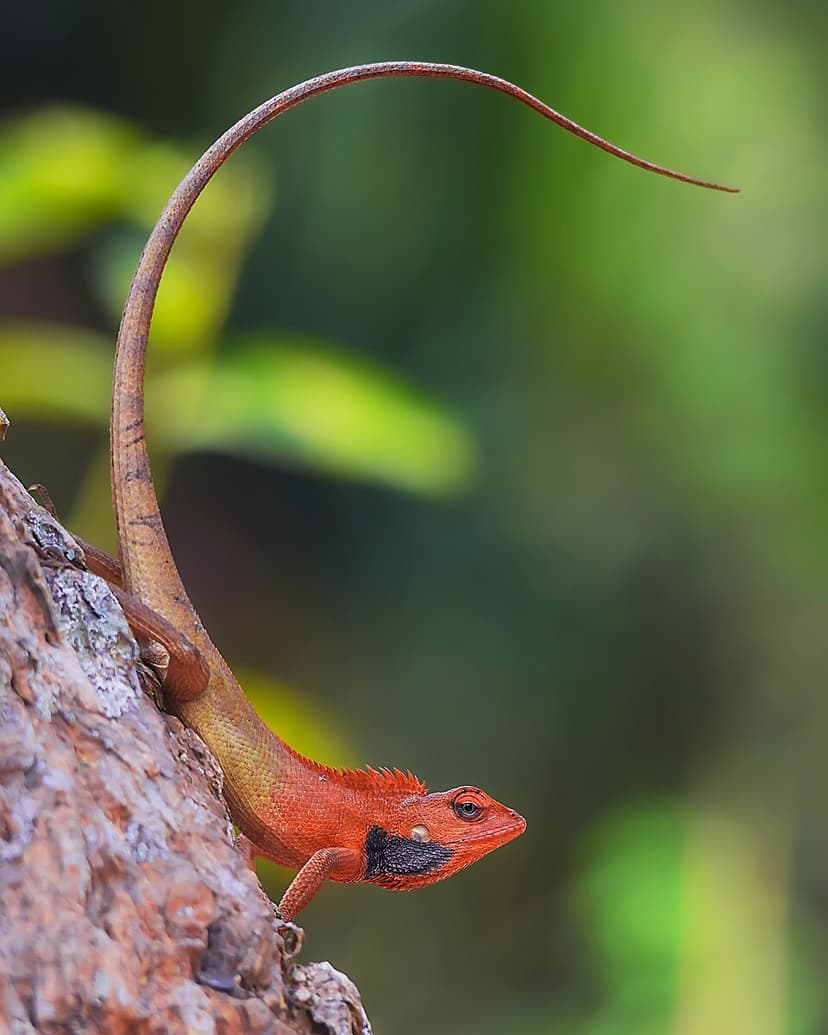
The Anaimalai spiny lizard (Salea anamallayana) is a species of agamid lizard found in the southern Western Ghats of India, specifically on the Anaimalai Hills and Meghamalai. It inhabits moist montane forests, tea plantations, and gardens at high altitudes, characterized by its long, pointed snout, distinctive head scales, and a crest of spines on its head and tail.
Key Facts
- ›Endemic to the southern Western Ghats of India.
- ›Found on the Anaimalai Hills and Meghamalai.
- ›Inhabits moist montane forests, tea plantations, and gardens.
- ›Adults measure approximately 4.3 inches from snout to vent.
- ›Possesses a crest of large, lance-like spines on the head and anterior tail.
- ›Characterized by a long, pointed snout and distinct head scale patterns.

Anaimalais Salea
India
- Snout Is Long and Pointed, Approximately Twice the Diameter of the Eye.
- Ear Opening Is About 1.6 Times the Diameter of the Eye.
- Scales On Top of the Head Are Large; Curved Series of Large Scales Border the Region Above the Eye.
- Enlarged Tubercle Present Behind the Edge of the Brow Ridge and A Few On the Back of the Head.
- A Row of 3-4 Large Scales Extends From the Eye To Above the Ear Opening.
- Chin Scales Are Larger Than Ventral Scales and Can Be Smooth Or Keeled.
- Well-Marked Curved Fold On Each Side of the Neck, In Front of the Shoulders.
- Crest On the Top of the Back of the Head Is Made of Large, Unequal, Lance-Like Spines.
- Scales On the Underside Are Imbricate and Keeled, Ending In A Spine.
- Hind Legs Are Long, Reaching the Nick When Held Along the Body.
- Tail Is Compressed With A Crest On the Anterior Part.
- Scales On the Underside of the Tail Are Unequal, Keeled, and Pale Olive.
- Usually Four Broad Angular Bands On the Back, Which Are Dark Brown.
- Head To Lip Region Is Dark Brown With Light Spots.
- Adult Length From Snout To Vent Is About 4.3 Inches.
About Anaimalai spiny lizard (Salea anamallayana)
The Anaimalai spiny lizard, scientifically known as Salea anamallayana, is a distinctive species of agamid lizard native to the southern Western Ghats of India. Its range is primarily confined to the Anaimalai Hills and Meghamalai regions, situated in the states of Kerala and Tamil Nadu. This lizard is typically found at significant elevations, between 1,700 and 2,300 meters above sea level.
Habitat and Distribution
This species thrives in moist montane forest environments. It is commonly observed in shola forests, a unique type of high-altitude tropical montane forest found in the Western Ghats, as well as in cultivated areas such as tea plantations. The Anaimalai spiny lizard also adapts to living among bushes, hedges, and gardens, indicating a degree of habitat flexibility within its specialized montane ecosystem.
Physical Characteristics
The Anaimalai spiny lizard possesses several notable physical traits. Adults typically measure around 4.3 inches from snout to vent. Its head is characterized by a long, pointed snout that is roughly twice the diameter of its eye. The scales on its head are large, with a specific arrangement that includes a curved series of large scales bordering the region above the eye and an enlarged tubercle behind the brow ridge. A prominent feature is the crest of large, unequal, lance-like spines adorning the back of its head and extending along the anterior part of its tail. The body scales are imbricate and keeled, terminating in a spine, and the underside scales are similarly structured. Broad, dark brown angular bands are usually present on its back, and the head-to-lip area is dark brown with light spots. Its hind legs are notably long.
Source: Wikipedia ↗
Frequently Asked Questions
Where is the Anaimalai spiny lizard found?
The Anaimalai spiny lizard is endemic to the southern Western Ghats of India. It is specifically found on the Anaimalai Hills and Meghamalai, areas located within the states of Kerala and Tamil Nadu.
What kind of habitat does the Anaimalai spiny lizard prefer?
This lizard thrives in moist montane forests, often found in shola forests and tea plantations at higher altitudes. It can also be observed on bushes, hedges, and within gardens.
What are the physical characteristics of the Anaimalai spiny lizard?
Adults are about 4.3 inches long from snout to vent. Key features include a long, pointed snout, large scales on the head with a series of enlarged tubercles, and a notable crest of unequal, lance-like spines on the back of the head and the anterior part of the tail.
What is the size of the Anaimalai spiny lizard?
The Anaimalai spiny lizard reaches an adult size of approximately 4.3 inches from snout to vent. The article text does not provide details on its total length.
Does the Anaimalai spiny lizard have any distinctive features?
Yes, it is distinguished by a prominent crest of large, lance-like spines on the back of its head and the anterior portion of its tail. It also has a long, pointed snout and a unique arrangement of scales on its head.
Related Lizards

Black-lipped forest lizard (Calotes nigrilabris)
The Black-lipped forest lizard (Calotes nigrilabris), also known as the black-cheek lizard, is an agamid species found only in Sri Lanka. It is easily distinguished from similar species by a black bar on its mouth, unlike the white or orange bars seen in others. This largely arboreal lizard inhabits tree trunks, hedges, and shrubs in submontane and montane regions, where it actively hunts insects and worms during the day.
Calotes versicolor
The Oriental garden lizard, scientifically known as Calotes versicolor, is a widely distributed agamid lizard recognized for its striking color-changing abilities, particularly in males during the breeding season. Primarily an insectivore, it inhabits a variety of environments across Indo-Malaya and has been introduced to other regions. Its distinctive features include a dorsal crest, a bright red throat in breeding males, and the ability to move its eyes independently.

Chalcides striatus
The western three-toed skink (Chalcides striatus) is a lizard found in the Iberian Peninsula, southern France, and northwestern Italy. It superficially resembles a snake due to its tiny limbs, but possesses smooth, glossy skin with a silvery or bronze coloration marked by longitudinal dark lines. This secretive species inhabits damp, sunny areas with dense low vegetation and feeds on invertebrates.