
Andaman day gecko
The Andaman day gecko is a small, slender lizard endemic to the Andaman Islands of India, recently introduced to the Nicobar Islands. It is characterized by its bright green coloration, red dots and stripes on its back, and a reddish-brown stripe from its nostrils to its ears. This generalist species thrives in domestic gardens and on various plants, demonstrating a rare benefit from human-induced environmental changes.
Key Facts
- ›Endemic to the Andaman Islands, India, with recent introductions to the Nicobar Islands.
- ›Distinctive bright green body with red dorsal markings and a reddish-brown stripe on the snout.
- ›Males possess a bluish or turquoise tail.
- ›Inhabits domestic gardens, coconut palms, screw pines, banana trees, and sisal plants.
- ›Known for being shy but extremely aggressive towards its own species.
- ›Typically lays two eggs in a protected, elevated location.
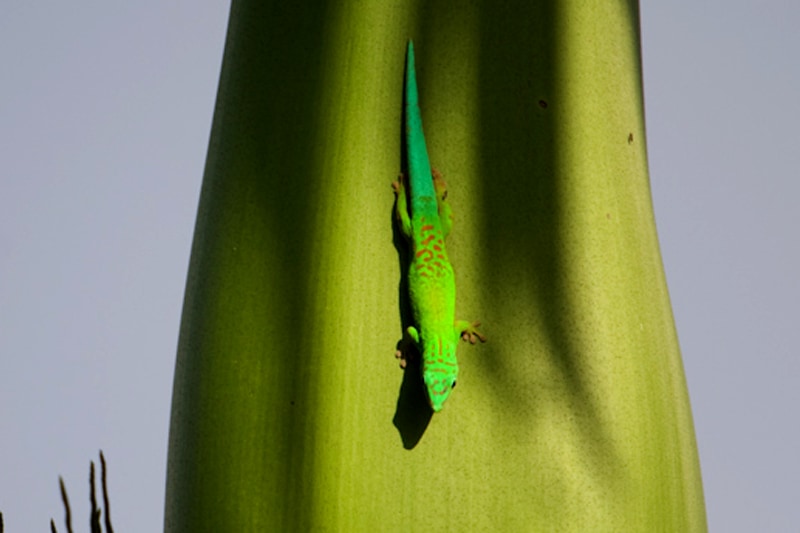
Andaman Islands Day Gecko
Andaman Islands, India, Nicobar Islands
- Small, Slender Lizard
- Bright Green Body
- Red Dots and Stripes On the Back
- Males Have A Bluish Or Turquoise Colored Tail
- Reddish-Brown Stripe Extending From Nostrils To Ear On Both Sides of the Snout
- Undersurface of the Body Is Bright Yellow Or Off-White
Insects
- Shy
- Extremely Aggressive Toward Other Members of Its Species
- Susceptibility To Parasites and Diseases Due To Dense Populations
About Andaman day gecko
The Andaman day gecko (Phelsuma andamanensis), also known as the Andaman Islands day gecko, is a small, slender lizard native to the Andaman Islands of India. This species has also recently been introduced to the Nicobar Islands. It is characterized by its vibrant bright green coloration, adorned with red dots and stripes on its back, and a distinctive reddish-brown stripe running from its nostrils to its ears. Males can be identified by their bluish or turquoise tails, while the underside of the body is typically bright yellow or off-white.
Habitat and Behavior
This generalist species thrives in lowland environments, commonly found in domestic gardens and on various plants such as coconut palms, screw pines, and banana trees. It has demonstrated a remarkable ability to benefit from anthropogenic disturbance, leading to significant population expansion, though this density can make individuals more susceptible to diseases and parasites. Behaviorally, Andaman day geckos are known to be shy but exhibit extreme aggression towards conspecifics.
Reproduction
Reproduction in the Andaman day gecko involves the female laying typically two eggs in a secure, elevated location. These geckos are noted for their fertility; observations have recorded a female laying up to 14 pairs of eggs over an 18-month period. The species' phylogenetic position suggests it is the most basal extant member of the genus Phelsuma, having diverged millions of years ago.
Source: Wikipedia ↗
Frequently Asked Questions
What is the Andaman day gecko's scientific name?
The scientific name for the Andaman day gecko is Phelsuma andamanensis. It is also sometimes referred to as the Andaman Islands day gecko.
Where is the Andaman day gecko found?
The Andaman day gecko is native to the Andaman Islands in India. It has also been recently introduced to the Nicobar Islands, likely due to human activity.
What does the Andaman day gecko look like?
This is a small, slender lizard with a bright green body that features red dots and stripes on its back. Males have a distinctive bluish or turquoise tail, and a reddish-brown stripe runs from the nostrils to the ear on both sides of the snout. Its underside is bright yellow or off-white.
What is the habitat of the Andaman day gecko?
The Andaman day gecko prefers lowlands and is commonly found in domestic gardens. It inhabits coconut palms, screw pines, banana trees, and sisal plants, and has also been observed on local huts.
What is the diet of the Andaman day gecko?
The Andaman day gecko primarily feeds on insects. Its generalist lifestyle allows it to thrive in various garden environments.
How does the Andaman day gecko behave?
These geckos are described as shy but exhibit extreme aggression towards other members of their own species. This territorial behavior is a notable aspect of their social interactions.
How do Andaman day geckos reproduce?
Female Andaman day geckos typically lay two eggs at a time, choosing a protected and elevated spot for nesting. They are known for their fertility, with one observation noting 14 pairs of eggs laid by a single female over 18 months.
Related Lizards
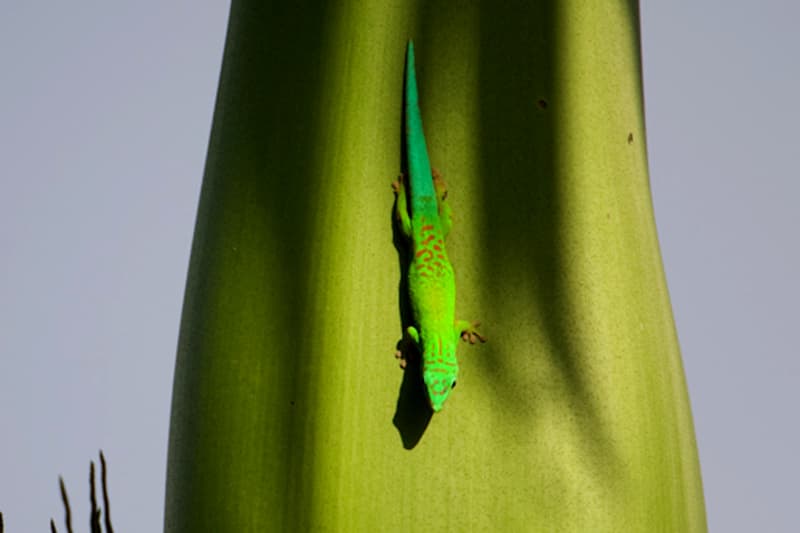
Phelsuma andamanense
The Andaman day gecko (Phelsuma andamanensis) is a small, slender lizard endemic to the Andaman Islands of India, with a recent introduction to the Nicobar Islands. It is characterized by its bright green coloration, often adorned with red dots and stripes, and its generalist habitat preference, thriving in domestic gardens and on various plants. This species is known for its shy yet aggressive behavior towards its own kind.
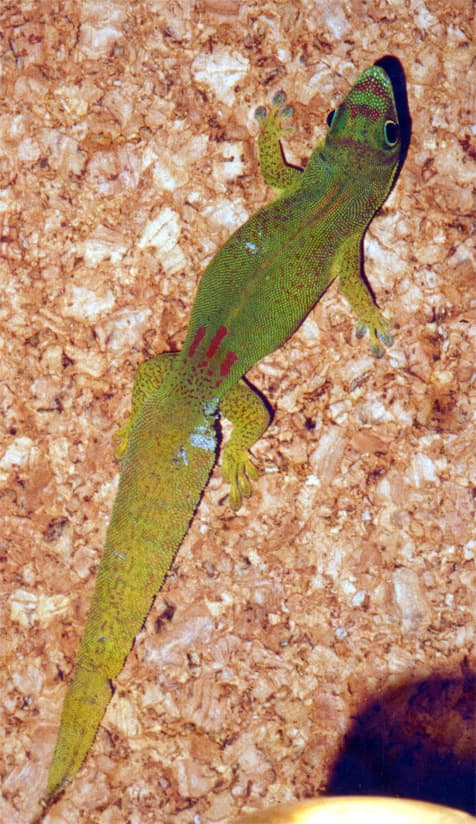
Phelsuma serraticauda
The flat-tailed day gecko (Phelsuma serraticauda) is a diurnal lizard native to the rainforests of eastern Madagascar. This species is characterized by its dark green or yellowish-green coloration and a distinctive broad, flattened tail with serrated edges. It faces endangerment primarily due to illegal collection for the international pet trade.

Chamaeleo laevigatus
Chamaeleo laevigatus, also known as the smooth chameleon, is a slender, bluish-green lizard characterized by its small scales. Native to Sub-Saharan Africa, it inhabits the lowlands of Central and East Africa, preferring arboreal savanna environments, particularly near watercourses.