
Chamaeleo laevigatus
Chamaeleo laevigatus·Chamaeleonidae
Chamaeleo laevigatus, also known as the smooth chameleon, is a slender, bluish-green lizard characterized by its small scales. Native to Sub-Saharan Africa, it inhabits the lowlands of Central and East Africa, preferring arboreal savanna environments, particularly near watercourses.
Key Facts
- ›Native to Sub-Saharan Africa.
- ›Bluish-green coloration with small scales.
- ›Slender body, similar in appearance to Chamaeleo senegalensis.
- ›Primarily arboreal savanna dweller.
- ›Found in lowlands across Central and East Africa.

Smooth Chameleon
Burundi, Rwanda, Kenya, Sudan, South Sudan, Uganda, Tanzania, Democratic Republic of the Congo, Central African Republic, Zambia, Ethiopia, Cameroon
Arboreal Savanna, Lowlands
- Bluish-Green Coloration.
- Possesses Small Scales.
- Body Is Very Slender.
- Similar In Appearance To Chamaeleo Senegalensis.
About Chamaeleo laevigatus
The smooth chameleon, scientifically known as Chamaeleo laevigatus, is a species of chameleon native to Sub-Saharan Africa. It is distinguished by its bluish-green coloration and small scales, with a notably slender body that bears resemblance to Chamaeleo senegalensis.
Distribution and Habitat
Chamaeleo laevigatus is widely distributed across the lowlands of Central and East Africa. Its range includes countries such as Burundi, Rwanda, Kenya, Sudan, South Sudan, Uganda, Tanzania, the Democratic Republic of the Congo, Central African Republic, Zambia, Ethiopia, and Cameroon. While found in these regions, there can be some uncertainty regarding specific records, particularly in Cameroon and the Central African Republic, where morphological similarities with Chamaeleo senegalensis may lead to identification challenges. The preferred habitat for this species is the arboreal savanna, and it is often observed in trees that grow along watercourses.
Source: Wikipedia ↗
Frequently Asked Questions
What does the smooth chameleon look like?
The smooth chameleon (Chamaeleo laevigatus) is characterized by its bluish-green coloration and small scales. It possesses a very slender body, making it visually similar to Chamaeleo senegalensis.
Where is the smooth chameleon found?
This species is widely distributed in the lowlands of Central and East Africa. Its recorded locations include Burundi, Rwanda, Kenya, Sudan, South Sudan, Uganda, Tanzania, the Democratic Republic of the Congo, Central African Republic, Zambia, Ethiopia, and Cameroon.
What kind of habitat does Chamaeleo laevigatus prefer?
Chamaeleo laevigatus is an arboreal species that typically inhabits savanna environments. It is often observed in trees situated along watercourses.
Is the smooth chameleon similar to other chameleon species?
Yes, the smooth chameleon is noted to be similar in appearance to Chamaeleo senegalensis. There can be uncertainty in identifying specimens in certain regions due to this morphological similarity.
Related Lizards
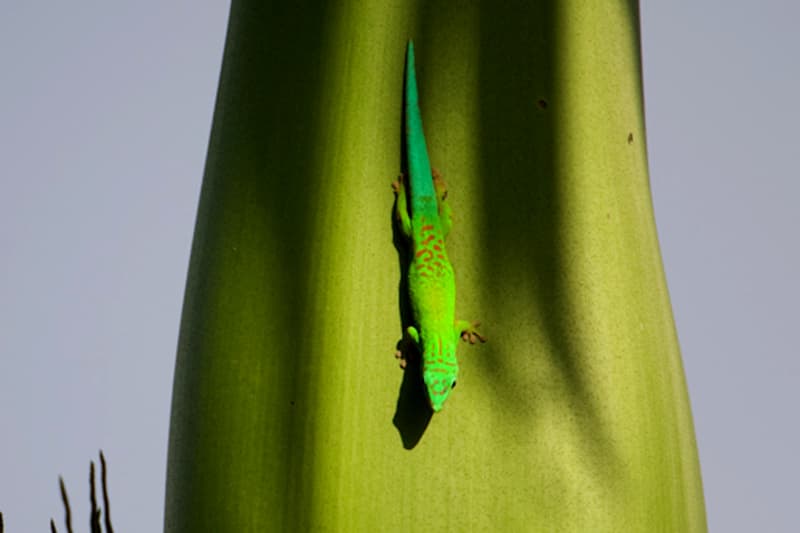
Andaman day gecko
The Andaman day gecko is a small, slender lizard endemic to the Andaman Islands of India, recently introduced to the Nicobar Islands. It is characterized by its bright green coloration, red dots and stripes on its back, and a reddish-brown stripe from its nostrils to its ears. This generalist species thrives in domestic gardens and on various plants, demonstrating a rare benefit from human-induced environmental changes.
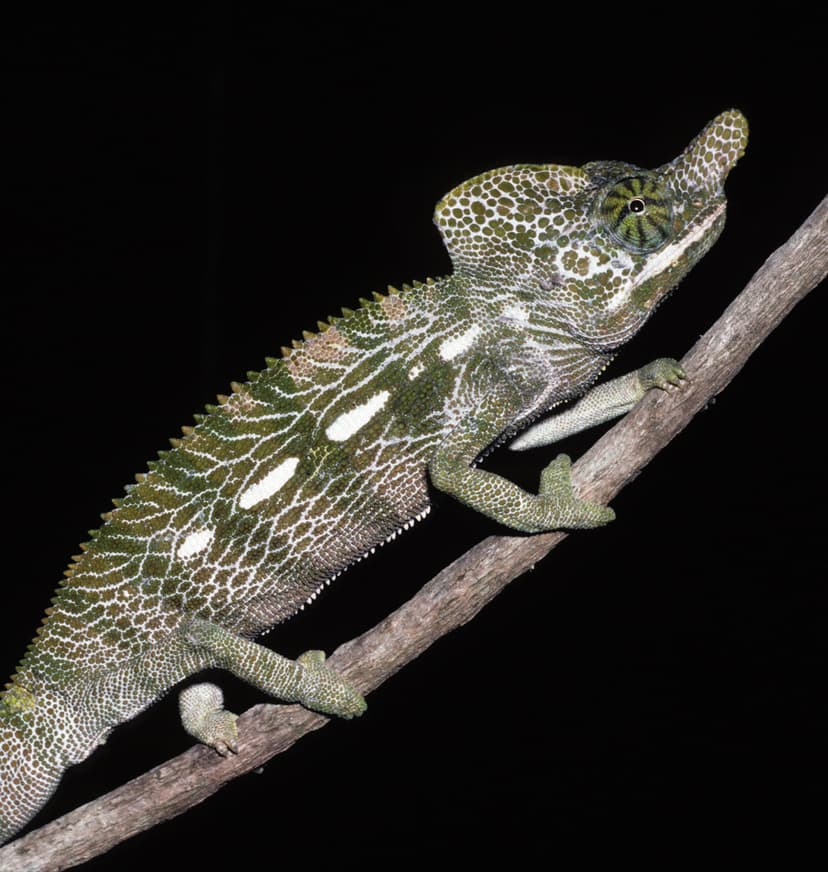
Furcifer labordi
Labord's chameleon (Furcifer labordi) is a chameleon species endemic to the dry and deciduous forests of western Madagascar. This species is notable for its exceptionally short, often one-year life cycle, with adults typically dying after breeding, making it one of the shortest-lived tetrapod vertebrates.
Phelsuma andamanense
The Andaman day gecko (Phelsuma andamanensis) is a small, slender lizard endemic to the Andaman Islands of India, with a recent introduction to the Nicobar Islands. It is characterized by its bright green coloration, often adorned with red dots and stripes, and its generalist habitat preference, thriving in domestic gardens and on various plants. This species is known for its shy yet aggressive behavior towards its own kind.