
Anolis cristatellus
Anolis cristatellus, commonly known as the crested anole or common Puerto Rican anole, is a small to moderately-sized lizard native to Puerto Rico and the Virgin Islands. Males are distinctive for their prominent caudal crest and colorful dewlap, used in dominance displays and mating rituals. This adaptable species thrives in various habitats, including urban environments, and is known for its ability to change color.
Key Facts
- ›Males possess a prominent, erect caudal crest and a colorful dewlap.
- ›Native to Puerto Rico and the U.S. and British Virgin Islands, with introduced populations elsewhere.
- ›Commonly found in urban areas, on tree trunks, fences, and building walls.
- ›Can change color from light gray to dark brown or black in response to emotional state.
- ›Reproduction is oviparous (egg-laying).
- ›Known locally as lagartijo común.

Crested Anole, Common Puerto Rican Anole, Puerto Rican Crested Anole, Lagartijo ComúN, Common Anole, Lagartija Crestada
Puerto Rico, U.S. Virgin Islands, British Virgin Islands, Costa Rica, Trinidad, Dominican Republic, Dominica
Urban Areas, Open Fields, Rainforest, Tree Trunks, Fences, Building Walls, Disturbed Areas
- Small To Moderately-Sized Species.
- Stocky, Muscular, and Aggressive Compared To Some Other Anoles.
- Males Have A Prominent, Erect Caudal Crest Running Down the Top of the Tail, Supported By Bony Vertebral Extensions.
- Tail Is Compressed In Cross-Section.
- Coloration: Bronze To Greenish-Grey Head and Body With Faint Brownish Spots; Greenish-Yellow Belly; Whitish Throat.
- Iris Is Dark Brown.
- Male Dewlap Is Mustard Or Greenish-Yellow With A Burnt-Orange, Reddish-Orange, Or Reddish Marginal Band.
- Females Have A Well-Developed But Smaller Dewlap and A Low Caudal Crest.
- Juveniles Are Transversely Banded In Brown With Purplish-Brown Dots On the Throat and Crotch, Often With A Light Mid-Dorsal Stripe.
- Can Change Color From Light Gray To Reddish-Brown and Dark Black.
Blindsnakes, Other Anoles
- Diurnal Activity.
- Exhibit 'Push-Up' Displays and Dewlap Inflation To Establish Dominance, Attract Mates, Or Intimidate Rivals.
- Males May Aggressively Defend Territories.
- Can Autotomize Their Tails As A Defense Mechanism Against Predators.
- Regrown Tails Lack Bony Vertebrae and Are Supported By Cartilage.
- Consume Their Shed Skins, Possibly For Nutrient Conservation.
- Can Make Chirping Sounds.
- Spend Most of Their Time On the Lower Parts of Tree Trunks .
- Venture To the Ground To Forage and Lay Eggs.
Anolis Cuvieri, Mongoose, Margarops Fuscatus, Buteo Jamaicensis, Falco Sparverius, Todus Mexicanus
- Competition With Introduced Populations On Dominica, Potentially Supplanting Native A. Oculatus.
About Anolis cristatellus
Anolis cristatellus, commonly known as the crested anole or the common Puerto Rican anole, is a small to moderately-sized lizard native to Puerto Rico and the U.S. and British Virgin Islands. This adaptable species is characterized by its ability to thrive in a variety of habitats, including urban environments, where it can frequently be observed on tree trunks, fences, and the walls of buildings.
Key Characteristics
Male Anolis cristatellus are readily identifiable by their prominent, permanently erect caudal crest, a distinctive fin-like structure running along the top of their tail. They also possess a colorful dewlap, a throat flap that they inflate to display dominance, attract mates, or intimidate rivals. While females also have a crest and dewlap, these features are typically smaller than those of the males. The species exhibits sexual dimorphism, with males generally being larger and more ornate. Anolis cristatellus is also known for its ability to change color, shifting from light gray to dark brown or black in response to its emotional state, a trait that has led some to mistakenly refer to them as chameleons, though they are not related.
Habitat and Distribution
This anole is found in nearly all habitats across Puerto Rico and the Virgin Islands, ranging from open fields to rainforests, though it generally decreases in abundance at higher elevations. Introduced populations have established themselves in other Caribbean locations, including Costa Rica, Trinidad, and parts of Hispaniola and Dominica. In these introduced ranges, they often show a strong preference for urban and disturbed areas. The species is classified as a 'ground-trunk anole,' meaning it spends a significant portion of its time on the lower sections of tree trunks but will descend to the ground to forage and lay eggs.
Behavior and Diet
Anolis cristatellus is oviparous, reproducing by laying eggs. As they grow, they shed their skin and often consume the shed skin, a behavior thought to conserve nutrients. Defensively, they can autotomize, or break off, their tails to escape predators; these regrown tails are supported by cartilage rather than bone. While not particularly vocal, they can produce chirping sounds. Their diet consists of various prey items, and they have been documented consuming relatively large prey such as blindsnakes and juvenile anoles.
Conservation and Human Interaction
Anolis cristatellus is considered an extremely common species in its native range and may have become even more prevalent as human development has created more of its preferred habitats. While generally not considered invasive, its introduction to islands like Dominica has raised concerns about its potential to outcompete and displace native anole species. They are also sold globally in the pet trade. The species is present in several protected areas, including nature reserves and national parks in Puerto Rico and the U.S. Virgin Islands.
Source: Wikipedia ↗
Frequently Asked Questions
What are the common names for Anolis cristatellus?
Anolis cristatellus is known by several common names. In its native Puerto Rico, it is called lagartijo común or common anole. Other names include crested anole, common Puerto Rican anole, and Puerto Rican crested anole.
What is the most distinctive feature of male Anolis cristatellus?
Male Anolis cristatellus are easily recognized by their permanently erect caudal crest, a sail- or fin-like structure running down the top of their tail. They also possess a colorful dewlap, a flap of skin on their throat, which they inflate for displays.
Where is Anolis cristatellus found?
The species is native to Puerto Rico and the U.S. and British Virgin Islands. Introduced populations are found in various locations around the Caribbean, including Costa Rica, Trinidad, and parts of Hispaniola.
What kind of habitats does Anolis cristatellus prefer?
Anolis cristatellus is highly adaptable and can be found in almost all habitats, from open fields to rainforests. It is particularly common in urban areas, often seen on tree trunks, buildings, and fences.
Does Anolis cristatellus change color?
Yes, Anolis cristatellus can change its color significantly, shifting from light gray to reddish-brown and dark black. This color change is primarily a reaction to its behavioral state, rather than for camouflage like true chameleons.
How does Anolis cristatellus reproduce?
Anolis cristatellus is oviparous, meaning it reproduces by laying eggs. The lizards shed their skin as they grow and may consume their old skins.
What do Anolis cristatellus eat?
Their diet includes a variety of prey, and they have been observed attempting to consume relatively large items such as blindsnakes and even other smaller anoles.
Related Lizards

Puerto Rican crested anole
The Puerto Rican crested anole, also known as the common Puerto Rican anole, is a small to medium-sized lizard native to Puerto Rico and the Virgin Islands, with introduced populations elsewhere. Males are distinguished by a prominent fin-like crest running down their tail, while females possess a smaller version of this feature. These lizards are commonly found in a variety of habitats, including urban areas, and are known for their ability to change color.
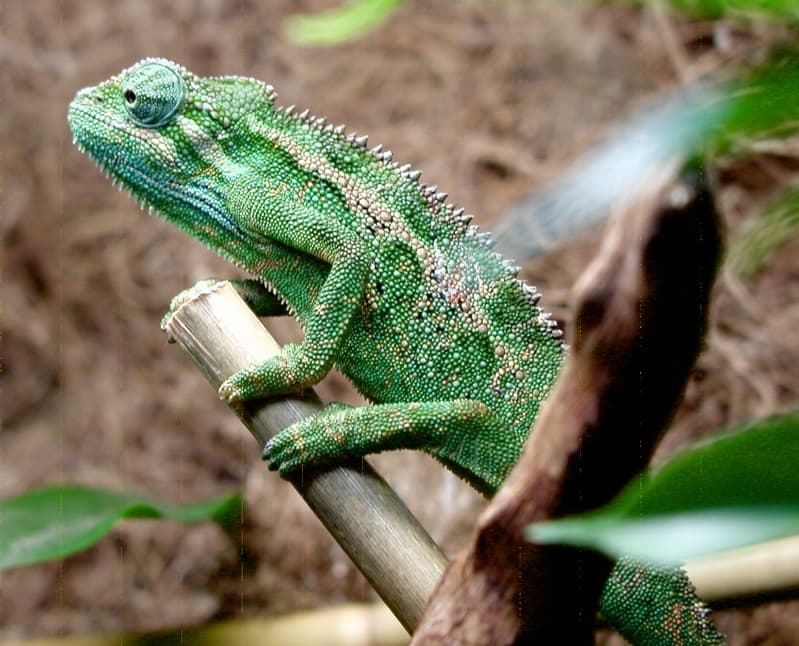
Trioceros ellioti
Trioceros ellioti, commonly known as Elliot's chameleon, is a species of lizard native to Africa. It inhabits diverse environments from forests to grasslands at moderate altitudes. This chameleon is characterized by its viviparous or ovoviviparous reproductive strategy.

Sceloporus occidentalis
The western fence lizard (Sceloporus occidentalis), also known as the blue-belly, is a common lizard found across the western United States and northern Mexico, easily recognizable by its bright blue ventral abdomen. It inhabits diverse environments from grasslands to forests and is known for its diurnal basking behavior and a diet primarily consisting of terrestrial invertebrates. Its unique blood composition also plays a role in reducing Lyme disease transmission.