
Puerto Rican crested anole
The Puerto Rican crested anole, also known as the common Puerto Rican anole, is a small to medium-sized lizard native to Puerto Rico and the Virgin Islands, with introduced populations elsewhere. Males are distinguished by a prominent fin-like crest running down their tail, while females possess a smaller version of this feature. These lizards are commonly found in a variety of habitats, including urban areas, and are known for their ability to change color.
Key Facts
- ›Males are characterized by a prominent, erect caudal crest on their tail.
- ›This species is known for its ability to change color, leading to confusion with chameleons.
- ›They are 'ground-trunk anoles,' spending most of their time on tree trunks but foraging on the ground.
- ›Males use push-ups and dewlap displays to establish dominance, attract mates, and intimidate rivals.
- ›The Puerto Rican crested anole is sold globally in the pet trade.

Lagartijo ComúN, Crested Anole, Common Puerto Rican Anole, Puerto Rican Crested Anole
Puerto Rico, U.S. Virgin Islands, British Virgin Islands, Costa Rica, Dominican Republic, Southern Florida, Trinidad
- Small To Moderately-Sized, Stocky and Muscular Lizard.
- Males Have A Permanent, Erect Caudal Crest On the Tail, Which Is Fin-Like and Supported By Bony Vertebral Extensions.
- Females Have A Well-Developed But Smaller Dewlap and A Low Caudal Crest.
- Coloration Is Variable, Typically Bronze To Greenish-Grey With Faint Brownish Spots On the Head and Body.
- Belly Is Greenish-Yellow, and the Throat Is Whitish.
- Iris Is Dark Brown.
- Male Dewlap Is Mustard Or Greenish-Yellow With A Burnt-Orange To Reddish-Orange Marginal Band.
- Juveniles Are Transversely Banded In Brown With Purplish-Brown Dots and May Have A Light Mid-Dorsal Stripe.
- Can Change Color Significantly From Light Grey To Reddish-Brown and Dark Black.
- Tail Is Compressed In Cross-Section.
- Snout-Vent Length Can Reach Up To 75 mm In Males and 73 mm In Females, Though Most Females Are Smaller.
Blindsnakes, Other Anoles, Insects, Other Small Invertebrates
- Diurnal Activity Pattern.
- Engages In Push-Up Displays and Dewlap Inflation To Show Dominance, Attract Mates, Or Intimidate Rivals.
- Can Autotomize Its Tail As A Defense Mechanism.
- Regrows Tails, Which Initially Lack Bony Vertebrae and Contain Cartilage.
- Can Change Color In Response To Emotional State.
- Spends Most Time On the Lower Parts of Tree Trunks .
- Ventures To the Ground To Forage and Lay Eggs.
- Generally Not Very Vocal, But Can Make Chirping Sounds.
- Males May Defend Territories Aggressively, Though Physical Combat Is Rare.
- Sheds Skin As It Grows and Consumes Shed Skin.
Anolis Cuvieri, Mongoose, Margarops Fuscatus, Buteo Jamaicensis, Falco Sparverius, Todus Mexicanus
- Competition With Introduced Populations of Other Anoles
About Puerto Rican crested anole
The Puerto Rican crested anole, scientifically known as Anolis cristatellus, is a common and distinctive lizard native to Puerto Rico and the U.S. and British Virgin Islands. It is also found in introduced populations across other Caribbean islands and parts of Central and South America. This species is easily identifiable, particularly the males, by the prominent, fin-like crest running along the top of their tails, a feature that is smaller but present in females. Their ability to change color, from light grey to dark brown or black, often leads to them being mistakenly called chameleons, though they are not related.
Habitat and Behavior
Puerto Rican crested anoles are adaptable and can be found in a variety of habitats, including open fields, rainforests, and notably, urban environments. They are often observed on the lower parts of tree trunks, fences, and building walls, and are classified as 'ground-trunk anoles' because they spend much of their time in these locations, occasionally descending to the ground for foraging or to lay eggs. Males exhibit characteristic behaviors such as push-ups and inflating a colorful dewlap (a flap of skin on the throat) to assert dominance, attract mates, or ward off rivals. As a defense mechanism, they can shed their tails, which then regrow, albeit without bony vertebrae.
Description and Diet
These anoles are generally stocky and muscular. Adult males can reach a snout-to-vent length of up to 75 mm (3.0 inches), with females being slightly smaller. Their coloration varies, typically ranging from bronze to greenish-grey with irregular brown spots, and they possess a greenish-yellow belly and whitish throat. The male's dewlap is a striking mustard or greenish-yellow with a reddish-orange border. Their diet consists of various prey, including insects, other small invertebrates, and even other anoles or small blindsnakes, indicating opportunistic predatory behavior.
Conservation and Human Interaction
The Puerto Rican crested anole is considered extremely common, with its numbers believed to have increased in recent centuries due to habitat conversion that favors its preferences. In some introduced areas, it has been noted to outcompete or supplant native anole species. These lizards are also a part of the global pet trade. They are found in numerous protected areas across their native range.
Source: Wikipedia ↗
Frequently Asked Questions
What are the common names for Anolis cristatellus?
In Puerto Rico, it is locally known as lagartijo común or common anole. Other common names include crested anole, common Puerto Rican anole, and Puerto Rican crested anole. It is sometimes incorrectly referred to as a chameleon due to its color-changing abilities.
What is the most distinctive physical feature of the male Puerto Rican crested anole?
The most recognizable feature of the male Puerto Rican crested anole is its permanently erect caudal crest, a fin-like structure running along the top of its tail. This crest is supported by bony extensions of the vertebrae and is more pronounced in males than in females.
Where is the Puerto Rican crested anole found?
The native range of Anolis cristatellus includes Puerto Rico and the U.S. and British Virgin Islands. Introduced populations have been established in other Caribbean locations, including Costa Rica, eastern Hispaniola, and southern Florida.
What kind of habitats does this anole prefer?
This anole inhabits a wide range of environments, from open fields to rainforests, though it is less common in high-altitude elfin forests. In urban areas, it is frequently found on tree trunks, fences, and building walls. Introduced populations often show a preference for disturbed or urbanized areas.
What do Puerto Rican crested anoles eat?
Their diet appears to be varied, with observations of them consuming relatively large prey. This includes other anoles and even small blindsnakes. They are opportunistic predators, foraging on the ground and in their arboreal habitats.
How do Puerto Rican crested anoles defend themselves?
As a defense mechanism against predators, they can detach their tails, a process called autotomy. They can regrow a new tail, though these replacements lack bony vertebrae and are supported by cartilage. They may also use their dewlap displays and push-up behaviors to deter rivals and predators.
What is the conservation status of the Puerto Rican crested anole?
The Puerto Rican crested anole is considered an extremely common species. In fact, its population is believed to have increased in recent centuries due to human development creating more of its preferred habitats. It is not listed as threatened.
Related Lizards

Anolis cristatellus
Anolis cristatellus, commonly known as the crested anole or common Puerto Rican anole, is a small to moderately-sized lizard native to Puerto Rico and the Virgin Islands. Males are distinctive for their prominent caudal crest and colorful dewlap, used in dominance displays and mating rituals. This adaptable species thrives in various habitats, including urban environments, and is known for its ability to change color.
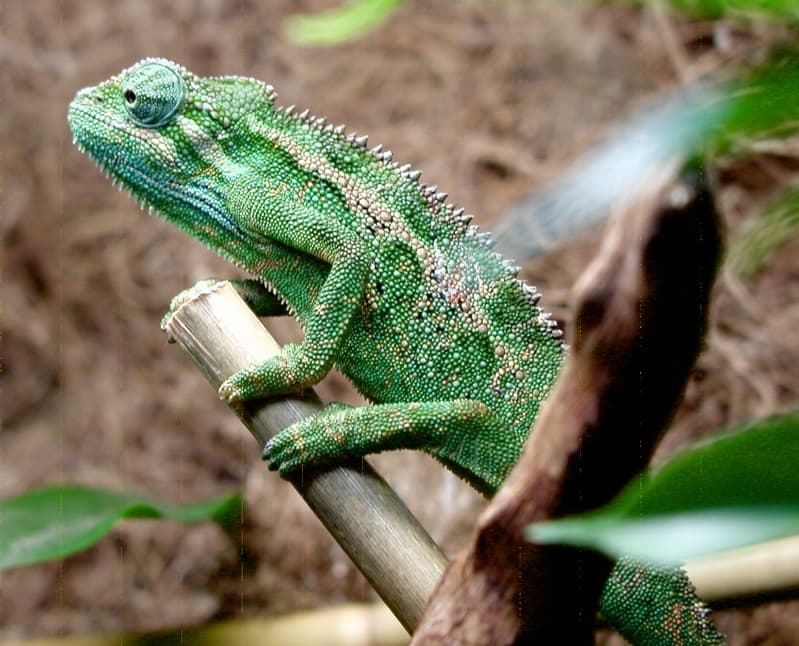
Trioceros ellioti
Trioceros ellioti, commonly known as Elliot's chameleon, is a species of lizard native to Africa. It inhabits diverse environments from forests to grasslands at moderate altitudes. This chameleon is characterized by its viviparous or ovoviviparous reproductive strategy.

Cyrtopodion kotschyi
Kotschy's gecko is a slender lizard native to southeastern Europe and the Middle East, distinguished by its variable coloration and distinct W-shaped dorsal bands. It typically inhabits rocky areas, scrub, and the walls of buildings, often being nocturnal. This species lays two eggs which take a considerable time to hatch, with individuals reaching maturity in about two years and a lifespan of up to nine years in captivity.