
Trioceros ellioti
viviparous/ovoviviparous
Trioceros ellioti, commonly known as Elliot's chameleon, is a species of lizard native to Africa. It inhabits diverse environments from forests to grasslands at moderate altitudes. This chameleon is characterized by its viviparous or ovoviviparous reproductive strategy.
Key Facts
- ›Indigenous to Africa, found in several East African countries.
- ›Inhabits forests, savannas, shrublands, and grasslands.
- ›Typically found at altitudes between 1,200 and 1,800 meters.
- ›Reproduces via viviparous or ovoviviparous methods.
- ›Named in honor of British botanist George Francis Scott Elliot.
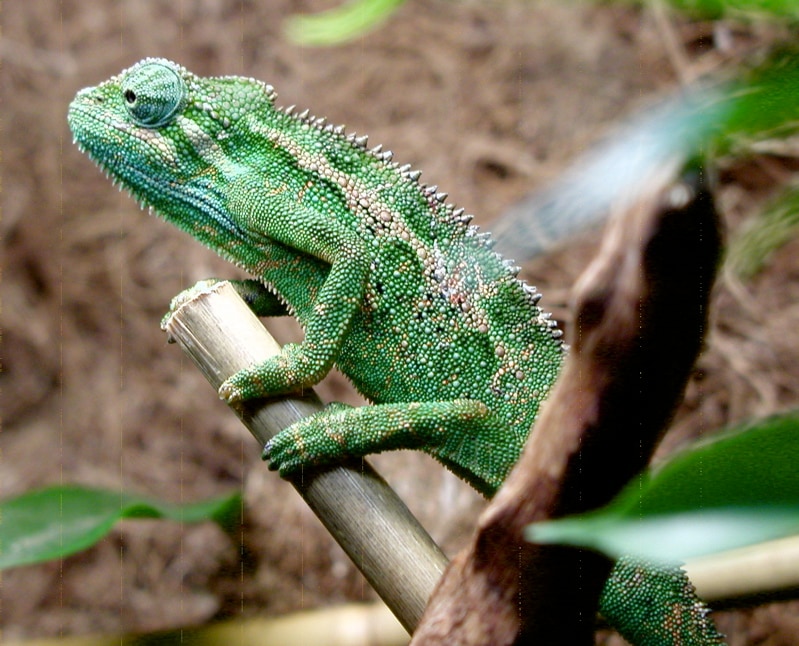
Elliot's Chameleon, Elliot's Groove-Throated Chameleon, Montane Side-Striped Chameleon
Burundi, Democratic Republic of the Congo, Kenya, Rwanda, South Sudan, Tanzania, Uganda
About Trioceros ellioti
Trioceros ellioti: Elliot's Chameleon
Trioceros ellioti, commonly referred to as Elliot's chameleon, is a species of lizard belonging to the family Chamaeleonidae. This species is indigenous to the African continent, with its natural range extending across several East African nations.
Geographic Range and Habitat
Elliot's chameleon is found in Burundi, the Democratic Republic of the Congo, Kenya, Rwanda, South Sudan, Tanzania, and Uganda. Its preferred natural habitats are diverse, encompassing forest, savanna, shrubland, and grassland environments. The species typically inhabits areas at altitudes between 1,200 and 1,800 meters (3,900 to 5,900 feet). It has also demonstrated adaptability by being found in disturbed areas such as plantations, gardens, and open fields.
Reproduction
The reproductive strategy of Trioceros ellioti is notable. The mode of reproduction has been described in scientific literature as both viviparous and ovoviviparous, indicating that it may give birth to live young or lay eggs that hatch internally.
Etymology
The specific name, ellioti, was given in honor of the British botanist George Francis Scott Elliot, recognizing his contributions to the field of botany, which often intersects with the study of the natural world.
Source: Wikipedia ↗
Frequently Asked Questions
What is Trioceros ellioti commonly known as?
Trioceros ellioti is commonly known as Elliot's chameleon, Elliot's groove-throated chameleon, and the montane side-striped chameleon.
Where is Elliot's chameleon found?
Elliot's chameleon is naturally found in Burundi, the Democratic Republic of the Congo, Kenya, Rwanda, South Sudan, Tanzania, and Uganda.
What kind of habitats does Trioceros ellioti prefer?
The preferred natural habitats of Trioceros ellioti include forest, savanna, shrubland, and grassland. It can also be found in disturbed areas like plantations and gardens.
How does Elliot's chameleon reproduce?
The mode of reproduction for Trioceros ellioti has been described as both viviparous and ovoviviparous.
At what altitudes can Elliot's chameleon be found?
Elliot's chameleon is found at altitudes ranging from 1,200 to 1,800 meters (3,900 to 5,900 feet).
Related Lizards

Anolis cristatellus
Anolis cristatellus, commonly known as the crested anole or common Puerto Rican anole, is a small to moderately-sized lizard native to Puerto Rico and the Virgin Islands. Males are distinctive for their prominent caudal crest and colorful dewlap, used in dominance displays and mating rituals. This adaptable species thrives in various habitats, including urban environments, and is known for its ability to change color.

Puerto Rican crested anole
The Puerto Rican crested anole, also known as the common Puerto Rican anole, is a small to medium-sized lizard native to Puerto Rico and the Virgin Islands, with introduced populations elsewhere. Males are distinguished by a prominent fin-like crest running down their tail, while females possess a smaller version of this feature. These lizards are commonly found in a variety of habitats, including urban areas, and are known for their ability to change color.

Paracontias hildebrandti
Paracontias hildebrandti, commonly known as Hildebrandt's skink, is a legless lizard species native to Madagascar. It inhabits forests and disturbed areas, and is distinguished by its lack of external ear openings. This species is oviparous, laying eggs as its primary mode of reproduction.