
Anolis sabanus
Near-threatened·Not specified in text
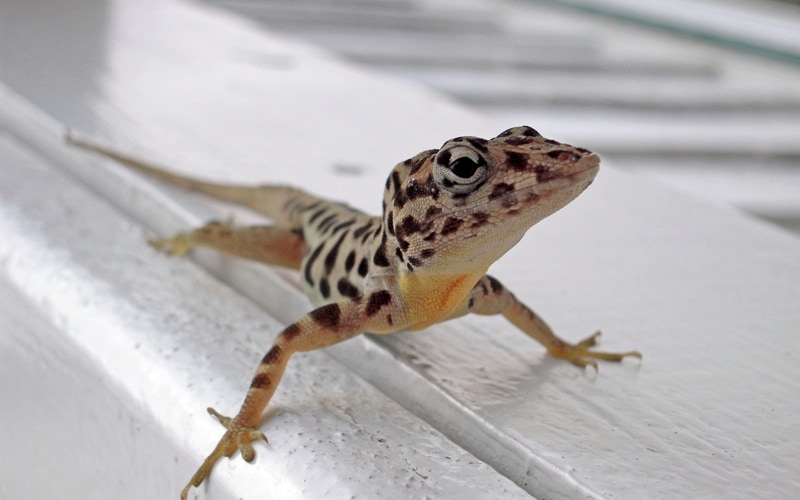
The Saba anole (Anolis sabanus) is a medium-sized lizard endemic to the Caribbean island of Saba. Both males and females have pale bodies, but males display dark dorsal blotches, while females have a lighter hue with a dorsal stripe or mottling. This species is considered near-threatened due to the potential risk of invasive anoles being introduced to its habitat.
Key Facts
- ›Endemic to the island of Saba in the Caribbean Lesser Antilles.
- ›Males reach a snout-vent length of up to 69 mm, while females reach up to 50 mm.
- ›Omnivorous diet includes arthropods, flowers, fruits, and nectar.
- ›Considered 'near-threatened' by the IUCN.
- ›Inhabits most habitats on Saba up to 870 meters in elevation.
Saba Anole, Saban Anole
Saba
Various Habitats On Saba, Up To 870 Meters Elevation
- Medium-Sized Anole.
- Males: Snout-Vent Length Up To 69 mm , Pale Grey To Tan Body, Pale Yellow-Green To Orange-Tinted Dewlap, Dark Blotches On Dorsum.
- Females: Snout-Vent Length Up To 50 mm , Pale Grey To Tan Body, Pale Yellow-Green To Orange-Tinted Dewlap, Lighter Overall Coloration, Stripe Or Mottled Pattern Along the Centre of the Dorsum.
Arthropods, Flowers, Fruits, Nectar
- Inhabits Various Environments On Its Native Island.
Introduction of Non-Native Anoles
About Anolis sabanus
Anolis sabanus: The Saba Anole
The Saba anole, scientifically known as Anolis sabanus, is a medium-sized lizard species exclusively found on the Caribbean island of Saba. This anole is recognized by its pale grey to tan coloration, with males exhibiting distinctive dark blotches on their backs, while females tend to be lighter and may display a dorsal stripe or mottling. Both sexes possess pale yellow-green to orange-tinted dewlaps.
Habitat and Distribution
This species is endemic to Saba, a Dutch municipality in the Lesser Antilles. Anolis sabanus is widespread and common across the island, inhabiting most environments up to an elevation of 870 meters (2,850 ft). A single specimen was documented on Sint Eustatius in 2016, likely transported by ship from Saba, but this occurrence is not indicative of a natural distribution outside of its native island.
Diet and Behavior
The Saba anole is an omnivore, supplementing its diet of arthropods with floral and fruit matter, as well as nectar. Its adaptability allows it to thrive in the varied habitats present on Saba.
Conservation Status
The International Union for Conservation of Nature (IUCN) classifies the Saba anole as 'near-threatened'. While the species is abundant within its limited range and the entirety of Saba is designated as a National Land Park, a significant threat to its population is the potential introduction of non-native anole species to the island, which could lead to a population collapse.
Source: Wikipedia ↗
Frequently Asked Questions
What is the scientific name of the Saba anole?
The scientific name of the Saba anole is Anolis sabanus. It is also known by its common names, Saba anole or Saban anole.
Where is the Saba anole found?
The Saba anole is found exclusively on the island of Saba, a Dutch municipality in the Caribbean Lesser Antilles. It is very common throughout the island, inhabiting most environments up to an elevation of 870 meters.
What does the Saba anole eat?
The Saba anole is omnivorous. Its diet consists of various arthropods, as well as plant matter such as flowers, fruits, and nectar.
What is the conservation status of the Saba anole?
The Saba anole is listed as 'near-threatened' by the International Union for Conservation of Nature (IUCN). While common on Saba, the introduction of non-native anoles poses a significant risk to its population.
How large do Saba anoles get?
Saba anoles are medium-sized lizards. Adult males typically grow to a snout-vent length of up to 69 mm (2.7 inches), while females are smaller, reaching up to 50 mm (2.0 inches).
What are the physical characteristics of the Saba anole?
Both male and female Saba anoles have pale grey to tan bodies and pale yellow-green to orange-tinted dewlaps. Males are distinguished by additional dark blotches on their backs, while females are generally lighter in color and may have a central dorsal stripe or mottling.
Related Lizards

Crotaphytus bicinctores
The Great Basin collared lizard (Crotaphytus bicinctores), also known as the desert collared lizard or Mojave black-collared lizard, is a species endemic to the Western United States. It is characterized by its less vibrant coloration compared to the common collared lizard, with males exhibiting brown to orange hues and females being darker. This species inhabits rocky arid desert regions, favoring desert scrub and wash environments.

Gerrhosaurus major
The Sudan plated lizard, also known as the western plated lizard or great plated lizard, is a medium-sized, diurnal African reptile recognized for its heavily armored appearance. Found in eastern and central Africa, it inhabits rocky, semi-open areas within various savannah and woodland environments. Primarily insectivorous, it also supplements its diet with fruits, vegetation, and small vertebrates.
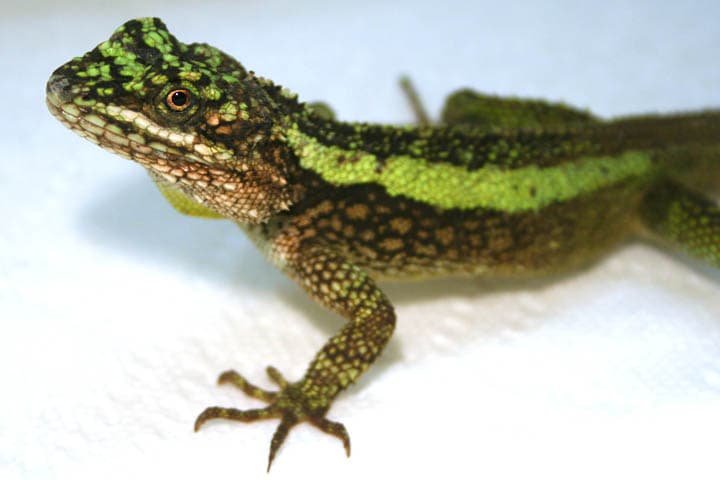
Japalura tree dragon
The Japalura tree dragon (Diploderma splendidum) is an agamid lizard native to the Yangtze River Basin of southwestern China, known for its green striped appearance and its popularity as an international pet. This species inhabits temperate, humid lowland jungles and has a diet that is primarily insectivorous, though it may occasionally consume plant matter. Its distinctive physical characteristics include rugose scales, a nuchal crest, and a coloration often featuring yellow spots and streaks on a dark brown head and body.