
Japalura tree dragon
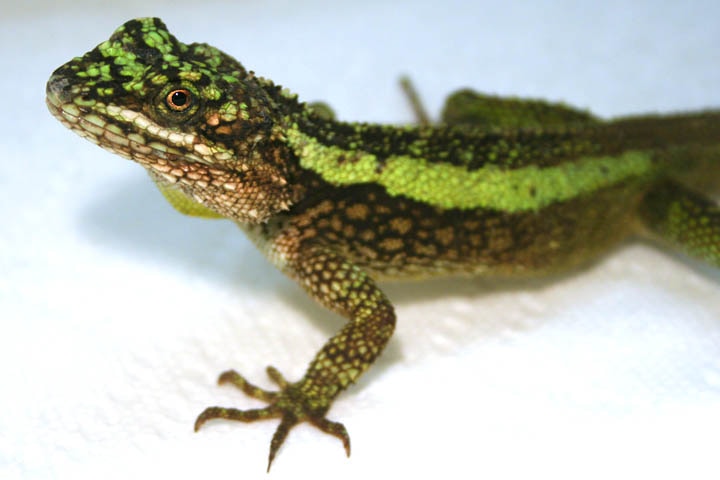
The Japalura tree dragon (Diploderma splendidum) is an agamid lizard native to the Yangtze River Basin of southwestern China, known for its green striped appearance and its popularity as an international pet. This species inhabits temperate, humid lowland jungles and has a diet that is primarily insectivorous, though it may occasionally consume plant matter. Its distinctive physical characteristics include rugose scales, a nuchal crest, and a coloration often featuring yellow spots and streaks on a dark brown head and body.
Key Facts
- ›Native to the Yangtze River Basin in southwestern China.
- ›Primarily insectivorous but may occasionally be herbivorous.
- ›Features rugose scales, a feeble nuchal crest, and a dorsal crest.
- ›Head coloration is often dark brown with conspicuous yellow spots and streaks.
- ›Popularly sold as an international pet.
- ›Can harbor various bacterial pathogens and the nematode Rhabdias megalocephalum.
Green Striped Tree Dragon, Splendid Japalure
Yangtze River Basin, Southwestern China
Lowland Jungle, Temperate
- Top of the Head Covered With Medium-Sized, Subequal, Rugose, Juxtaposed Scales.
- Median Series of Three Or Four Slightly Enlarged Subconical Scales On the Snout Form A Faintly Indicated Ridge.
- Considerably Enlarged Anterior Canthal Scale On Each Side of the Snout.
- No Other Head Scales Are Conspicuously Enlarged, Except In the Post-Occipital Areas.
- Rostral Scale Is Twice As Wide As High, and Wider But Lower Than the Mental.
- Canthus Rostralis Is Sharply Defined and Continuous With the Superciliaries.
- Nostril In A Large Suboval Shield, Separated From the Rostral By A Single Small Scale.
- Eight Upper Labials, With the Sixth Below the Center of the Eye.
- Ten Lower Labials.
- Orbit Separated From Upper Labials By Three Rows of Shields, the Middle Row Much Enlarged.
- Short Series of About Three Enlarged Shields Above the Tympanic Region.
- Few, Elongated, Almost Spine-Like Scales Above the Tympanic Region.
- Nuchal Crest Is Very Feeble, Composed of About Eight Or Nine Slightly Enlarged, Denticulate Scales.
- Dorsal Crest Is Even More Feebly Developed Than the Nuchal Crest.
- Faintly Indicated Fold Anterior To the Insertion of the Forelimb.
- Large Area Covered With Tiny, Almost Granular Scales Above the Insertion of the Forelimb.
- Back and Sides Covered With Imbricate, Strongly Keeled Scales of Varying Size.
- Somewhat Enlarged Scales Are Abundantly Scattered Over the Back and Sides, Tending To Form Longitudinal Series.
- Scales of the Throat and Belly Are Small, Equal In Size, and Strongly Keeled.
- Hind Limb, When Extended Forward, Reaches the Anterior Border of the Orbit Or Slightly Beyond.
- Scales of Both Forelimbs and Hind Limbs Are Strongly Keeled and Unequal In Size.
- Type Specimen Had A Dark Brown Head With Conspicuous Yellow Spots and Streaks.
- Yellow Band Extended From Behind the Nostril, Beneath the Eye, and Above the Labials To Below the Tympanic Area.
- Rostral and Three Anterior Labials Were Yellow, Others Dark.
- Back Was A Uniform Dark Brown With A Broad, Conspicuous Light Stripe On Each Side and A Broad Dark Zone Below the Light Stripes.
- Belly and Tail Were Dusky, With the Tail Having Irregular Darker Bands.
- Throat Was Conspicuously Longitudinally Streaked With Brown On A Yellow Background.
Insects, Plant Matter
Sold As Pets Internationally.
About Japalura tree dragon
The Japalura Tree Dragon
The Japalura tree dragon, scientifically known as Diploderma splendidum and also called the green striped tree dragon or splendid japalure, is a species of agamid lizard native to the temperate yet humid lowland jungles of the Yangtze River Basin in southwestern China. This species is recognized for its distinctive coloration and is also notable for its presence in the international pet trade.
Physical Characteristics
The Japalura tree dragon possesses a head covered in medium-sized, rugose, juxtaposed scales. A median series of slightly enlarged subconical scales forms a faint ridge on the snout, flanked by considerably enlarged anterior canthal scales. The body is covered with imbricate, strongly keeled scales that vary in size, with some enlarged scales scattered across the back and sides, often tending to form longitudinal series. The nuchal crest is very feeble, composed of slightly enlarged, denticulate scales, and is continuous with an even more feebly developed dorsal crest. Adult males, as described in the type specimen, often exhibit a dark brown head conspicuously marked with yellow spots and streaks, with a yellow band extending from below the eye. The back is typically dark brown with a broad, light stripe on each side, and the belly and tail are dusky.
Habitat and Diet
This lizard inhabits the lowland jungles surrounding the Yangtze River. Its diet is primarily insectivorous, consisting of insects. However, recent research has indicated that due to the presence of specific bacteria in its gut flora, the Japalura tree dragon may also occasionally consume plant matter, suggesting a degree of herbivory.
Health and Pathogens
Studies have identified a total of 26 species of potential human pathogens within wild specimens of Diploderma splendidum, found in both their gut and oral cavities, including bacteria such as Clostridium perfringens, Staphylococcus aureus, and Mycobacterium tuberculosis. The species also harbors specific parasites like the nematode Rhabdias megalocephalum. Consequently, keeping these lizards in captivity is considered to carry a high risk of potential disease transmission to humans through bite wounds or contamination of food and water with feces.
Source: Wikipedia ↗
Frequently Asked Questions
What is the scientific name of the Japalura tree dragon?
The scientific name of the Japalura tree dragon is Diploderma splendidum. It is also sometimes referred to as the splendid japalure.
Where does the Japalura tree dragon live?
The Japalura tree dragon is found in the temperate yet humid lowland jungles surrounding the Yangtze River in southwestern China. This region provides its natural habitat.
What does the Japalura tree dragon eat?
The Japalura tree dragon is primarily insectivorous, meaning it feeds on insects. However, research suggests it may also occasionally consume plant matter, possibly due to its gut flora's ability to digest fiber.
What are the physical characteristics of the Japalura tree dragon?
This lizard has a head covered in medium-sized, rugose scales, with a median series of slightly enlarged scales on the snout. It possesses a feeble nuchal crest continuous with an even more feebly developed dorsal crest. Its back and sides are covered with imbricate, strongly keeled scales, often with scattered enlarged scales.
Are Japalura tree dragons dangerous to humans?
Wild specimens of Diploderma splendidum have been found to carry a significant number of potential human pathogens in their gut and oral cavities. Keeping these lizards in captivity could pose a risk of spreading infectious diseases through bites or contaminated feces.
What are some notable features of the Japalura tree dragon's coloration?
An adult male type specimen was described with a dark brown head marked with yellow spots and streaks. A yellow band runs from behind the nostril beneath the eye. The back is typically dark brown with a conspicuous light stripe on each side, and a dark zone below these stripes.
Related Lizards

Crotaphytus bicinctores
The Great Basin collared lizard (Crotaphytus bicinctores), also known as the desert collared lizard or Mojave black-collared lizard, is a species endemic to the Western United States. It is characterized by its less vibrant coloration compared to the common collared lizard, with males exhibiting brown to orange hues and females being darker. This species inhabits rocky arid desert regions, favoring desert scrub and wash environments.

Gerrhosaurus major
The Sudan plated lizard, also known as the western plated lizard or great plated lizard, is a medium-sized, diurnal African reptile recognized for its heavily armored appearance. Found in eastern and central Africa, it inhabits rocky, semi-open areas within various savannah and woodland environments. Primarily insectivorous, it also supplements its diet with fruits, vegetation, and small vertebrates.
Anolis sabanus
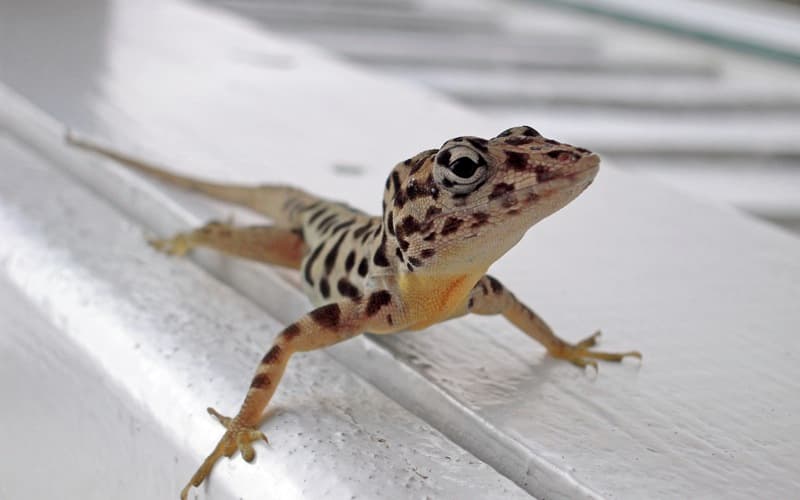
The Saba anole (Anolis sabanus) is a medium-sized lizard endemic to the Caribbean island of Saba. Both males and females have pale bodies, but males display dark dorsal blotches, while females have a lighter hue with a dorsal stripe or mottling. This species is considered near-threatened due to the potential risk of invasive anoles being introduced to its habitat.