
Aprasia striolata
The striated worm-lizard (Aprasia striolata) is a species of legless lizard found in southern Australia. It is characterized by its slender, elongated, snake-like body and pale brown to grey coloration, often adorned with thin, dark parallel stripes. This burrowing species primarily feeds on ant brood and is oviparous, laying thick-shelled eggs.
Key Facts
- ›Endemic to southern Australia, including parts of Western Australia, South Australia, and Victoria.
- ›Legless lizard with an elongated, slender, and cylindrical body, resembling a snake.
- ›Diet consists almost exclusively of ant larvae and pupae (>95%).
- ›Reproduction is oviparous, with females laying thick-shelled elongate eggs.
- ›Habitat includes a variety of environments with dry sandy or loamy soils.
- ›Conservation status is 'Least Concern' according to the IUCN Red List.

Striated Worm-Lizard, Striped Worm-Lizard, Lined Worm-Lizard
Southern Western Australia, South Australia, Western Victoria
Dry Sandy Soils, Loamy Soils, Burrowing Environments
- Elongated, Slender, Cylindrical Body.
- Pale Brown, Olive-Brown, Or Grey Coloration.
- Usually Has Narrow Dark Stripes On the Top of the Head That Fade At the Neck.
- Thin Dark Stripes Run Dorso-Laterally Along the Body and Tail.
- A Noticeable Stripe Extends From the Snout and Passes Through the Eye.
- Some Populations In Wa and Kangaroo Island May Have Absent Stripes Or Lines of Dots.
- Whitish Colored Underneath.
- Very Short Tail, Shorter Than the Body.
- Scales In 12 Rows At Mid-Body .
- Rounded and Relatively Blunt Snout.
- Relatively Large Eyes.
- Females Tend To Grow Larger Than Males.
Ant Brood, Adult Ants, Other Insect Pupae
- Feed Infrequently, Primarily In Warmer Months.
- Engage In 'Binge Feeding,' Consuming A Large Amount of Prey In A Single Meal.
- Locating Ant Colonies and Defending Against Adult Ants Are Unknown Behaviors.
Habitat Clearing For Farming, Habitat Clearing For Tree Plantations
About Aprasia striolata
The Striated Worm-Lizard: A Legless Reptile of Southern Australia
The striated worm-lizard, scientifically known as Aprasia striolata, is a distinctive species of legless lizard belonging to the family Pygopodidae. This reptile is endemic to the southern regions of Australia, with populations found in southern Western Australia, South Australia, and western Victoria. Its common names, including striated, striped, or lined worm-lizard, are derived from the characteristic pattern of long, thin, parallel streaks that often adorn its pale brown, olive-brown, or grey body. Some populations, particularly those in Western Australia and on Kangaroo Island, may exhibit absent stripes or have these markings present as rows of dots.
Physical Characteristics and Habitat
As a member of the Pygopodidae family, the striated worm-lizard displays extreme body elongation and lacks limbs, giving it a snake-like appearance. Its body is slender and cylindrical, featuring a rounded and blunt snout and relatively large eyes. The underside is typically whitish. While females generally grow larger than males, their precise snout-to-vent length is not detailed. These lizards are adapted to burrowing and inhabit a diverse range of environments, primarily those with dry sandy or loamy soils.
Diet and Behavior
The diet of Aprasia striolata is highly specialized, with over 95% of their food intake consisting of ant brood, meaning the larvae and pupae of ants. While males may occasionally consume adult ants, this constitutes a small portion of their diet. Prey is swallowed whole, which is consistent with their greatly reduced dentition. Behaviorally, these lizards feed infrequently, typically only during the warmer months, and are noted for 'binge feeding,' consuming a substantial amount of prey in a single instance. How they locate ant colonies or defend themselves against adult ants remains an area of scientific inquiry.
Reproduction and Conservation
Reproduction in Aprasia striolata is oviparous, with females laying thick-shelled, elongate eggs. Evidence suggests that both males and females can reproduce year-round, potentially allowing females to produce multiple clutches per year, a trait that deviates from the seasonally based reproductive cycles common in other southern Australian reptile species. The differences in dentition between adult males and females, with males possessing premaxillary teeth while juveniles and females lack them, are thought to be linked to sexual selection rather than dietary differences. Historically, much of their habitat has been cleared for agriculture and tree plantations. Despite these pressures, the striated worm-lizard is currently listed as 'Least Concern' on the IUCN Red List due to its wide distribution and the absence of major overarching threats.
Source: Wikipedia ↗
Frequently Asked Questions
What are the common names for Aprasia striolata?
Aprasia striolata is commonly known as the striated worm-lizard. It has also been referred to as the striped worm-lizard or the lined worm-lizard due to its characteristic markings.
Where is the striated worm-lizard found?
The striated worm-lizard is endemic to southern Australia. Its distribution includes the southwestern part of Western Australia and a region extending from western Victoria to the Eyre Peninsula in South Australia.
What does Aprasia striolata eat?
The diet of the striated worm-lizard is highly specialized, consisting almost entirely of ant brood, which includes ant larvae and pupae. While males may occasionally consume a small percentage of adult ants, their primary food source remains the immature stages of ants.
How does the striated worm-lizard reproduce?
Aprasia striolata is oviparous, meaning it reproduces by laying eggs. These eggs are described as thick-shelled and elongate. Gravid females and males with enlarged testes have been collected year-round, suggesting a potential for multiple clutches annually.
What are the physical characteristics of Aprasia striolata?
This legless lizard has an elongated, slender, and cylindrical body with a pale brown, olive-brown, or grey coloration. It typically features narrow dark stripes, particularly noticeable from the snout through the eye and along the dorso-lateral sides, though these can be absent or appear as dots in some populations. It has a short tail and relatively large eyes.
What is the conservation status of the striated worm-lizard?
The International Union for Conservation of Nature and Natural Resources (IUCN) red list assessment in February 2017 classified Aprasia striolata as 'Least Concern.' This designation is based on its wide distribution and the absence of major threats or significant population decline.
Related Lizards
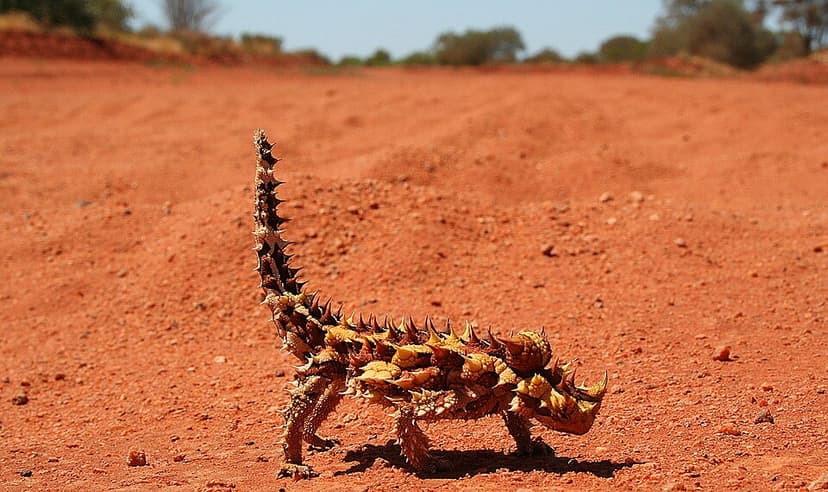
Moloch horridus
The thorny devil (Moloch horridus) is a unique lizard species endemic to Australia, known for its distinctive spiky appearance and remarkable ability to collect water through its skin. These agamid lizards are found in arid scrublands and deserts, where they primarily feed on ants. Their spiny bodies and a "false head" on their neck serve as defense mechanisms against predators.

Pygopodidae
Pygopodidae, commonly known as snake-lizards or flap-footed lizards, are a family of legless geckos native to Australia and New Guinea. They possess unusually long, slender bodies resembling snakes, but are distinguished by external ear holes, flat tongues, and vestigial hind limbs. These adaptations allow some species to burrow or navigate dense vegetation, with their diet primarily consisting of insects.
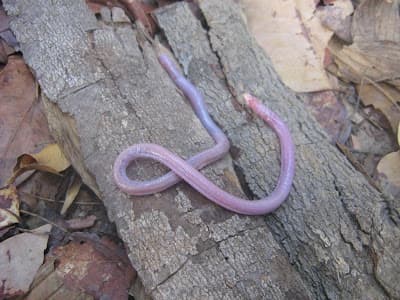
Amphisbaena bilabialata
Amphisbaena bilabialata is a species of worm lizard native to Brazil. These legless reptiles are characterized by their unique burrowing lifestyle and are part of the Amphisbaenidae family.