
Moloch horridus
The thorny devil (Moloch horridus) is a unique lizard species endemic to Australia, known for its distinctive spiky appearance and remarkable ability to collect water through its skin. These agamid lizards are found in arid scrublands and deserts, where they primarily feed on ants. Their spiny bodies and a "false head" on their neck serve as defense mechanisms against predators.
Key Facts
- ›Endemic to the arid scrublands and deserts of central Australia.
- ›Covered in conical, uncalcified spines that aid in defense and water collection.
- ›Possesses a spiny "false head" on its neck to deceive predators.
- ›Primarily feeds on ants, consuming thousands in a single day.
- ›Collects water through capillary action via channels between its scales, absorbing it from dew and damp sand.
- ›Females are generally larger than males and lay 3-10 eggs in a burrow.
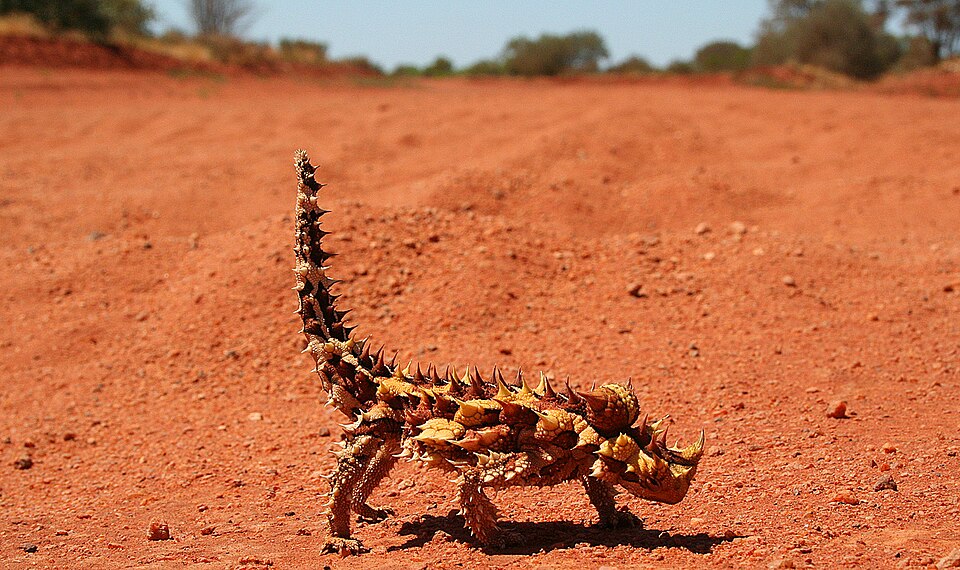
Mountain Devil, Thorny Lizard, Thorny Dragon, Moloch, Devil Lizard, Horned Lizard, Thorny Toad
Australia
Arid Scrubland, Desert, Sandplain Desert, Sandridge Desert, Mallee Belt
- Grows Up To 21 cm In Total Length, Including Tail.
- Females Are Generally Larger Than Males.
- Body Is Covered Entirely With Conical Spines, Mostly Uncalcified.
- Coloration Consists of Camouflaging Shades of Desert Browns and Tans, Which Change From Pale In Warm Weather To Darker In Cold Weather.
- Features A Spiny "False Head" Made of Soft Tissue On the Back of Its Neck.
- Scales Are Ridged and Hydrophilic, Aiding In Water Collection.
Ants
- Unusual Gait Involves Freezing and Rocking While Moving Slowly.
- Presents A "False Head" To Potential Predators By Dipping Its Real Head.
- Collects Water By Touching Moist Surfaces With Any Part of Its Body, With Water Transported To the Mouth Via Capillary Action.
- Absorbs Moisture From Damp Sand As A Primary Source of Water Intake.
Wild Birds, Goannas
About Moloch horridus
The Thorny Devil: A Spiky Marvel of the Australian Desert
The thorny devil, scientifically known as Moloch horridus, is a remarkable lizard species endemic to the arid interior of Australia. This unique reptile is instantly recognizable by its body, which is entirely covered in conical, spiky scales. These spines are not only a formidable defense against predators but also play a crucial role in the lizard's survival by enabling it to collect precious water in its harsh desert environment. The thorny devil's coloration, typically in shades of desert browns and tans, provides excellent camouflage against its sandy surroundings, and can even shift to darker hues in colder weather.
Unique Adaptations for Survival
Beyond its spiky exterior, the thorny devil possesses a distinctive "false head" on the back of its neck. When threatened, the lizard lowers its real head between its front legs, presenting this spiny appendage to potential predators, creating a convincing illusion. Its most extraordinary adaptation, however, is its ability to harvest water. The ridged scales and the hydrophilic nature of its skin allow capillary action to draw moisture from dew and even damp sand directly to its mouth. This passive water collection system is vital for survival in its arid habitat.
Habitat and Diet
The thorny devil inhabits the sandy scrublands and deserts of central Australia, favoring areas with sandy loam soils. Its diet is highly specialized, consisting almost exclusively of ants. These lizards are voracious ant-eaters, often consuming thousands of ants in a single day. This specialized diet and unique water-gathering mechanism highlight the extreme adaptations that allow Moloch horridus to thrive in one of the planet's most challenging environments.
Reproduction and Lifespan
Female thorny devils lay clutches of three to ten eggs in burrows dug about 30 centimeters underground, typically between September and December. The eggs hatch after approximately three to four months. In both wild and captive settings, thorny devils have a lifespan ranging from 15 to 20 years. Despite its intimidating appearance, the thorny devil is a fascinating example of evolutionary ingenuity in the Australian fauna.
Source: Wikipedia ↗
Frequently Asked Questions
What is the scientific name for the thorny devil?
The scientific name for the thorny devil is Moloch horridus. It is the sole species within the genus Moloch.
Where do thorny devils live?
Thorny devils are found in the arid scrubland and desert regions of central Australia. Their habitat is characterized by sandy loam soils.
How do thorny devils get water?
Thorny devils have a remarkable ability to collect water through their skin. Water from dew or damp sand is channeled to their mouth via capillary action through grooves between their spines.
What do thorny devils eat?
The primary diet of the thorny devil consists of ants. They are known to consume thousands of ants in a single day, with various genera of ants being preferred.
How do thorny devils defend themselves?
Thorny devils are protected by their spiky bodies, which make them difficult for predators to swallow. They also have a spiny "false head" on their neck, which they present to threats by dipping their true head.
What is the lifespan of a thorny devil?
Thorny devils can live for 15 to 20 years. This lifespan is observed in both wild and captive individuals.
How do thorny devils reproduce?
Female thorny devils lay clutches of three to ten eggs in nesting burrows about 30 cm underground between September and December. The eggs typically hatch after three to four months.
Related Lizards

Phrynocephalus versicolor
Phrynocephalus versicolor, also known as the Tuvan toad-headed agama, is a lizard species native to the desert regions of China and Mongolia. It is characterized by its rounded head, blunt snout, and variable coloration, often featuring olive or leaden-grey with dark transverse bars. This species inhabits stony plains, canyons, and sand dunes, demonstrating adaptations to extreme temperature fluctuations and arid conditions.

Aprasia striolata
The striated worm-lizard (Aprasia striolata) is a species of legless lizard found in southern Australia. It is characterized by its slender, elongated, snake-like body and pale brown to grey coloration, often adorned with thin, dark parallel stripes. This burrowing species primarily feeds on ant brood and is oviparous, laying thick-shelled eggs.
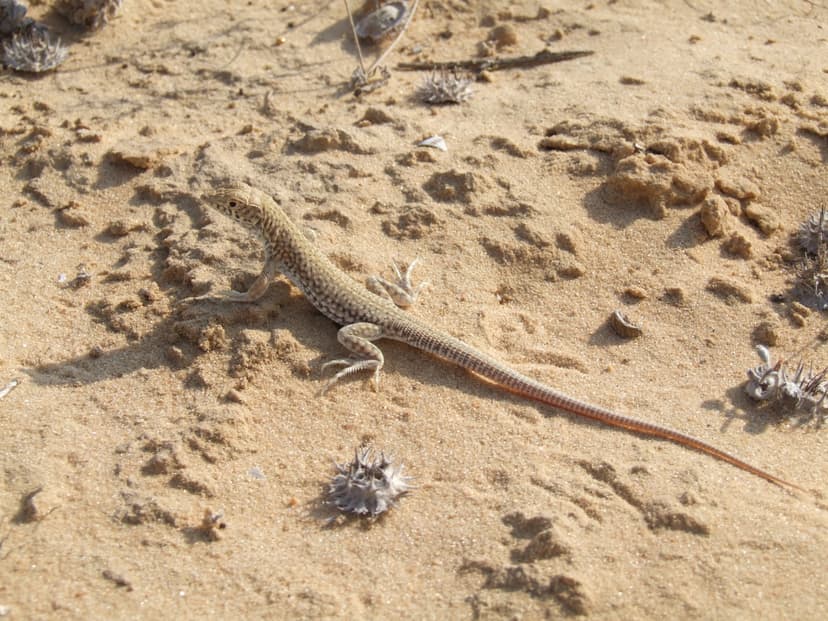
Acanthodactylus scutellatus
The Acanthodactylus scutellatus, commonly known as the Nidua fringe-fingered lizard, is a small lizard species endemic to northern Africa and the Middle East. It is recognized by its unique ventral scale arrangement and its adeptness at burrowing in loose sand for shelter. This diurnal species breeds in late winter, with females laying clutches of 3-6 eggs in the spring.