
Balkan green lizard
The Balkan green lizard (Lacerta trilineata) is a widespread lizard species found throughout the Balkans and parts of the Eastern Mediterranean. It inhabits diverse environments such as Mediterranean shrubland, sandy shores, and agricultural areas. A key characteristic is its reproductive cycle, which typically spans from April to July, with individuals reaching sexual maturity around 80 millimeters in body size.
Key Facts
- ›Most widespread of the Balkan lizard species.
- ›Found in numerous countries across the Balkans and Eastern Mediterranean.
- ›Inhabits Mediterranean shrubland, sandy shores, and agricultural areas.
- ›Reproductive cycle occurs from April to July.
- ›Reaches sexual maturity at approximately 80 mm body size.
- ›Threatened by habitat loss.
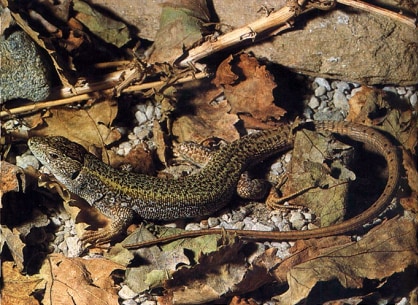
Balkan Green Lizard
Albania, Bosnia and Herzegovina, Bulgaria, Croatia, Greece, Kosovo, Montenegro, North Macedonia, Palestine, Romania, Serbia, Syria, Turkey
- Males and Females Reach Sexual Maturity At Approximately 80 Millimeters In Body Size.
Habitat Loss
About Balkan green lizard
The Balkan green lizard, scientifically known as Lacerta trilineata, is a prominent species within the Lacertidae family and holds the distinction of being the most widespread lizard across the Balkan region. Its natural range extends through numerous countries, including Albania, Bosnia and Herzegovina, Bulgaria, Croatia, Greece, Kosovo, Montenegro, North Macedonia, Romania, Serbia, as well as parts of the Middle East in Palestine, Syria, and Turkey.
Habitat and Distribution
This adaptable lizard thrives in a variety of environments. Its preferred natural habitats include Mediterranean-type shrubby vegetation, open sandy shores, and agricultural landscapes such as arable land, pastureland, and plantations. It has also been observed to inhabit rural gardens, indicating a capacity to coexist with human presence to some degree.
Reproduction and Maturation
The reproductive cycle for the Balkan green lizard, as documented in populations from Greece, typically commences in April and concludes in July. Both male and female individuals attain sexual maturity when they reach a body size of approximately 80 millimeters. This signifies their readiness to participate in the breeding season.
Conservation Concerns
Despite its widespread distribution, the Balkan green lizard faces threats, with habitat loss being the most significant concern. Changes in land use and the degradation of natural environments pose a risk to the long-term viability of its populations.
Source: Wikipedia ↗
Frequently Asked Questions
Where can the Balkan green lizard be found?
The Balkan green lizard is widely distributed across the Balkans, including countries like Albania, Bosnia and Herzegovina, Bulgaria, Croatia, Greece, Kosovo, Montenegro, North Macedonia, Romania, Serbia, and Turkey. It is also found in Palestine and Syria.
What kind of habitats does the Balkan green lizard prefer?
This species thrives in a variety of natural and semi-natural environments. These include Mediterranean-type shrubby vegetation, sandy shores, arable land, pastureland, plantations, and even rural gardens.
When does the reproductive cycle of the Balkan green lizard take place?
For populations in Greece, the reproductive cycle for both males and females begins in April and concludes in July. This period allows for mating and egg-laying.
At what size do Balkan green lizards become sexually mature?
Both male and female Balkan green lizards typically achieve sexual maturity when they reach a body size of approximately 80 millimeters. This size indicates they are ready to reproduce.
What are the main threats facing the Balkan green lizard?
The primary threat identified for the Balkan green lizard is habitat loss. As its natural and agricultural environments are altered or destroyed, the species' populations are put at risk.
Related Lizards

Chalcides parallelus
Chalcides parallelus, commonly known as the Chafarinas's skink, is a species of skink found in parts of North Africa and Southern Europe. This lizard inhabits Mediterranean coastal environments, including shrubland, rocky areas, and sandy shores. Its primary threat is habitat loss.

Cnemaspis beddomei
Beddome's day gecko, scientifically known as Cnemaspis beddomei, is a species of lizard endemic to the Western Ghats of India. This diurnal reptile is typically found under rocks in forested areas and primarily feeds on insects. It is named in honor of Richard Henry Beddome.
Gallotia intermedia
The Tenerife speckled lizard (Gallotia intermedia) is a small lacertid lizard endemic to the island of Tenerife in the Canary Islands. Discovered in 1996, it is the smallest member of a clade that includes larger giant species. Its populations are currently restricted to small coastal areas in the northwest and a location in the south of the island, with conservation efforts focused on controlling introduced predators.