
Bibron's sand gecko
Bibron's sand gecko, also known as Bibron's thick-toed gecko, is a moderate-sized lizard native to southern Africa. It is characterized by a stocky build, brown coloration with beaded patterns and black crossbars, and a white or light brown belly. This species is notable for its use in bioastronautic research and its territorial behavior.
Key Facts
- ›Native to southern Africa, including Namibia, South Africa, and Eswatini.
- ›Reaches a total length of 15 to 20 cm (6 to 8 inches).
- ›Has a stockier build compared to most other geckos.
- ›Males are territorial and aggressive towards each other.
- ›Females typically lay two clutches of two eggs per year.
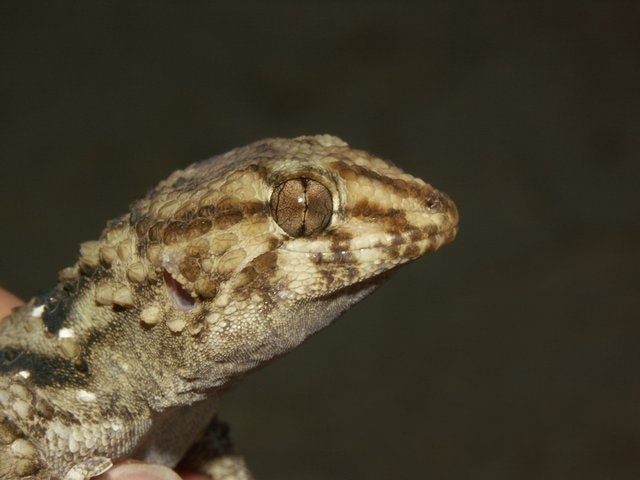
Bibron's Thick-Toed Gecko, Bibron's Gecko
Namibia, South Africa, Eswatini, Southeastern United States
- Moderate-Sized Gecko With A Total Length of 15 To 20 cm .
- Stockier Build Than Most Other Geckos.
- Base Color Is Brown With Beaded Patterns Dorsally.
- Features Black Crossbars On the Back.
- Belly Is White Or Very Light Brown.
- Males Have White Dots; Females May Also Have Them.
- Newly Hatched Geckos Have Solid Line and Color Patterns, Which Become More Broken In Adults.
- Arboreal and Ground-Dwelling.
- Territorial.
- Males Are Very Aggressive Toward Each Other.
- Individuals In the Wild Commonly Exhibit Missing Appendages.
About Bibron's sand gecko
Bibron's sand gecko, scientifically known as Chondrodactylus bibronii, is a species of lizard belonging to the Gekkonidae family. This moderate-sized gecko is native to the southern regions of Africa, specifically found in Namibia, South Africa, and Eswatini, where it is considered one of the larger gecko species. Its common names, including Bibron's thick-toed gecko and Bibron's gecko, honor the French herpetologist Gabriel Bibron.
Description and Habitat
Bibron's sand gecko typically reaches a total length of 15 to 20 cm (6 to 8 inches) and possesses a notably stockier build compared to many other geckos. Its coloration consists of a brown base with distinctive beaded patterns and black crossbars along its dorsal side. The belly is usually white or a very light brown. While newly hatched geckos exhibit solid patterns, adults display more broken designs. This species is both arboreal and ground-dwelling, meaning it inhabits both trees and the ground.
Behavior and Reproduction
Behaviorally, Bibron's sand gecko is territorial, with males exhibiting significant aggression towards one another. This territorial nature and potential conflict may contribute to the common observation of individuals in the wild missing appendages. In terms of reproduction, adult females typically lay two clutches of eggs per year, with each clutch containing two eggs.
Scientific Interest
Beyond its natural range, Chondrodactylus bibronii has been utilized as an animal model in bioastronautic research. This research has focused on understanding the effects of spaceflight on the morphology and physiology of vertebrate animals. The species has also been introduced to the southeastern United States, with established populations noted in Manatee County, Florida.
Source: Wikipedia ↗
Frequently Asked Questions
What is Bibron's sand gecko commonly known as?
Bibron's sand gecko is also commonly known by names such as Bibron's thick-toed gecko, Bibron's gecko, and its scientific name, Chondrodactylus bibronii.
Where is Bibron's sand gecko found geographically?
This species is distributed across the southern part of the African continent, specifically in Namibia, South Africa, and Eswatini. It has also been introduced to southeastern United States, with populations found in Florida.
What are the physical characteristics of Bibron's sand gecko?
Bibron's sand gecko is a moderate-sized lizard, reaching 15 to 20 cm in total length. It has a stocky build, brown base coloration with beaded patterns and black crossbars dorsally, and a white or light brown belly. Males often display white dots, which females may also have.
What is the reproductive behavior of Bibron's sand gecko?
Adult female Bibron's sand geckos typically lay two clutches of eggs each year. Each clutch usually contains two eggs.
What kind of habitat does Bibron's sand gecko prefer?
Bibron's sand gecko is described as both arboreal and ground-dwelling, indicating it can be found in trees as well as on the ground.
What is notable about the behavior of male Bibron's sand geckos?
Males of this species are known to be territorial and can be very aggressive towards each other. This aggression may contribute to individuals commonly being found missing appendages in the wild.
Related Lizards
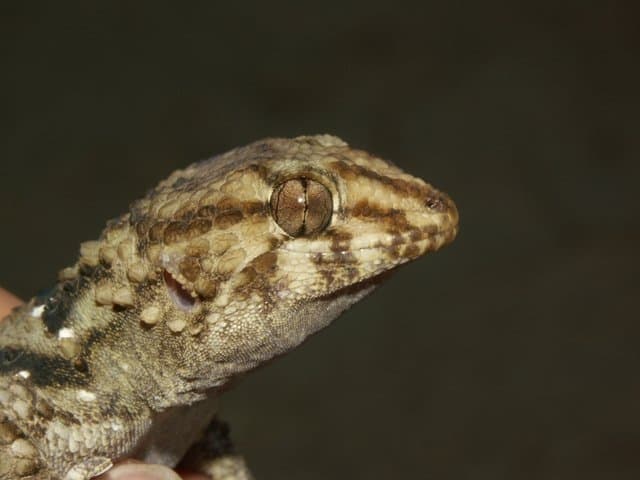
Bibron's thick-toed gecko
Bibron's thick-toed gecko, also known as Bibron's sand gecko, is a moderate-sized lizard native to southern Africa, particularly Namibia, South Africa, and Eswatini. It is characterized by its stocky build, beaded brown dorsal pattern with black crossbars, and a white or light brown belly. This species is notable for its use as an animal model in bioastronautic research.

Iranian fat-tailed gecko
The Iranian fat-tailed gecko is a nocturnal, ground-dwelling lizard found in parts of the Middle East, including Iraq, Iran, Turkey, and Syria. It is characterized by a fatter tail with spots and a distinct light vertebral stripe bordered by black stripes. Its diet primarily consists of insects, though it may also consume smaller vertebrates.

Agama armata
The Agama armata, also known as the tropical spiny agama or northern ground agama, is a small, ground-dwelling lizard native to sub-Saharan Africa. It is characterized by its grey, brown, or red coloration with pale crossbars, and males display vibrant green or blue heads during breeding seasons. This species is found across a wide range of southern and eastern African countries.