
Broadhead skink
The broadhead skink (Plestiodon laticeps) is a large lizard species endemic to the southeastern United States, notable for its semi-arboreal lifestyle and preference for live oak trees. Adult males develop striking orange heads during the spring mating season, while females and juveniles display longitudinal stripes. These skinks are diurnal hunters, feeding on a variety of invertebrates and occasionally smaller vertebrates.
Key Facts
- ›One of the largest "Plestiodon skinks," reaching up to 33 cm in total length.
- ›Adult males have distinctively wide jaws, giving their heads a triangular appearance and bright orange coloration during mating season.
- ›Females and juveniles have five light stripes down their backs and tails, with females distinguished by five labial scales around the mouth.
- ›They are semi-arboreal, foraging on the ground but frequently climbing trees for shelter, sleep, or food.
- ›Females lay 8-22 eggs in decaying log cavities and guard them until hatching.
- ›Broadhead skinks are nonvenomous.

Broad-Headed Skink
Southeastern United States, East Coast, Kansas, Eastern Texas, Ohio, Gulf Coast
Forest, Live Oak Trees, Trees With Holes, Decaying Trees, Fallen Logs, Dense Brushes
- Total Length Ranges From 15 cm To Nearly 33 cm .
- Adult Males Have Wide Jaws, Giving the Head A Triangular Appearance, and Are Brown Or Olive Brown, With Bright Orange Heads During the Spring Mating Season.
- Females Have Five Light Stripes Running Down the Back and Tail, Similar To the Five-Lined Skink.
- Females Are Distinguished From Five-Lined Skinks By Having Five Labial Scales Around the Mouth.
- Females Can Retain Their Blue Juvenile Tails.
- Juveniles Are Black With 5 White Or Yellowish Stripes and A Blue Tail.
Insects, Insect Larvae, Gastropods, Spiders, Anolis Lizards, Juvenile Broadhead Skinks
- Semi-Arboreal, Climbing Trees For Shelter, Sleep, Or Food.
- Forage On the Ground, Often Searching Under Debris For "Hidden Prey".
- Diurnal Feeders, Actively Hunting Prey.
- Exhibit Tail Autotomy When Caught By A Predator.
- Can Detect Chemical Stimuli From Sympatric Snake Predators.
- Females Typically Flee Before Males During Encounters.
- Males May Stand Their Ground During the Breeding Season.
- Use Coloration and Directional Stimuli To Attack Prey.
- Carry Larger Prey To Shelter.
- Males Guard Females During the Breeding Season.
- Females Become Less Active When Pregnant.
Insectivore, Carnivore, Opportunistic Omnivore
Carnivorous Birds, Larger Reptiles, Mammals, Sympatric Snakes
About Broadhead skink
What is the Broadhead Skink?
The broadhead skink, scientifically known as Plestiodon laticeps, is a prominent lizard species native to the southeastern United States. It is one of the largest members of the Plestiodon genus, commonly referred to as "skinks." This species shares its habitat with closely related skinks like the five-lined skink (Plestiodon fasciatus) and the Southeastern five-lined skink (Plestiodon inexpectatus), with whom it was once classified under a single species designation.
Description and Habitat
Broadhead skinks can reach impressive lengths, with adults measuring between 15 cm and nearly 33 cm from snout to tail. Their name derives from their notably wide jaws, which give their heads a distinctive triangular shape. Adult males undergo a striking transformation during the spring mating season, developing bright orange heads against their brown or olive-brown bodies. Females and juveniles, conversely, display five light stripes running longitudinally along their backs and tails. A key distinguishing feature for females is the presence of five labial scales around the mouth, unlike the four found in five-lined skinks. These lizards are semi-arboreal, showing a strong affinity for live oak trees, particularly those with cavities that serve as shelter and nesting sites. Juveniles tend to remain closer to the ground, utilizing low branches, while males may actively defend trees surrounded by dense undergrowth.
Behavior and Diet
As the most arboreal of the North American Plestiodon skinks, broadhead skinks are adept climbers, frequently ascending trees for safety, rest, or foraging. They are diurnal hunters, actively seeking out prey on the ground and often investigating under leaf litter and debris for hidden invertebrates. Their diet is diverse, encompassing insects, insect larvae, spiders, and snails. They are opportunistic feeders and have been observed consuming smaller lizards, including juvenile broadhead skinks. When threatened, they typically flee by climbing trees or seeking cover. If captured, they can employ tail autotomy, shedding their tail to distract predators and facilitate escape. During the breeding season, males can become territorial and aggressive, engaging in combat with rivals to secure mating opportunities.
Reproduction
Reproduction in broadhead skinks involves significant male courtship and defense behaviors. Males often guard females for extended periods, sometimes at great personal risk. Females lay clutches of 8 to 22 eggs, typically within the safety of decaying log cavities. They exhibit parental care by guarding and protecting these eggs until they hatch, usually in June or July. The hatchlings emerge with a characteristic blue tail, a feature that adult females sometimes retain.
Source: Wikipedia ↗
Frequently Asked Questions
What is the difference between a broadhead skink and a five-lined skink?
Broadhead skinks and five-lined skinks are phenotypically similar, especially during development, and were once considered the same species. Adult females can be distinguished by having five labial scales around the mouth compared to the four found in five-lined skinks. Males also differ significantly in coloration during breeding season.
What do broadhead skinks eat?
Broadhead skinks are opportunistic diurnal feeders with a varied diet. They primarily consume insects, insect larvae, gastropods, and spiders. Their larger size allows them to also eat smaller lizards, including juvenile broadhead skinks.
Where do broadhead skinks live?
These lizards are found throughout the southeastern United States, with their range extending from the East Coast to Kansas and eastern Texas, and from Ohio down to the Gulf Coast. They are strongly associated with live oak trees and prefer habitats with holes for shelter and nesting.
How big do broadhead skinks get?
Broadhead skinks are among the largest of the 'Plestiodon skinks,' with total lengths ranging from 15 cm (5.9 in) to nearly 33 cm (13 in). Males are typically larger than females.
Are broadhead skinks venomous?
No, broadhead skinks are nonvenomous. Despite some misconceptions, they do not possess venom and pose no threat to humans.
What are the reproductive habits of the broadhead skink?
During the breeding season, males exhibit aggressive behavior to guard females and engage in fights with other males. Females lay between 8 and 22 eggs in decaying log cavities, which they then guard until hatching in June or July.
What are the predators of the broadhead skink?
Broadhead skinks are preyed upon by a variety of animals, including carnivorous birds, larger reptiles, and mammals. They employ defense mechanisms such as fleeing to trees or foliage, and exhibiting tail autotomy (shedding their tail) to distract predators.
Related Lizards

Plestiodon laticeps
The broad-headed skink (Plestiodon laticeps) is a large lizard species found in the southeastern United States. Named for its broad jaws that give its head a triangular appearance, adult males develop bright orange heads during the spring mating season. These semi-arboreal lizards primarily inhabit forests, often associating with live oak trees and utilizing decaying wood for nesting and overwintering.

Amphisbaena ridleyi
Amphisbaena ridleyi, also known as Ridley's worm lizard or the Noronha worm lizard, is a species unique to the island of Fernando de Noronha off the coast of Brazil. This legless reptile possesses a stout head with a broad snout and a tail that resembles its head, allowing it to move effectively in both directions. Its diet consists primarily of snails and other invertebrates, though it has also been observed climbing trees to feed on nectar during droughts.
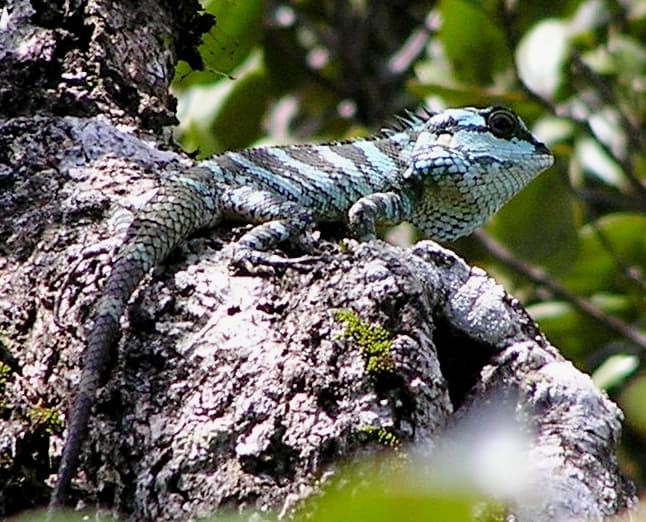
Crestless lizard
The Crestless lizard, also known as the spineless forest lizard or lionhead agama, is an agamid lizard endemic to Sri Lanka. It is characterized by its cryptic coloration, which aids in camouflage among treetops, and the notable absence of spines above its ear, distinguishing it from related species. This arboreal species is diurnal and feeds primarily on insects and other small animals.