
Amphisbaena ridleyi
Amphisbaena ridleyi, also known as Ridley's worm lizard or the Noronha worm lizard, is a species unique to the island of Fernando de Noronha off the coast of Brazil. This legless reptile possesses a stout head with a broad snout and a tail that resembles its head, allowing it to move effectively in both directions. Its diet consists primarily of snails and other invertebrates, though it has also been observed climbing trees to feed on nectar during droughts.
Key Facts
- ›Endemic to the island of Fernando de Noronha, Brazil.
- ›Possesses a stout head with a broad snout and a tail that superficially resembles the head.
- ›Carnivorous, with a specialized diet of snails and other invertebrates.
- ›Moves using an accordion-like motion, capable of locomotion in both forward and reverse.
- ›Oviparous, meaning it reproduces by laying eggs.
- ›One of only two indigenous reptiles found on Fernando de Noronha.

Ridley's Worm Lizard, Noronha Worm Lizard
Fernando De Noronha, Brazil
- Superficially Resembles Primitive Snakes But Has Distinct Amphisbaenian Features.
- Right Lung Is Reduced In Size.
- Typical Length of 250 mm .
- Stout Head With A Broad Snout, Not Set Off From the Neck.
- Most of the Skull Is Solid Bone.
- Distinctive Single Median Tooth In the Upper Jaw.
- No Outer Ears; Eyes Are Deeply Recessed and Covered With Skin and Scales.
- Elongated Body.
- Tail Truncates In A Manner That Vaguely Resembles the Head.
- Lacks Legs But Has Remnants of Pelvic and Pectoral Girdles Embedded Within Body Musculature.
- Tail Is Only Loosely Attached To the Body.
- Carnivorous
- Primarily Snails
- Other Invertebrates
- Nectar From Mulungu Tree Flowers During Droughts
Moves Using An Accordion-Like Motion., Capable of Effective Locomotion In Reverse., Can Be Found Basking In the Sun., Can Be Found By Turning Over Stones.
About Amphisbaena ridleyi
Amphisbaena ridleyi: Ridley's Worm Lizard
Amphisbaena ridleyi, commonly known as Ridley's worm lizard or the Noronha worm lizard, is a fascinating species of legless reptile endemic to the remote island of Fernando de Noronha, situated off the coast of Brazil. It holds the distinction of being one of the only two indigenous reptiles found on this volcanic archipelago.
Physical Characteristics and Locomotion
Despite a superficial resemblance to snakes, Amphisbaena ridleyi possesses unique traits that distinguish it as an amphisbaenian. It has a stout head with a broad snout and lacks external ears, with its eyes being recessed and covered by scales. A particularly notable feature is its tail, which truncates in a way that can vaguely resemble the head, contributing to its peculiar mode of locomotion. The creature moves using an accordion-like motion, allowing it to travel effectively in both forward and reverse directions. While it lacks legs, remnants of its pelvic and pectoral girdles are embedded within its musculature.
Diet and Behavior
This species is carnivorous, with a specialized diet that primarily consists of snails, for which it has blunt, interlocking teeth adapted for crushing. Its diet extends to other invertebrates as well. Intriguingly, during periods of drought, Amphisbaena ridleyi has been observed climbing the trunks of Mulungu trees to feed on nectar from their flowers. They are often found by turning over stones, and have been reported basking in the sun on rocky outcrops.
Taxonomy and Discovery
The species was officially described by George Albert Boulenger in 1890, who named it in honor of botanist Henry Nicholas Ridley, who collected specimens on Fernando de Noronha in 1887. The generic name Amphisbaena derives from Greek words meaning "both ways" and "to go," a reference to the animal's ability to move in either direction. Historical accounts suggest that early explorers like Amerigo Vespucci may have encountered this species, though the exact details are uncertain.
Source: Wikipedia ↗
Frequently Asked Questions
What is Amphisbaena ridleyi?
Amphisbaena ridleyi is a species of amphisbaenian, commonly known as Ridley's worm lizard or the Noronha worm lizard. It is a legless reptile endemic to the island of Fernando de Noronha.
Where is Amphisbaena ridleyi found?
This species is exclusively found on the island of Fernando de Noronha, a small volcanic archipelago located off the northeastern coast of Brazil.
What does Amphisbaena ridleyi eat?
Amphisbaena ridleyi is carnivorous and primarily feeds on snails, for which it has specialized crushing teeth. Its diet also includes other invertebrates. During dry periods, it has been observed climbing trees to consume nectar from flowers.
How does Amphisbaena ridleyi move?
Amphisbaena ridleyi moves using an accordion-like motion where its skin shifts, and its body follows. This unique locomotion allows it to move effectively in both forward and reverse directions.
What are the distinctive physical features of Amphisbaena ridleyi?
It has a stout head with a broad snout, no external ears, and deeply recessed eyes. Its tail is truncated and vaguely resembles the head, contributing to its ability to move in either direction. The species lacks legs but has internal remnants of limb girdles.
How does Amphisbaena ridleyi reproduce?
Amphisbaena ridleyi is oviparous, which means it reproduces by laying eggs.
Related Lizards
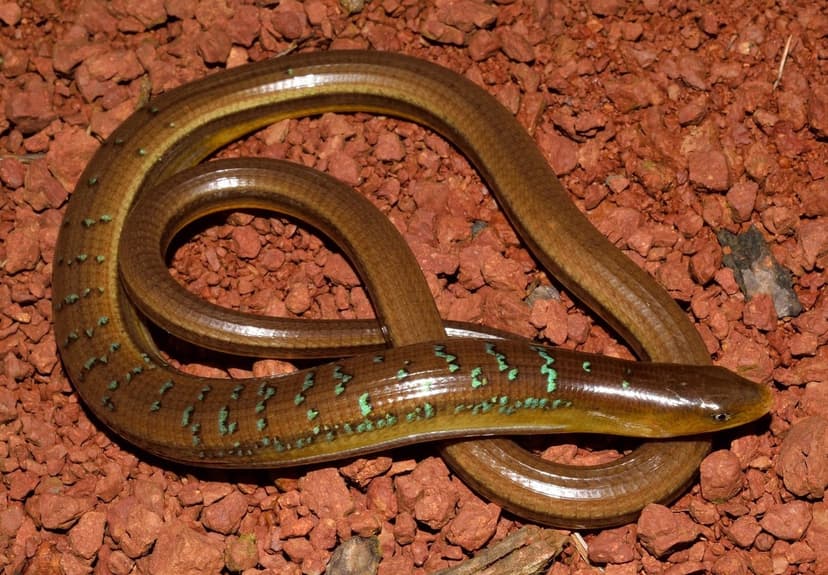
Burmese glass lizard
The Burmese glass lizard, also known as the Asian glass lizard or Indian glass snake, is a legless lizard species found across Southeast Asia and parts of South Asia. It is characterized by its smooth ventral scales, a slight keel on its dorsal scales, and a distinct lateral fold of skin that allows for expansion. This oviparous species likely inhabits dry areas and preys on small vertebrates.

European snake-eyed skink
The European snake-eyed skink, also known as the European copper skink, is a small, slender lizard native to Eastern Europe and Southwestern Asia. It is characterized by its bronze coloration and immovable eyelids, a feature distinguishing it from many other skinks. This shy species inhabits dry, open areas, preferring to live under stones and leaves, and is primarily active during twilight hours.
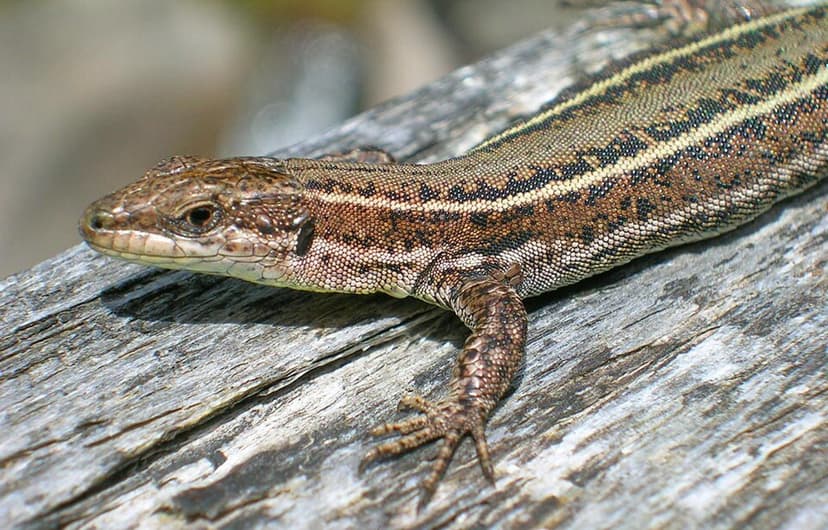
Podarcis atrata
The Columbretes wall lizard, scientifically known as Podarcis atrata, is a slender lizard characterized by its long tail, narrow head, and long toes. Its coloration is typically grey-brown with subtle spots and stripes, more prominent in females, and a cream or beige underside that may have a reddish hue. This species inhabits the northeastern Iberian Peninsula and parts of southern France.