
Brookesia betschi
Brookesia betschi, also known as Blanc's leaf chameleon or the Marojejy leaf chameleon, is a small lizard species endemic to the forests of northern Madagascar. This diurnal reptile relies on its cryptic coloration for camouflage and inhabits subhumid forests at high altitudes. It is oviparous and faces threats from habitat destruction.
Key Facts
- ›Endemic to northern Madagascar.
- ›Found in subhumid forests at altitudes between 1,150 and 1,650 meters.
- ›Diurnal, meaning it is active during the day.
- ›Relies on motionless behavior and cryptic coloration for camouflage.
- ›Oviparous, laying eggs as its method of reproduction.
- ›Rated as near Threatened by the IUCN due to rainforest loss.

Blanc's Leaf Chameleon, Marojejy Leaf Chameleon
Madagascar
Subhumid Forests, Forest
Small Lizard Species., Relies On Cryptic Coloration For Camouflage.
Insects, Small Invertebrates
Diurnal, Remains Motionless When Disturbed, Relies On Cryptic Coloration For Camouflage, Perches On Low Trees and Plants At Night
- Loss of Rainforest
- Destruction of the Forest For Agriculture By Slash and Burn
- Logging
About Brookesia betschi
Brookesia betschi, commonly recognized as Blanc's leaf chameleon or the Marojejy leaf chameleon, is a species of lizard belonging to the Chamaeleonidae family. This species is exclusively found in the island nation of Madagascar.
Taxonomy and Discovery
The species was first formally described by Édouard-Raoul Brygoo, Charles Pierre Blanc, and Charles Antoine Domergue in 1974. The original specimen was collected in 1973 from a forest in Marojejy at an elevation of 1,300 meters. The specific epithet, "betschi," was chosen to honor the French biologist Jean-Marie Betsch.
Geographic Range and Habitat
Brookesia betschi inhabits the forests of northern Madagascar. Its range extends across subhumid forest environments within several reserves, including Manongarivo Reserve, Anjanaharibe-Sud Reserve, Marojejy National Park, and Tsaratanana Reserve. These chameleons are found at altitudes typically between 1,150 and 1,650 meters. The total area it occupies is approximately 11,090 square kilometers.
Behavior and Diet
This chameleon is diurnal, meaning it is active during daylight hours. Its days are spent foraging through leaf litter in search of insects and other small invertebrates. When faced with a perceived threat, Brookesia betschi employs a defense mechanism of remaining motionless, relying on its natural cryptic coloration for camouflage against its surroundings. At night, it perches on low-lying trees and plants, a behavior that makes it more conspicuous.
Reproduction
Brookesia betschi reproduces by laying eggs, classifying it as oviparous.
Conservation Status
The International Union for Conservation of Nature (IUCN) has classified the Marojejy leaf chameleon as Near Threatened. This status is attributed to the significant loss of rainforest habitat in northern Madagascar. The species possesses highly specialized microhabitat requirements and is intolerant of environmental disturbances. Its survival is threatened by forest destruction for agricultural purposes, particularly through slash-and-burn techniques, and by logging activities. While its habitat is fragmented, each section is believed to be large enough to sustain a viable population.
Source: Wikipedia ↗
Frequently Asked Questions
What are the common names for Brookesia betschi?
Brookesia betschi is commonly known as Blanc's leaf chameleon or the Marojejy leaf chameleon. These names reflect its geographical location and its camouflage abilities.
Where is Brookesia betschi found?
This species is endemic to the forests of northern Madagascar. It inhabits subhumid forests within protected areas such as Manongarivo Reserve, Anjanaharibe-Sud Reserve, Marojejy National Park, and Tsaratanana Reserve.
What is the habitat of Brookesia betschi?
Brookesia betschi lives in subhumid forests at altitudes ranging from 1,150 to 1,650 meters (3,770 to 5,410 ft). It requires specialized microhabitats that do not tolerate disturbance.
How does Brookesia betschi behave?
This chameleon is diurnal, actively searching for insects and small invertebrates in leaf litter during the day. When threatened, it remains motionless, using its camouflage to blend in. It perches on low trees and plants at night.
What is the conservation status of Brookesia betschi?
The Marojejy leaf chameleon is classified as Near Threatened by the International Union for Conservation of Nature. This is primarily due to the destruction of its rainforest habitat in northern Madagascar.
What are the threats to Brookesia betschi?
The primary threats to Brookesia betschi are habitat destruction due to slash-and-burn agriculture and logging. The species has very specific habitat requirements and cannot tolerate environmental disturbances.
Related Lizards

Furcifer timoni
Furcifer timoni is a species of chameleon endemic to the Montagne d'Ambre National Park in northern Madagascar. This lizard is characterized by its distinctive coloration, with females displaying a green base with blue spots and males having a green head with purplish spots. Its preferred habitat is forest, and it is classified as Near Threatened by the IUCN due to potential threats like logging.
Calumma parsonii
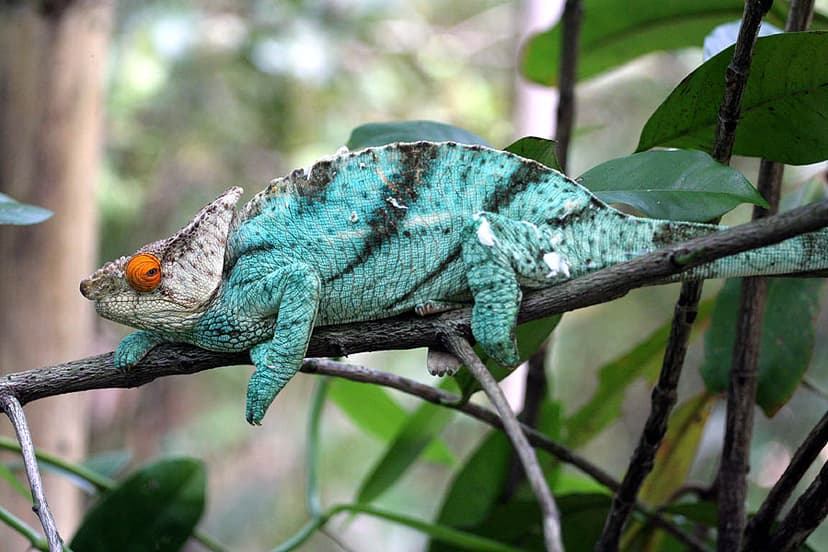
Parson's chameleon (Calumma parsonii) is one of the world's largest chameleons, known for its impressive size, longevity, and slow reproductive rate. Primarily found in the humid primary forests of eastern and northern Madagascar, this species exhibits striking color variations in males and is a slow-moving, sit-and-wait predator. Despite its protected status and large range, it faces threats from habitat loss and the pet trade.

Brookesia griveaudi
The Marojejy leaf chameleon, scientifically known as Brookesia griveaudi, is a species of chameleon endemic to northeastern Madagascar. This lizard, described in 1974, is characterized by its presence in the Marojejy National Park and surrounding areas. It is currently listed as Near Threatened due to habitat degradation.