
Calumma parsonii
Parson's chameleon (Calumma parsonii) is one of the world's largest chameleons, known for its impressive size, longevity, and slow reproductive rate. Primarily found in the humid primary forests of eastern and northern Madagascar, this species exhibits striking color variations in males and is a slow-moving, sit-and-wait predator. Despite its protected status and large range, it faces threats from habitat loss and the pet trade.
Key Facts
- ›Considered the world's largest chameleon by weight.
- ›Can reach up to 65 cm (26 in) in total length, with unverified reports exceeding 80 cm.
- ›Possesses one of the longest incubation periods of any reptile, ranging from 400 to 660 days.
- ›Exhibits significant sexual dimorphism, with males being larger and possessing a prominent casque.
- ›Males display distinct color variants, including 'orange eye,' 'yellow lip,' 'yellow giant,' and 'green giant.'
- ›Estimated lifespan in the wild is 10-12 years, with captive individuals potentially reaching 20 years.
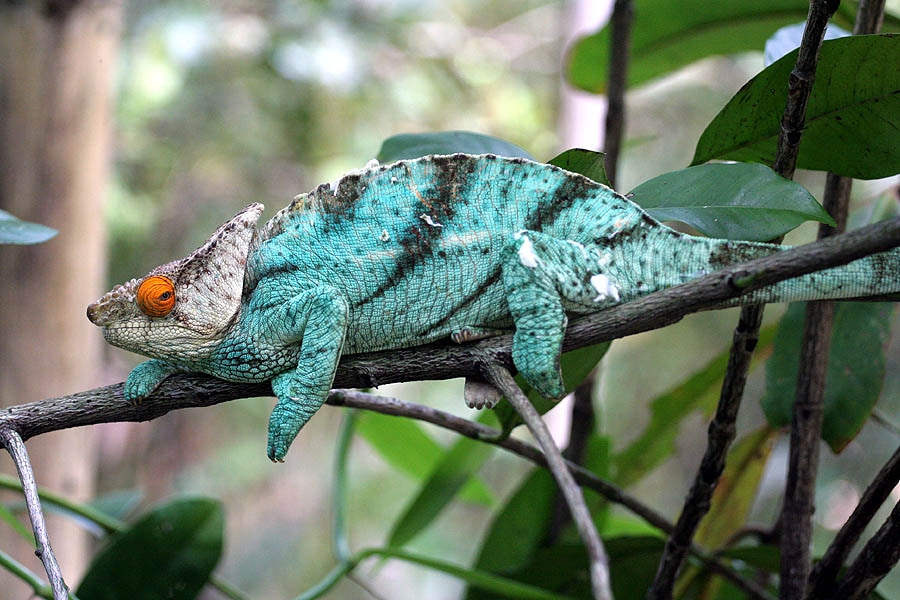
Parson's Chameleon
Madagascar
Humid Primary Forest, Disturbed Habitats With Trees
- One of the World's Largest Chameleon Species By Weight.
- Adult Males Typically Weigh 500–700 g.
- Adult Males Have A Casque On the Top of Their Head and Ridges Running From Above the Eyes To the Nose, Forming Two Warty 'Horns'.
- Nominate Subspecies Reaches Up To 65 cm Total Length, With Unverified Reports Over 80 cm.
- C. P. Cristifer Subspecies Reaches Up To 50 cm Total Length, With Unverified Reports Over 60 cm.
- Males of the Nominate Subspecies Have Four Main Color Variants: 'Orange Eye' , 'Yellow Lip' , 'Yellow Giant' , and 'Green Giant' .
- Males of C. P. Cristifer Are Overall Green Or Turquoise With A Yellow-Orange Or Rusty-Orange Blotch On Their Side.
- When Stressed, Males Become Duller Or Darker With Stronger Dark Spotting and Three Diagonal Body Bars.
- Females Are Smaller Than Males, Have A Smaller Casque, and No Or Tiny Nose Projections.
- Females Are Typically Overall Greenish, Sometimes Brownish, and May Have A Light Spot On Their Side.
- When Stressed, Females Tend To Show Yellow, Potentially Becoming Mostly Yellow With Green Spots.
- Juveniles Are Very Similar, Brown, Orangish, Or Green.
- All Ages and Sexes Become Paler When Sleeping.
- Invertebrates, Especially Insects
- Small Vertebrates Like Lizards and Small Birds
- Occasional Unverified Reports of Plant Material
- Slow-Moving and Quite Inactive, More Active During the Breeding Season.
- Sit-and-Wait Predator.
- Become Paler When Sleeping At Night.
- Males Become Duller Or Darker and Show Stronger Spotting/Bars When Stressed.
- Females Show Yellow When Stressed.
Insectivore, Carnivore, Opportunistic
Habitat Loss, Unregulated Collection For the Pet Trade
About Calumma parsonii
Parson's Chameleon (Calumma parsonii)
Parson's chameleon, scientifically known as Calumma parsonii, is a magnificent and sizeable species of chameleon native to Madagascar. It holds the distinction of being one of the world's largest chameleons by weight and is noted for its impressive longevity and slow reproductive cycle. This species is primarily found in the humid primary forests of eastern and northern Madagascar, inhabiting areas from lowlands up to an altitude of 1,195 meters.
Description and Variants
Adult males of Calumma parsonii are particularly striking, often weighing between 500 to 700 grams. They possess a prominent casque on their head and distinctive ridges that form two warty projections, often referred to as 'horns'. The species exhibits significant sexual dimorphism, with females being smaller and having a less pronounced casque and fewer horn-like features. Males are known for their remarkable color variations, with four main morphs described within the nominate subspecies: the 'orange eye' or 'white-lipped', the 'yellow lip', the 'yellow giant', and the 'green giant'. These colorations typically involve shades of green or turquoise, accented by distinct colors on their eyelids, lips, or overall body. When stressed, males tend to display duller colors and more pronounced markings, while females may exhibit yellow coloration.
Diet and Predation
As a sit-and-wait predator, Parson's chameleon primarily feeds on invertebrates, with insects forming the bulk of its diet. They are also opportunistic feeders and have been observed consuming small vertebrates such as other lizards and birds. While unusual for chameleons, there are unconfirmed reports suggesting occasional consumption of plant material like leaves, flowers, and pollen.
Life Cycle and Longevity
The reproductive cycle of Calumma parsonii is characterized by its long duration. Breeding occurs seasonally, with mating at the start of the rainy season and egg-laying towards its end. Females lay a single clutch of 20 to 60 eggs, which are buried in the ground. The incubation period is exceptionally long, typically ranging from 400 to 660 days, making it one of the longest known for any reptile. Females can retain sperm for fertilization of multiple clutches over time. Parson's chameleon is also one of the longest-lived chameleon species, with an estimated lifespan of 10 to 12 years in the wild, and potentially up to 20 years in captivity.
Conservation Status
Calumma parsonii is categorized as Near Threatened by the IUCN. While it has a considerable range encompassing protected areas, it exists at low population densities. The species faces significant threats from habitat loss, primarily due to agricultural practices like slash-and-burn farming and logging, as it relies heavily on primary forest ecosystems. The unregulated pet trade also poses a substantial risk, exacerbated by the chameleon's slow breeding rate. Legal international trade is regulated under CITES Appendix II, but illegal trade remains a concern.
Source: Wikipedia ↗
Frequently Asked Questions
What is Parson's chameleon?
Parson's chameleon (Calumma parsonii) is a large species of chameleon endemic to Madagascar. It is renowned for its considerable size, long lifespan, and slow reproduction, making it one of the most distinctive chameleon species.
Where does Parson's chameleon live?
This species is found in eastern and northern Madagascar, inhabiting humid primary forests from lowlands up to altitudes of 1,195 meters. While it prefers undisturbed forests, it can also be found in disturbed areas that retain trees.
What are the physical characteristics of Parson's chameleon?
Adult males can weigh between 500-700 grams and have a distinctive casque on their head, along with ridges forming two warty 'horns'. They exhibit various color morphs, often green or turquoise with different colored eyelids or lips. Females are smaller and have a less pronounced casque and fewer horn-like projections.
What does Parson's chameleon eat?
Parson's chameleons are primarily insectivores, feeding on invertebrates. However, they are opportunistic feeders and have been known to consume small vertebrates such as other lizards and birds. There are also unverified reports of them consuming plant material.
How long does it take for Parson's chameleon eggs to hatch?
The incubation period for Parson's chameleon eggs is exceptionally long, typically ranging from 400 to 660 days. This is one of the longest known incubation periods for any reptile species, with some instances exceeding 781 days.
What is the lifespan of Parson's chameleon?
Parson's chameleon is one of the longest-lived chameleon species. In the wild, they are estimated to live 10 to 12 years, with males reaching at least 9 years and females at least 8 years. In captivity, individuals have lived up to 14 years, with potential to reach 20 years.
What are the threats facing Parson's chameleon?
The primary threats to Parson's chameleon are habitat loss due to slash-and-burn agriculture and logging, as they are dependent on primary forests. Additionally, unregulated collection for the pet trade poses a significant risk due to their slow reproductive rate.
Related Lizards

Paroedura masobe
The Paroedura masobe, also known as the masobe gecko, is an endangered species recognized for its distinctive white-speckled dark skin and large eyes. This arboreal gecko inhabits low elevation humid primary forests in Madagascar, typically found 1-4 meters above the forest floor. Its population is decreasing due to habitat loss and the pet trade, leading to its classification on CITES Appendix II.

Calumma globifer
The globe-horned chameleon, also known as the flat-casqued chameleon (*Calumma globifer*), is a large chameleon species native to fragmented humid primary forests in eastern and southeastern Madagascar. It is recognized for its striking color variations and is listed on CITES Appendix II due to regulated trade.

Brookesia betschi
Brookesia betschi, also known as Blanc's leaf chameleon or the Marojejy leaf chameleon, is a small lizard species endemic to the forests of northern Madagascar. This diurnal reptile relies on its cryptic coloration for camouflage and inhabits subhumid forests at high altitudes. It is oviparous and faces threats from habitat destruction.