
Brookesia micra
Oviparous (implied by chameleon biology)
Brookesia micra, also known as the Nosy Hara leaf chameleon, is a species of chameleon discovered on the islet of Nosy Hara in Madagascar. It is notable for being one of the smallest known chameleons and reptiles worldwide, with adults reaching a maximum length of just 29 mm. This species inhabits limestone karst areas, residing in leaf litter during the day and sleeping on tree branches at night.
Key Facts
- ›Brookesia micra was once the smallest known chameleon and among the smallest reptiles.
- ›Adults have a total body length of less than 30 mm.
- ›Males have a maximum snout-vent length of 16 mm.
- ›They inhabit limestone karst (tsingy) areas on Nosy Hara, Madagascar.
- ›Brookesia micra sleep on tree branches at night and reside in leaf litter during the day.
- ›Adult males have distinctive orange tails, unlike the brown tails of females and juveniles.

Nosy Hara Leaf Chameleon
Madagascar
- Adults Can Grow Up To 29 mm In Total Length.
- Males Reach A Maximum Snout-Vent Length of 16 mm.
- Total Body Length of Both Sexes Is Less Than 30 mm.
- Possess A Shorter Tail and A Larger Head Compared To Brookesia Minima.
- Adult Males Have Orange Tails, While Females and Juveniles Have Brown Tails.
Insects
- Reside In Leaf Litter During the Day.
- Climb Tree Branches Up To 10 cm High At Night To Sleep.
Habitat Destruction, Illegal Logging
About Brookesia micra
Brookesia micra, also commonly referred to as the Nosy Hara leaf chameleon, is a remarkable species of chameleon celebrated for its diminutive size. Discovered on the small, uninhabited islet of Nosy Hara off the coast of Madagascar, it held the distinction of being the smallest known chameleon and one of the smallest reptiles in the world at the time of its description. Its scientific name, derived from the Greek "mikros," aptly reflects its tiny stature.
Description and Habitat
Adult Brookesia micra individuals rarely exceed 29 mm (1.1 inches) in total length, with males having a snout-vent length of up to 16 mm (0.63 inches). A distinctive feature is the bright orange tail of adult males, contrasting with the more muted brown tails of females and juveniles. The species also exhibits a shorter tail and a larger head in comparison to some related Brookesia species. These chameleons are primarily found in areas characterized by limestone karst, known as tsingy. They spend their days concealed within leaf litter and ascend small tree branches, up to 10 cm (3.9 inches), to sleep during the night. This specialized habitat is thought to provide essential moisture and protection from predators.
Distribution and Conservation Concerns
Brookesia micra's known range is limited to the islet of Nosy Hara. The species is particularly vulnerable to habitat degradation. The region where it resides is subject to illegal logging activities, raising concerns about its long-term survival. Due to its highly specific habitat requirements, any significant destruction of its environment would place Brookesia micra at a high risk of extinction.
Source: Wikipedia ↗
Frequently Asked Questions
What is Brookesia micra known for?
Brookesia micra is primarily known for its extremely small size, making it one of the smallest chameleons and reptiles discovered. It was once the smallest known chameleon until the discovery of Brookesia nana.
Where does Brookesia micra live?
This species is found exclusively on the small, uninhabited islet of Nosy Hara, located in the Nosy Hara archipelago off the coast of Madagascar. Its habitat is characterized by limestone karst (tsingy).
What are the physical characteristics of Brookesia micra?
Adults are tiny, with a total body length under 30 mm. Males have a snout-vent length of up to 16 mm and possess bright orange tails, contrasting with the more subdued brown tails of females and juveniles. Compared to similar species like Brookesia minima, they have a shorter tail and a larger head.
What is the habitat of Brookesia micra?
Brookesia micra thrives in areas with tsingy, which is limestone karst. They are found in leaf litter during the day and ascend tree branches as high as 10 cm to sleep at night. The presence of tsingy may provide moisture and predator protection.
What are the threats facing Brookesia micra?
The species is considered sensitive to habitat destruction due to illegal logging in its area. Its highly specific habitat requirements mean that significant habitat loss would put the species at high risk of extinction.
Related Lizards
Sierra curlytail lizard
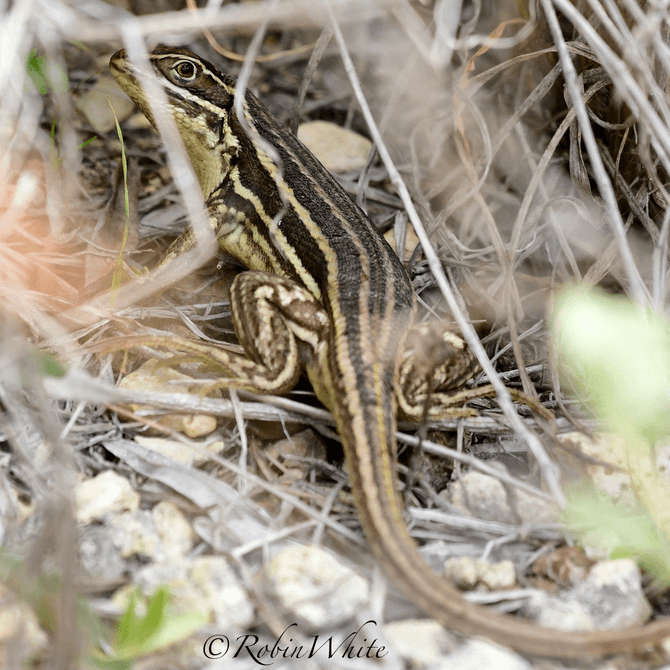
The Sierra curlytail lizard (*Leiocephalus onaneyi*) is a critically endangered species endemic to the Guantánamo Province of Cuba. This medium-sized lizard is characterized by a distinctive chocolate-brown dorsal stripe bordered by darker lines, with multiple alternating stripes extending along its back. Its habitat is a xeric environment with limestone karst topography near the coast.

Paroedura picta
The ocelot gecko (Paroedura picta) is a crepuscular, ground-dwelling lizard native to the leaf litter of Madagascar's forests. Known for its distinctive ocelot-like markings and a slender body, this species is also a popular pet. While primarily insectivorous and nocturnal, they possess the ability to climb surfaces when startled.

Lygodactylus madagascariensis
The Madagascar dwarf gecko (Lygodactylus madagascariensis) is a small, diurnal gecko species endemic to Madagascar. It inhabits a variety of ecosystems, from rainforests to human-altered gardens, and is characterized by its agile bodies and specialized toe pads for climbing. Conservation efforts are ongoing due to threats like habitat loss and introduced species.