
Lygodactylus madagascariensis
The Madagascar dwarf gecko (Lygodactylus madagascariensis) is a small, diurnal gecko species endemic to Madagascar. It inhabits a variety of ecosystems, from rainforests to human-altered gardens, and is characterized by its agile bodies and specialized toe pads for climbing. Conservation efforts are ongoing due to threats like habitat loss and introduced species.
Key Facts
- ›Endemic to Madagascar and its surrounding islands.
- ›Small, diurnal geckos with specialized toe pads for climbing.
- ›Inhabits diverse ecosystems including rainforests, dry forests, and gardens.
- ›Its population of females decreases during dry seasons, leading to fewer eggs.
- ›Listed as Vulnerable on the IUCN Red List.
- ›Faces threats from habitat loss, introduced species, and trade.

Madagascar Dwarf Gecko
Madagascar, Nosy Be, Sambirano Region, Northern Regions of Madagascar
Tropical Humid Forests, Subtropical Humid Forests, Rain Forests, Dry Forests, Savannas, Deserts, Montane Environments, Leaf Litter, Bark Crevices, Rock Crevices, Understory, Canopy, Human-Altered Habitats, Gardens, Plantations
- Relatively Small Size With A Snout-To-Vent Length of 28.5–34.0 mm.
- Typically Shows A Coloration With Irregular Beige Patches Forming In Longitudinal Rows Across the Brown Dorsum.
- Features Irregular Dark Brown Markings.
Insects, Fruit, Nectar
- Diurnal .
- Agile Bodies and Specialized Toe Pads Enable Easy Climbing of Trees and Shrubs.
- Coloration and Patterns Provide Camouflage.
Snakes, Larger Lizards, Birds, Mammals
Habitat Loss, Agriculture, Introduced Species, International Trade
About Lygodactylus madagascariensis
Lygodactylus madagascariensis: The Madagascar Dwarf Gecko
The Madagascar dwarf gecko, scientifically known as Lygodactylus madagascariensis, is a small, diurnal lizard species found exclusively in Madagascar and its surrounding islands. These geckos are characterized by their agile bodies and specialized toe pads, which allow them to navigate trees and shrubs with ease. Their coloration typically includes irregular beige patches on a brown dorsum, accented by dark brown markings, providing effective camouflage within their varied environments.
Habitat and Distribution
Lygodactylus madagascariensis inhabits a diverse range of ecosystems, including tropical and subtropical humid forests, dry forests, savannas, deserts, and montane environments. Their microhabitats can be found in leaf litter, bark and rock crevices, and within the understory and canopy of vegetation. Historically, Madagascar is hypothesized to be the geographic origin of the Lygodactylus genus. The species has been well-documented in several specific locations within the Sambirano and northern regions of Madagascar, including Nosy Be and the Manarikoba Forest.
Life Cycle and Reproduction
Members of the Lygodactylus genus generally have a lifespan of 5 to 10 years, with the potential for a longer life in captivity. A notable aspect of the Madagascar dwarf gecko's life cycle is its reproductive pattern, which is influenced by seasonal dryness. Unlike some other geckos, they do not reproduce during the dry seasons in the rainforest. During drier periods, the population of females decreases, leading to fewer eggs being laid.
Ecology and Conservation
This species faces a variety of natural predators, including snakes, larger lizards, birds, and mammals. They also compete with other gecko species, such as other dwarf geckos (Lygodactylus spp.) and day geckos (Phelsuma spp.), for resources like food and suitable habitat. The Madagascar dwarf gecko is classified as Vulnerable on the IUCN Red List due to significant threats. Habitat loss, driven by agricultural expansion and human landscape modification, is a major concern, particularly in areas like Nosy Be and Nosy Komba where vegetation coverage has been extensively altered. The introduction of non-native gecko species also poses a threat, as they can displace native populations. While international trade is regulated, the species' vulnerability necessitates ongoing conservation efforts, including the protection of critical habitats like Lokobe National Park.
Source: Wikipedia ↗
Frequently Asked Questions
Where do Madagascar dwarf geckos live?
Madagascar dwarf geckos are found in Madagascar and its surrounding islands. They inhabit a range of ecosystems, including rainforests, dry forests, coastal areas, and even human-altered habitats like gardens and plantations.
What do Madagascar dwarf geckos eat?
The article mentions that dwarf geckos and day geckos compete for food sources such as insects, fruit, and nectar. This suggests that the Madagascar dwarf gecko likely consumes these items as well.
What is the conservation status of the Madagascar dwarf gecko?
The Madagascar dwarf gecko is listed as Vulnerable under the International Union for Conservation of Nature Red List. This status highlights the significant threats facing the species.
What are the main threats to the Madagascar dwarf gecko?
The primary threats include habitat loss due to human activities like agriculture, the spread of introduced species that can displace native geckos, and the international trade of wild animals.
How do Madagascar dwarf geckos reproduce?
While the article states that most species in the Gekkonidae family lay two eggs with a calcareous shell, it also notes that the Madagascar dwarf gecko does not reproduce in dry seasons of the rainforest. Their female population decreases during these dry periods, leading to fewer eggs being laid.
What is the typical lifespan of a Madagascar dwarf gecko?
Members of the Lygodactylus genus, which includes the Madagascar dwarf gecko, generally have a lifespan between 5 and 10 years. However, they can live longer in captivity.
Related Lizards

Chamaeleonidae
Chamaeleonidae, commonly known as chameleons, are a family of Old World lizards renowned for their distinctive color-shifting abilities, used for camouflage and social signaling. They possess specialized zygodactylous feet, prehensile tails, and independently mobile eyes, along with projectile tongues for capturing prey. These diurnal reptiles inhabit diverse environments across Africa, Madagascar, southern Europe, and southern Asia, ranging from rainforests to deserts.

Hokou gecko
The Hokou gecko (Gekko hokouensis) is a small, nocturnal, and insectivorous gecko found across parts of East Asia and introduced to several islands. It is characterized by shades of brown, grey, or tan with distinct darker cross-bands on its back and tail, and a unique scale near the base of its tail. This species plays a role in its ecosystem, primarily by consuming insects, and its reproductive cycle largely occurs during the summer months.
Xantusia vigilis
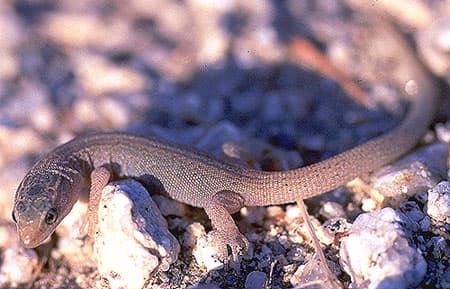
The desert night lizard (Xantusia vigilis) is a small, secretive reptile found in arid and semi-arid regions of the southwestern United States and northern Mexico. Despite its name, it is diurnal and known for its ability to change color from light olive to dark brown. A distinctive feature of this species is its unusual social behavior, forming family groups that can persist for years.