
Calumma globifer
The globe-horned chameleon, also known as the flat-casqued chameleon (*Calumma globifer*), is a large chameleon species native to fragmented humid primary forests in eastern and southeastern Madagascar. It is recognized for its striking color variations and is listed on CITES Appendix II due to regulated trade.
Key Facts
- ›Endemic to isolated pockets of humid primary forest in eastern and southeastern Madagascar.
- ›Listed on CITES Appendix II, regulating international trade.
- ›Can exhibit a range of colors including red-brown, yellow, black, white, and green.
- ›Considered a large species of chameleon.

Globe-Horned Chameleon, Flat-Casqued Chameleon
Madagascar
- Large Species of Chameleon
- Color Variations Include Red-Brown, Yellow, Black, White, and Green.
About Calumma globifer
The Globe-Horned Chameleon (Calumma globifer)
The globe-horned chameleon, scientifically known as Calumma globifer, is a notable species of chameleon distinguished by its significant size. This reptile is endemic to Madagascar, specifically found in isolated and humid primary forest environments within the eastern and southeastern regions of the island. Its presence in these specific habitats highlights its dependence on undisturbed forest ecosystems.
Description and Conservation
Calumma globifer is characterized by its striking color variability. Individuals can display a range of hues, including red-brown, yellow, black, white, and green, allowing for potential camouflage within its forest surroundings. Due to concerns about international trade and its impact on wild populations, the globe-horned chameleon is listed on CITES Appendix II. This designation signifies that trade in this species is regulated to ensure its sustainability and prevent overexploitation.
Source: Wikipedia ↗
Frequently Asked Questions
What is the scientific name for the globe-horned chameleon?
The scientific name for the globe-horned chameleon is *Calumma globifer*.
Where is the globe-horned chameleon found?
This species is endemic to isolated pockets of humid primary forest located in eastern and southeastern Madagascar.
What is the conservation status of the globe-horned chameleon?
The globe-horned chameleon is listed on CITES Appendix II, which means that international trade in this species is regulated.
What colors can the globe-horned chameleon be?
The globe-horned chameleon exhibits significant color variations, including red-brown, yellow, black, white, and green.
Related Lizards
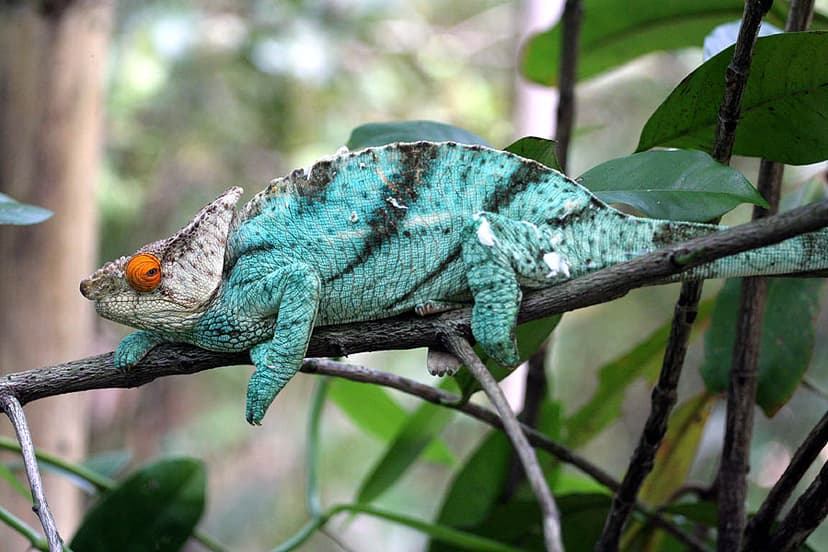
Calumma parsonii
Parson's chameleon (Calumma parsonii) is one of the world's largest chameleons, known for its impressive size, longevity, and slow reproductive rate. Primarily found in the humid primary forests of eastern and northern Madagascar, this species exhibits striking color variations in males and is a slow-moving, sit-and-wait predator. Despite its protected status and large range, it faces threats from habitat loss and the pet trade.

Paroedura masobe
The Paroedura masobe, also known as the masobe gecko, is an endangered species recognized for its distinctive white-speckled dark skin and large eyes. This arboreal gecko inhabits low elevation humid primary forests in Madagascar, typically found 1-4 meters above the forest floor. Its population is decreasing due to habitat loss and the pet trade, leading to its classification on CITES Appendix II.

Calumma gastrotaenia
The Perinet chameleon (Calumma gastrotaenia), also known as the Malagasy side-striped chameleon, is a small and slender lizard endemic to the humid primary forests of eastern and central Madagascar, often found near rivers. It is characterized by its elongated head and body, smooth skin that can be green, brown, or yellow, and a distinctive thin stripe running along its sides and across its eyes. Males are larger and possess a bony head crest.