
Paroedura masobe
The Paroedura masobe, also known as the masobe gecko, is an endangered species recognized for its distinctive white-speckled dark skin and large eyes. This arboreal gecko inhabits low elevation humid primary forests in Madagascar, typically found 1-4 meters above the forest floor. Its population is decreasing due to habitat loss and the pet trade, leading to its classification on CITES Appendix II.
Key Facts
- ›Endangered species of gecko endemic to Madagascar.
- ›Characterized by white-speckled dark skin and large eyes.
- ›Inhabits low elevation humid primary forests, active 1-4 meters above the ground.
- ›Threatened by habitat destruction and the international pet trade.
- ›Listed on CITES Appendix II, with a current export quota of zero live animals from Madagascar.
- ›Average lifespan is approximately eight years.

Masobe Gecko
Madagascar
Humid Primary Forest, Low Elevation Forest
White-Speckled Dark Skin, Big Eyes, Reaches Lengths of Up To 17 Centimeters
Crickets, Roaches, Land Snails, Isopods
Arboreal, Active 1–4 m Above the Forest Floor
- Habitat Destruction
- Pet Trade
- Low Elevation Humid Forest Into Farmland
- Removal of Timber
- Extraction of Honey and Other Biological Resources
About Paroedura masobe
What is it?
The Paroedura masobe, commonly known as the masobe gecko, is a distinct species of gecko belonging to the Gekkonidae family. It is recognized for its striking appearance, featuring dark skin adorned with white speckles and notably large eyes. This species is endemic to the island of Madagascar.
Habitat and Distribution
This arboreal gecko primarily inhabits low elevation humid primary forests. It is typically found active in the forest canopy, specifically between 1 to 4 meters above the ground. The masobe gecko's distribution is limited to specific low elevation sites within Madagascar, including areas within Zahamena National Park and Betampona Special Reserve. The available suitable habitat is scarce, leading to a fragmented population.
Diet and Reproduction
While detailed studies on the diet of wild Paroedura masobe are limited, captive individuals are fed a varied diet of insects such as crickets and roaches, supplemented with land snails and isopods. For females, the inclusion of snails and isopods is particularly beneficial for calcium intake. Reproduction involves females laying pairs of hard-shelled, roughly spherical eggs, which hatch after approximately six months.
Conservation Status and Threats
The Paroedura masobe is classified as an endangered species. Its existence is severely threatened by the conversion of its humid forest habitat into farmland and the ongoing removal of timber. The extraction of honey and other forest resources further degrades their environment. Furthermore, the species has been targeted for the international pet trade, although significant efforts have been made to halt exports.
Conservation Efforts
Conservation initiatives for the masobe gecko are currently limited. Although its known distribution lies within protected areas, these habitats are fragmented, and there is a notable absence of species monitoring and regional management plans. Further research into population trends is essential for effective conservation strategies.
Key Facts
- Scientific Name: Paroedura masobe
- Family: Gekkonidae
- Common Name: Masobe gecko
- Lifespan: Approximately 8 years
- Size: Up to 17 cm (6.69 in) total length
- Habitat: Low elevation humid primary forest
- Reproduction: Oviparous (lays eggs)
- Conservation Status: Endangered
- CITES Listing: Appendix II
Source: Wikipedia ↗
Frequently Asked Questions
What is the masobe gecko?
The masobe gecko (Paroedura masobe) is an endangered species of gecko found in Madagascar. It is known for its unique dark skin with white speckles and its large eyes. This species plays a role within its specific forest ecosystem.
Where does the Paroedura masobe live?
Paroedura masobe is endemic to Madagascar. It inhabits low elevation humid primary forests, specifically in protected areas like Zahamena National Park and Betampona Special Reserve. They are typically found active between 1 and 4 meters above the forest floor.
What does the masobe gecko eat?
While the diet of wild masobe geckos has not been extensively studied, captive individuals are commonly fed insects such as crickets and roaches, along with land snails and isopods. Including snails and isopods is particularly beneficial for females due to their calcium content.
How does the Paroedura masobe reproduce?
Female masobe geckos lay pairs of hard-shelled, roughly spherical eggs, which measure approximately 18 x 17 mm. The eggs hatch after an incubation period of about six months.
What are the threats to the masobe gecko?
The primary threats to Paroedura masobe include the conversion of its humid forest habitat into farmland and the removal of timber. The extraction of honey and other forest resources also degrades their environment. Additionally, the species has been sought after for the international pet trade, though exports are now halted.
What is being done to protect the masobe gecko?
Currently, conservation efforts for Paroedura masobe are limited. While 100% of its known distribution is within protected areas, these habitats are fragmented. There is a lack of species monitoring and regional management plans, and more research is needed to understand population trends.
Related Lizards
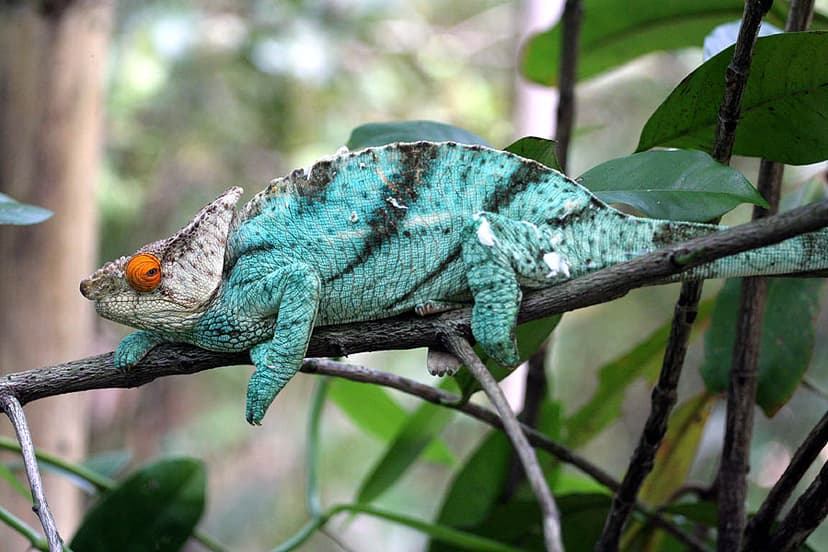
Calumma parsonii
Parson's chameleon (Calumma parsonii) is one of the world's largest chameleons, known for its impressive size, longevity, and slow reproductive rate. Primarily found in the humid primary forests of eastern and northern Madagascar, this species exhibits striking color variations in males and is a slow-moving, sit-and-wait predator. Despite its protected status and large range, it faces threats from habitat loss and the pet trade.

Calumma globifer
The globe-horned chameleon, also known as the flat-casqued chameleon (*Calumma globifer*), is a large chameleon species native to fragmented humid primary forests in eastern and southeastern Madagascar. It is recognized for its striking color variations and is listed on CITES Appendix II due to regulated trade.

Chinese crocodile lizard
The Chinese crocodile lizard, also known as Shinisaurus crocodilurus, is a semiaquatic lizard native to cool, forested regions of southeastern China and northeastern Vietnam. Characterized by bony scales along its back and a muscular tail resembling a crocodile, this species is a "sit-and-wait" predator that hunts insects, snails, and small aquatic animals. It is a viviparous species, giving birth to live young annually.