
Chamaeleo gracilis
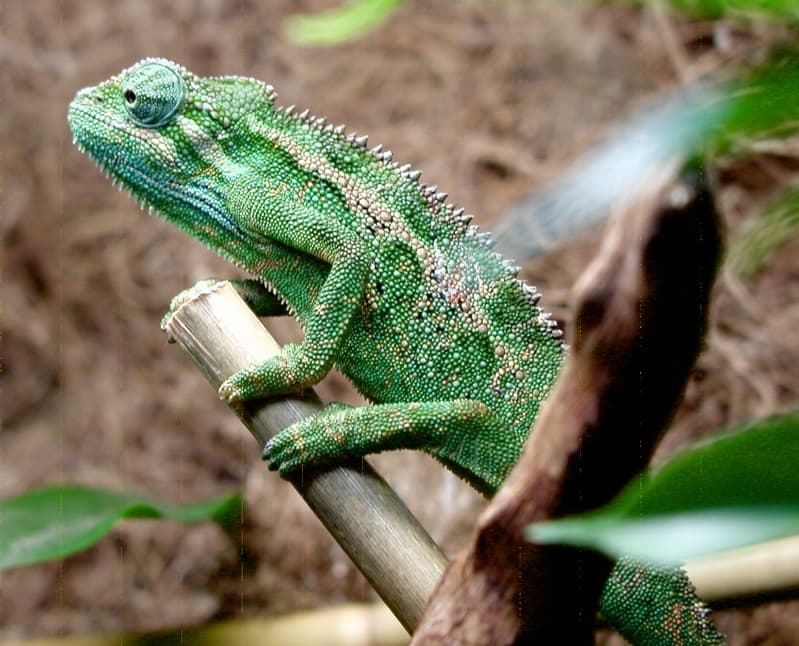
The graceful chameleon (Chamaeleo gracilis) is a common chameleon species found across sub-Saharan Africa. Typically measuring around 30.5 cm in length, it exhibits vibrant colors, often green, yellow, or brown, with a distinctive green stripe. This diurnal reptile inhabits forests and bushy savannas, and is known for its territorial behavior among males and its prolific breeding habits.
Key Facts
- ›Native to sub-Saharan Africa, with a range extending from Senegal to Angola and Ethiopia.
- ›Diurnal, actively hunting for insects in the morning and evening.
- ›Males are territorial and engage in colorful displays to threaten rivals.
- ›Females lay 20 to 50 eggs per clutch, breeding twice annually.
- ›Can live up to 10 years in captivity.
- ›Commonly exploited by the pet trade due to its abundance.

Graceful Chameleon
Senegal, Angola, Ethiopia, Sub-Saharan Africa
Forest, Bushy Areas, Plantations, Savanna
Often Green, Yellow, Or Brown Coloration., Features A Green Stripe On Its Side., Typical Total Length Is Around 30.5 cm ., Can Reach Up To 38 cm In Total Length.
Insects
- Diurnal, Active During Morning and Evening.
- Rests In Shade During the Hottest Part of the Day.
- Males Are Territorial.
- Engage In Colorful Displays For Territorial Disputes.
Pet Trade Exploitation
About Chamaeleo gracilis
The Graceful Chameleon
The graceful chameleon, scientifically known as Chamaeleo gracilis, is a widely distributed species of chameleon native to sub-Saharan Africa. It is recognized for its moderate size, typically reaching about 30.5 cm (1 foot) in total length, though it can grow slightly larger. Its coloration often includes shades of green, yellow, and brown, frequently accented with a prominent green stripe along its side.
Habitat and Distribution
This adaptable species inhabits a broad geographic range across sub-Saharan Africa, extending from Senegal in the west to Angola in the south and Ethiopia in the east. While its primary habitat is forests, Chamaeleo gracilis also thrives in bushy areas bordering plantations and in savanna environments, demonstrating a degree of ecological flexibility.
Behavior and Reproduction
The graceful chameleon is diurnal, meaning it is most active during daylight hours. It engages in hunting for insects during the cooler periods of the morning and evening, seeking shade to rest during the peak heat of the day. Males are notably territorial and often display vivid color changes to intimidate rivals. Reproduction occurs twice annually, with clutches of 20 to 50 eggs laid during both the dry season and at the close of the wet season.
Conservation and Exploitation
Due to its abundance, the graceful chameleon is significantly impacted by the pet trade. While specific conservation status is not detailed, its widespread exploitation highlights a potential concern for its populations. In captivity, individuals have been recorded to live up to 10 years.
Source: Wikipedia ↗
Frequently Asked Questions
What is the average size of a graceful chameleon?
The graceful chameleon is commonly around 30.5 cm (1 foot) in total length, including its tail. However, some individuals can grow up to 38 cm (15 inches) in total length.
Where can the graceful chameleon be found?
This species inhabits much of sub-Saharan Africa. Its geographic range extends from Senegal in the west, south to Angola, and east to Ethiopia.
What do graceful chameleons eat?
Graceful chameleons are insectivores, actively hunting for insects as their primary food source. They forage during the cooler parts of the day, typically in the morning and evening.
How often do graceful chameleons reproduce?
Graceful chameleons breed twice each year. One breeding cycle occurs during the dry season, and another takes place at the end of the wet season.
What are the main habitats of the graceful chameleon?
While they primarily live in forests, graceful chameleons also tolerate bushy areas adjacent to plantations and savannas. They are adaptable to various wooded and semi-wooded environments.
Are male graceful chameleons aggressive?
Male graceful chameleons are known to be very territorial. They often engage in colorful displays to threaten and assert dominance over other males.
Related Lizards
Trioceros ellioti
Trioceros ellioti, commonly known as Elliot's chameleon, is a species of lizard native to Africa. It inhabits diverse environments from forests to grasslands at moderate altitudes. This chameleon is characterized by its viviparous or ovoviviparous reproductive strategy.

Knight anole
The Knight anole is the largest anole species, native to Cuba and introduced to Florida. Known for its arboreal nature, it inhabits forests, savannas, and gardens, often found high in trees. This territorial lizard is primarily green with yellow stripes and is known for its impressive challenge display.

Lophognathus gilberti
Lophognathus gilberti, commonly known as Gilbert's dragon or Gilbert's lashtail, is a species of agamid lizard native to Australia. This terrestrial and semi-arboreal species inhabits a range of environments from coastal dunes to savannas and has adapted to agricultural and urban settings. Reproduction in Lophognathus gilberti is oviparous, with sex determination influenced by temperature.