
Cnemaspis goaensis
The Goan day gecko (Cnemaspis goaensis) is a species of lizard belonging to the Gekkonidae family, native to southwestern India. This oviparous species is documented within the Indian states of Goa and Karnataka.
Key Facts
- ›The Goan day gecko is scientifically known as Cnemaspis goaensis.
- ›It is a member of the Gekkonidae family.
- ›The species is found in the Indian states of Goa and Karnataka.
- ›Cnemaspis goaensis is oviparous, meaning it reproduces by laying eggs.
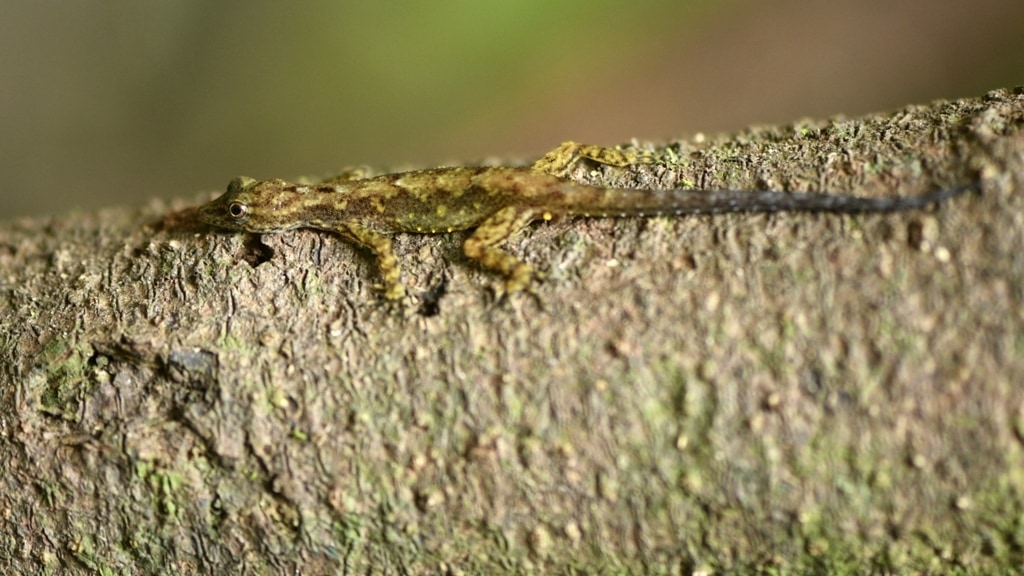
Goan Day Gecko
India
About Cnemaspis goaensis
Quick Summary
The Goan day gecko, scientifically identified as Cnemaspis goaensis, is a species of lizard recognized within the Gekkonidae family. This reptile is indigenous to the southwestern part of India, with documented occurrences in the states of Goa and Karnataka. Its reproductive strategy is oviparous, meaning it reproduces by laying eggs.
Geographic Range
The natural habitat of Cnemaspis goaensis is confined to the Indian subcontinent. Specifically, the species has been recorded in the Indian states of Goa and Karnataka, indicating a localized distribution within southwestern India.
Source: Wikipedia ↗
Frequently Asked Questions
What is the scientific name for the Goan day gecko?
The scientific name for the Goan day gecko is Cnemaspis goaensis.
Where is the Goan day gecko found?
The Goan day gecko is found in the southwestern region of India, specifically in the Indian states of Goa and Karnataka.
How does the Goan day gecko reproduce?
Cnemaspis goaensis is oviparous, which means it reproduces by laying eggs.
What family does the Goan day gecko belong to?
The Goan day gecko belongs to the Gekkonidae family, which is the family of geckos.
Related Lizards

Aaron Bauer's house gecko
Aaron Bauer's house gecko is a species of lizard found in the Western Ghats of Maharashtra, India. It is notable for its relatively large size within its genus, reaching up to 13 cm in snout-to-vent length. This species prefers rocky outcrops within forested areas as its natural habitat.

Ablepharus
Ablepharus, commonly known as snake-eyed skinks, are small lizards distinguished by fused eyelids that prevent blinking, similar to snakes. They inhabit dry fields, hills, and rocky areas, often concealed within leaf litter. These skinks possess shiny, bronze scales and a characteristic dark stripe along their sides, feeding primarily on small insects and mollusks.

Abor hills agama
The Abor Hills agama, scientifically known as Japalura austeniana, is a rare lizard species belonging to the Agamidae family, endemic to Asia. This species is characterized by its notably long tail relative to its body length. It has been documented in parts of India and Bhutan, with a significant rediscovery occurring in 2006.