
Cophosaurus texanus
The greater earless lizard (Cophosaurus texanus) is a medium-sized lizard native to arid and semi-arid regions of the southwestern United States and northern Mexico. It is distinguished by its lack of external ear openings, an adaptation for burrowing, and exhibits notable sexual dimorphism, with males being larger and more vibrantly colored than females. These lizards are primarily insectivores and rely on camouflage and speed to evade predators.
Key Facts
- ›Lacks external ear openings, an adaptation for burrowing.
- ›Exhibits significant sexual dimorphism in size and coloration.
- ›Primarily insectivorous, consuming a variety of insects and occasionally spiders and small lizards.
- ›Native to arid and semi-arid regions, including the Chihuahua Desert.
- ›Known for its speed and camouflage as defense mechanisms.
- ›Reproduction is oviparous, with females laying multiple clutches of eggs annually.
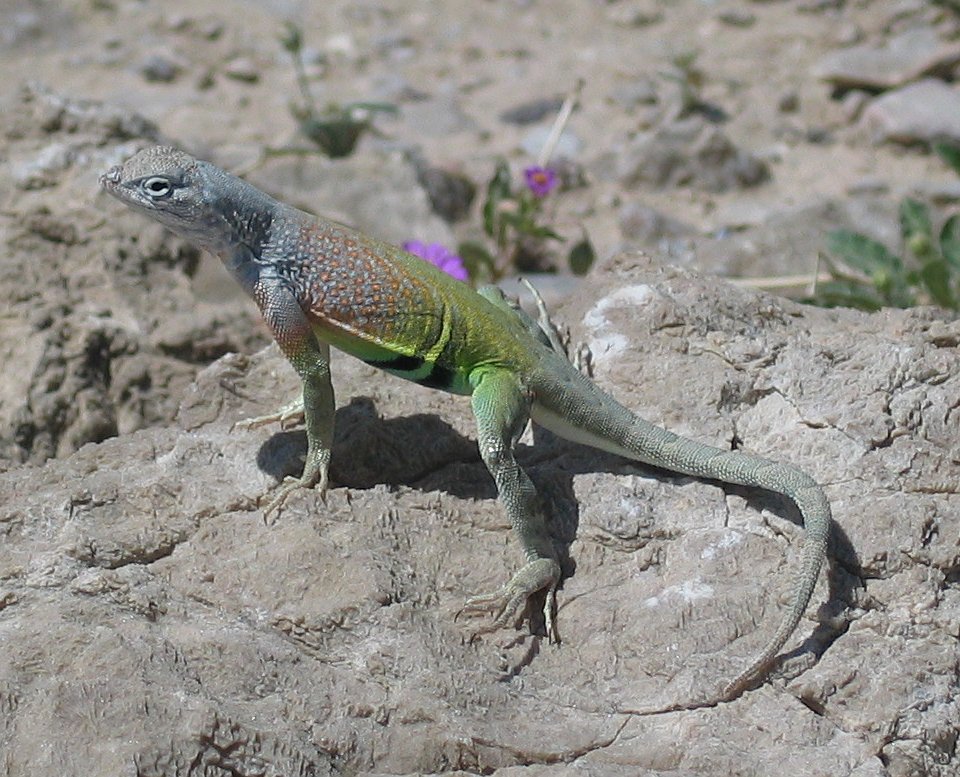
Greater Earless Lizard
Southwestern United States, Northern Mexico
Arid Regions, Semi-Arid Regions, Chihuahua Desert, Moderately Open Areas With Sparse Vegetation, Scrubland, Areas With Rocks, Gravel, and Sand, Limestone Ledges and Outcrops, Dry Gulches and Arroyos, Canyons
- Medium-Sized Lizard, Largest of the Earless Lizards.
- Lack External Ear Openings.
- Small, Granular Body Scales; Dorsal Scales Slightly Smaller Than Ventral.
- Relatively Long Legs, Especially Hind Legs.
- Slightly Flattened Tail, Longer Than Head and Body Combined.
- Underside of Tail Has 5-9 Bold, Contrasting Black Bands .
- Base Color Varies From Grays, Browns, Tans, To Reddish-Brown, Matching Local Substrate.
- Sexually Dimorphic: Males Are Larger and More Colorful.
- Males Exhibit Two Bold Black Bands On the Lateral Region, Often Rising From Blue Belly Patches.
- Male Body Anterior To Black Bands Is Suffused With Pink, Orange, Or Red; Posterior Is Green Or Aqua-Green.
- These Colors Are Most Prominent In Breeding Season.
- Females Have Greatly Reduced, Vague, Or Absent Black Lateral Bands.
- Females and Young Often Have A Lateral White Stripe.
Crickets, Grasshoppers, Caterpillars, Ants, Flies, Beetles, Bugs, Spiders, Small Lizards
- Diurnal With Bimodal Activity Pattern .
- High Optimum Active Body Temperature Range .
- Burrow In Loose Sand Up To 15.3 cm Deep At Night.
- May Partially Bury In Loose Gravel Or Shale, Or Sleep On the Surface.
- Females Have Been Found Communally Buried Under Shale On Cold Winter Days.
- Predominantly Ground-Dwelling.
- Seek High Perches To Survey Surroundings.
- Reluctant To Retreat Into Crevices; Rely On Speed and Camouflage.
- Engage In Bipedal Locomotion During Short Bursts of Speed.
- Exhibit Territorial Displays: Head Bobbing, Pushups, Lateral Body Compression.
- Lift and Curl Tail Over Back While Running, Waving It To Divert Attention.
- Tail Curling Aids In Counterbalance.
About Cophosaurus texanus
Greater Earless Lizard (Cophosaurus texanus)
The greater earless lizard, scientifically known as Cophosaurus texanus, is a distinctive reptile found in the arid and semi-arid landscapes of the southwestern United States and northern Mexico. It is the sole member of the monotypic genus Cophosaurus and is closely related to other earless lizards.
Key Characteristics
The most striking characteristic of the greater earless lizard is its complete lack of external ear openings, an adaptation believed to help prevent sand from entering the ear canal while burrowing. These lizards also exhibit significant sexual dimorphism. Males are typically larger and more vibrantly colored, often displaying bold black lateral bars and patches of pink, orange, or green, particularly during the breeding season. Females are generally smaller and more subdued in coloration, often lacking the distinct black markings of males.
Habitat and Distribution
Cophosaurus texanus inhabits the Chihuahua Desert and other arid and semi-arid regions. They prefer moderately open areas with sparse vegetation, characterized by rocks, gravel, and sand. Their coloration often provides excellent camouflage, closely matching the local substrate, which aids in their ability to elude predators. They are found across states like Arizona, New Mexico, and Texas in the United States, and into several northern Mexican states.
Diet and Behavior
These lizards are primarily insectivores, preying on a variety of insects including crickets, grasshoppers, ants, and beetles. Spiders and occasionally small lizards are also part of their diet. Cophosaurus texanus is a diurnal species, often exhibiting a bimodal activity pattern with peaks in the late morning and late afternoon. They are known for their speed and will often run short distances, stop abruptly, and freeze, relying on their camouflage. They are also capable of bipedal locomotion for short bursts. Territorial displays, such as head bobbing and push-ups, are common in both sexes.
Reproduction
The greater earless lizard is oviparous, meaning it reproduces by laying eggs. Females can lay multiple clutches per year, typically containing 2 to 9 eggs. Hatchlings emerge from June to October, and both males and females reach adult size and sexual maturity within about one year. The typical lifespan is around three years, though some may live longer.
Source: Wikipedia ↗
Frequently Asked Questions
What are the distinguishing features of the greater earless lizard?
The most notable feature is the absence of external ear openings, an adaptation for burrowing in sand. They also exhibit sexual dimorphism, with males being larger and possessing more striking black and colored markings compared to females.
Where does the greater earless lizard live?
This species is found in the arid and semi-arid environments of the Chihuahua Desert and surrounding regions in the southwestern United States (Arizona, New Mexico, Texas) and northern Mexico.
What does the greater earless lizard eat?
They are primarily insectivores, feeding on a variety of insects such as crickets, grasshoppers, caterpillars, ants, flies, and beetles. They may also occasionally consume spiders and small lizards.
How does the greater earless lizard protect itself from predators?
They rely heavily on their camouflage, with coloration that often matches the local substrate, and their remarkable speed to escape threats. They may also retreat into rock crevices.
What is the typical lifespan of a greater earless lizard?
The typical lifespan in the wild is around 3 years, though some individuals have been documented surviving for five reproductive seasons.
Are there different types of greater earless lizards?
Yes, three subspecies are currently recognized: the Texas greater earless lizard (C. t. texanus), the Sonoran greater earless lizard (C. t. reticulatus), and the Chihuahuan greater earless lizard (C. t. scitulus).
Related Lizards

Texas horned lizard
The Texas horned lizard (Phrynosoma cornutum) is a distinctive reptile known for its spiky body and ability to squirt blood from its eyes as a defense mechanism. Primarily found in south-central regions of the United States and northeastern Mexico, this lizard inhabits arid and semi-arid environments. Once abundant, its populations have experienced significant declines, leading to its classification as a threatened species in Texas.

Aspidoscelis gularis
The Texas spotted whiptail (Aspidoscelis gularis) is a long-tailed lizard native to the south-central and southwestern United States and northern Mexico. Characterized by its tan brown or green-brown coloration with seven distinct stripes and light spots, it is highly active and found in diverse habitats. This diurnal and insectivorous species is known for its quick movements and ability to shed its tail as a defense mechanism.
Common spotted whiptail
The Texas spotted whiptail is a long-tailed lizard species found in the south central and southwestern United States and northern Mexico. It is characterized by its tan brown or green-brown coloration with seven distinct grey or white stripes, and a long tail often three times the body length. This diurnal and insectivorous lizard thrives in diverse habitats, from grasslands to rocky terrains, and is known for its ability to shed its tail as a defense mechanism.