
Texas horned lizard
Least Concern (IUCN), Threatened (Texas)·Oviparous (lays eggs)
The Texas horned lizard (Phrynosoma cornutum) is a distinctive reptile known for its spiky body and ability to squirt blood from its eyes as a defense mechanism. Primarily found in south-central regions of the United States and northeastern Mexico, this lizard inhabits arid and semi-arid environments. Once abundant, its populations have experienced significant declines, leading to its classification as a threatened species in Texas.
Key Facts
- ›The Texas horned lizard is one of about 21 North American species of horned lizards.
- ›It is known for its ability to squirt blood from its eyes to deter predators, particularly canids.
- ›Harvester ants constitute approximately 70% of its diet.
- ›The species exhibits sexual dimorphism, with females being larger than males.
- ›It is the state reptile of Texas and the mascot of Texas Christian University.
- ›Population declines are largely attributed to pesticide use and the proliferation of invasive fire ants.

Horned Toad, Horny Toad, Horned Frog
- South-Central United States
- Northeastern Mexico
- Southeast Colorado
- Central and Southern Kansas
- Central and Western Oklahoma
- Central and Western Texas
- Southeast New Mexico
- Extreme Southeast Arizona
- Extreme Eastern Sonora
- Most of Chihuahua
- Northeast Durango
- Northern Zacatecas
- San Luis Potosí
- Most of Coahuila
- Nuevo LeóN
- Tamaulipas
- Barrier Islands On the Gulf Coast of Texas and Tamaulipas
Arid Environments, Semi-Arid Environments, Open, Rocky Areas, Prairies, Deserts, Edwards Plateau, Tamaulipan Mezquital, Chihuahua Desert, Llanos El Salado
- Spikey-Bodied Reptile
- Rounded Body
- Blunt Snout
- Characteristic Horns Extending From the Cranium
- Two Largest Horns Crown the Head
- Additional Horns On Brows and Jawline
- Lines of Spikes Along the Lateral Parts of the Torso
- Dorsal Ridges of Spikes On the Back
- Coloration Varies From Yellow Or Reddish-Brown To Tannish Brown, Depending On the Environment For Camouflage
- Colors May Become More Vibrant During Mating Season
- Dark Lines Span From the Eyes To the Tip of the Horns
- Solid White Line With A Few Black Circular Splotches On Either Side
- Females Are Larger Than Males
Harvester Ants, Termites, Beetles, Grasshoppers
- Docile Creatures
- Sunbathers, Requiring Sunlight For Vitamin D Production
- Most Active In Open, Sunny Areas
- Buries Itself In Sand At Night
- Can Move Quickly When Threatened
- Darts Into Thick Grass and Foliage To Escape Predators
- Excellent Diggers, Can Quickly Burrow Underground
- Uses Forelimbs To Dig Burrows For Egg Deposition
- Often Found Near Harvester Ant Colonies
- Average Daily Movement of 50 Meters
- Hibernates In Burrows, Often Facing South/Southwest For Maximum Sun Exposure
- When Threatened, Puffs Up To Appear Larger and Makes Scales Protrude
- Can Stab Predators With Horns
- Autohaemorrhaging: Squirts Blood From Eyes At Predators
- Blood Squirting Is Context-Dependent, Often Elicited By Canids
Canine Predators, Birds
- Overuse of Pesticides
- Spread of Nonnative Red Imported Fire Ants
- Increased Urbanization
- Habitat Fragmentation
- Habitat Isolation
- Loss of Habitat
- Human Eradication of Ant Populations
- Displacement of Native Ant Populations By Invading Fire Ants
- Predation By Domestic Dogs and Cats
- Pet Trade
About Texas horned lizard
The Texas Horned Lizard
The Texas horned lizard (Phrynosoma cornutum) is a uniquely adapted reptile native to the arid and semi-arid regions of south-central North America, encompassing parts of the United States and northeastern Mexico. It belongs to the genus Phrynosoma, commonly known as horned lizards, and is distinguished by its flattened, spiky body, the prominent horns adorning its head, and its remarkable defense mechanisms. Popularly referred to as "horned toads" or "horned frogs" due to their appearance, these lizards are neither amphibians nor true toads.
Physical Characteristics and Habitat
This species is the largest among the roughly 21 North American horned lizards. Adult females are typically larger than males, with snout-vent lengths reaching about 13 cm (5 inches), while males measure around 9.4 cm (3.7 inches). Their coloration varies, ranging from yellow or reddish-brown in desert environments to tannish brown in prairies, providing effective camouflage against the ground. Dark lines extend from their eyes to the tips of their cranial horns, and a distinctive white line with black splotches runs along their sides. The Texas horned lizard thrives in open, rocky areas, prairies, and deserts, often found at elevations up to 1,830 meters.
Behavior and Defense
Despite their formidable appearance, Texas horned lizards are docile creatures. They are diurnal sunbathers, requiring ample sunlight for vitamin D synthesis. At night, they bury themselves in sand. When threatened, they exhibit several defense strategies: they can puff up their bodies to appear larger and more difficult to swallow, and they possess the extraordinary ability to squirt a stream of blood from the corners of their eyes, a tactic particularly effective against canine predators. This blood squirting can result in a loss of up to 6 percent of their body weight.
Diet and Conservation
The diet of the Texas horned lizard is highly specialized, with harvester ants constituting about 70% of their food intake. They supplement this with other insects like termites, beetles, and grasshoppers. Their physiology allows them to neutralize harvester ant venom. Unfortunately, the species has faced severe population declines across much of its range, leading to its designation as a threatened species in Texas. Major threats include the widespread use of pesticides, the proliferation of invasive red imported fire ants which decimate their primary food source, habitat loss and fragmentation due to urbanization, and predation by domestic pets. Conservation efforts, including captive breeding and reintroduction programs, are underway to help bolster wild populations and preserve this iconic reptile.
Source: Wikipedia ↗
Frequently Asked Questions
What is the Texas horned lizard commonly called?
The Texas horned lizard is popularly called a "horned toad" or "horned frog" due to its rounded body and blunt snout, which gives it a batrachian appearance, despite it being neither a toad nor a frog.
Where is the Texas horned lizard found?
Its natural distribution spans south-central regions of the US, including parts of Colorado, Kansas, Oklahoma, Texas, New Mexico, and Arizona, as well as northeastern Mexico. Introduced populations also exist in some southeastern US states.
What does the Texas horned lizard eat?
The Texas horned lizard is a specialized predator, with harvester ants making up about 70% of its diet. It also consumes termites, beetles, and grasshoppers.
How does the Texas horned lizard defend itself?
When threatened, it can puff up its body to make it difficult to swallow, and it possesses the unique ability to squirt blood from its eyes at predators, which is particularly effective against canids.
Why have Texas horned lizard populations declined?
Population declines are primarily blamed on the overuse of pesticides that eradicate their main food source, harvester ants, and the spread of invasive red imported fire ants which displace native ants. Increased urbanization and habitat fragmentation also contribute.
Is it legal to own a Texas horned lizard?
In Texas, the Texas horned lizard is listed as a threatened species, making it illegal to pick up, touch, or possess them without a special permit.
Related Lizards
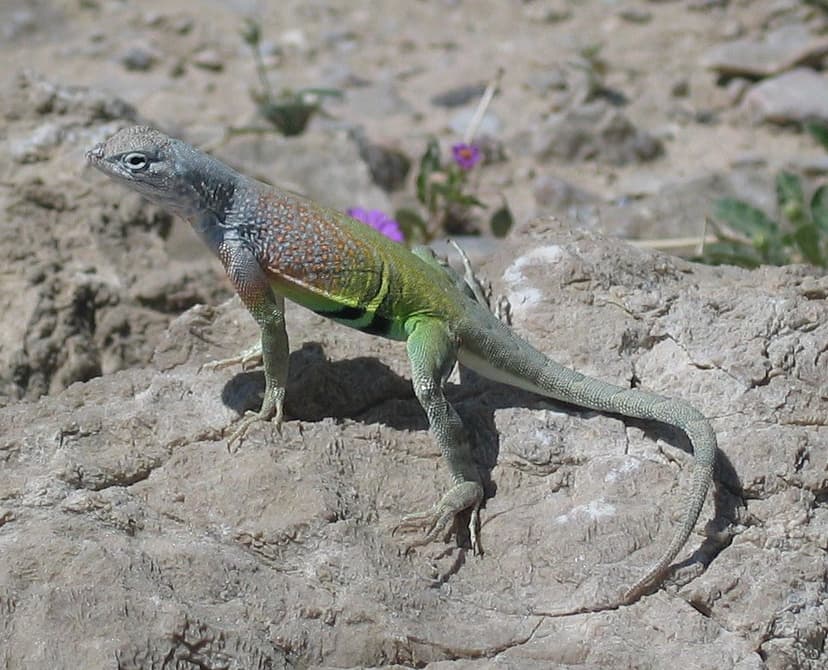
Cophosaurus texanus
The greater earless lizard (Cophosaurus texanus) is a medium-sized lizard native to arid and semi-arid regions of the southwestern United States and northern Mexico. It is distinguished by its lack of external ear openings, an adaptation for burrowing, and exhibits notable sexual dimorphism, with males being larger and more vibrantly colored than females. These lizards are primarily insectivores and rely on camouflage and speed to evade predators.

Ophisaurus attenuatus
The slender glass lizard (Ophisaurus attenuatus) is a legless lizard native to the United States, easily identified by its easily breakable tail, which it sheds as a defense mechanism. This diurnal species inhabits prairies, open woodlands, and old fields, where it preys on insects, spiders, and small animals. Despite its common name, it is a lizard, distinguishable from snakes by its movable eyelids and external ear openings.

Lygodactylus madagascariensis
The Madagascar dwarf gecko (Lygodactylus madagascariensis) is a small, diurnal gecko species endemic to Madagascar. It inhabits a variety of ecosystems, from rainforests to human-altered gardens, and is characterized by its agile bodies and specialized toe pads for climbing. Conservation efforts are ongoing due to threats like habitat loss and introduced species.