
Cordylus tropidosternum
The East African armadillo lizard, also known as the dwarf sungazer or tropical girdled lizard (Cordylus tropidosternum), is a rupicolous and arboreal species found in East Africa. Characterized by brown coloration with dark spots or bands and a spiny tail, it inhabits dry forests. This diurnal lizard is known for its unique defense mechanisms and suitability as a pet.
Key Facts
- ›Endemic to East Africa, ranging from southern Kenya to Mozambique.
- ›Prefers dry forest habitats.
- ›Diurnal and lays down fat reserves for the dry season.
- ›Adults reach a total length of 160-190 mm.
- ›Gives birth to 1-6 live young.
- ›Commonly exported for the pet trade and can become long-lived pets with proper care.
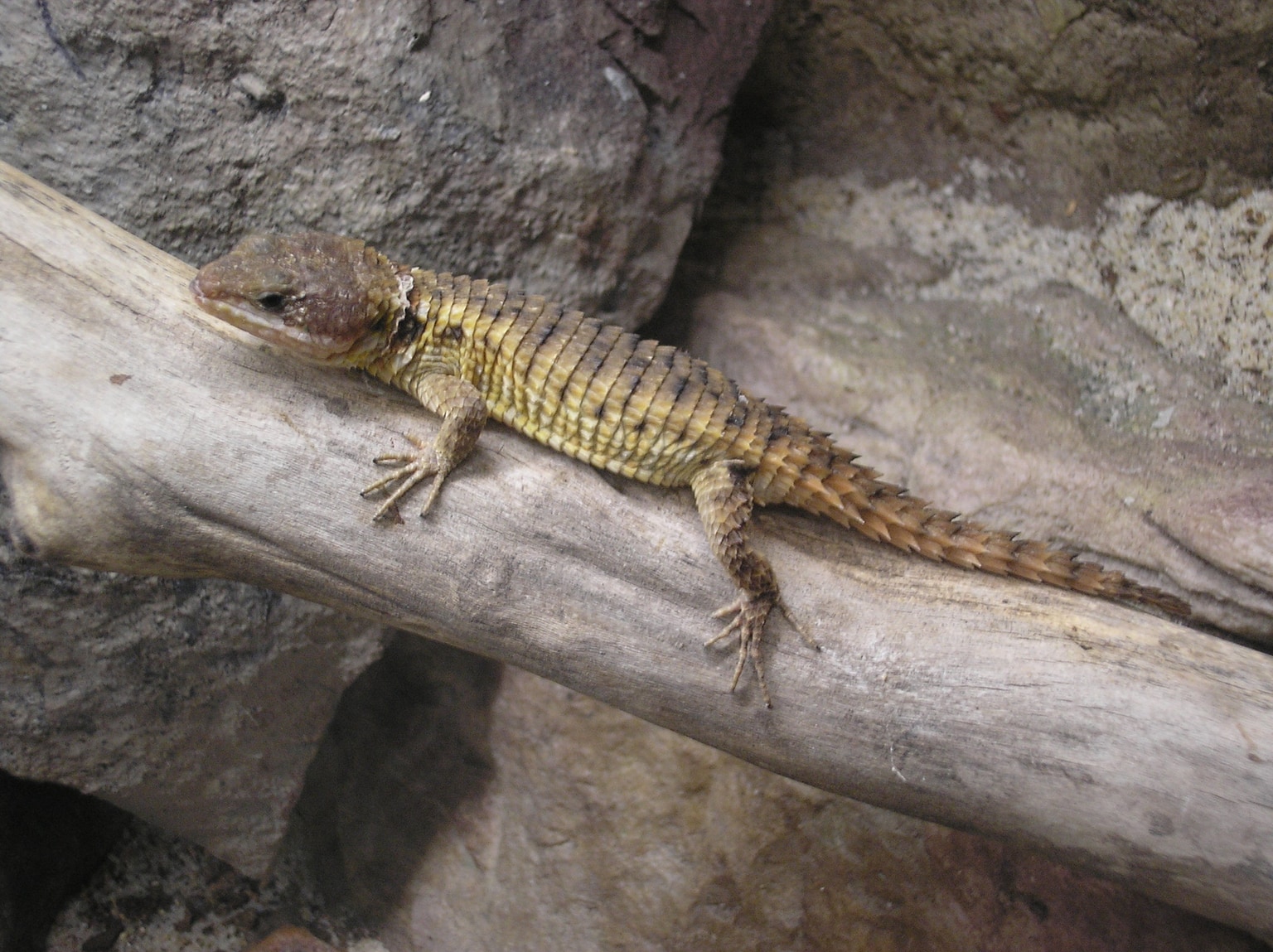
East African Armadillo Lizard, Dwarf Sungazer, Tropical Girdled Lizard, Armadillo Lizard, Forest Armadillo Lizard, Jones's Armadillo Lizard
Kenya, Tanzania, Malawi, Democratic Republic of the Congo, Zambia, Zimbabwe, Mozambique
Dry Forests, Rupicolous, Arboreal
- Brown Coloration Above With Dark Brown and Cream Spots Or Thin Dark Bands.
- Conspicuous Black Stripe Along Each Side of the Neck From Ear To Shoulder.
- Cream-Colored Lips, Throat, and Belly.
- Very Spiny Tail.
- Adults Are 160–190 mm In Total Length.
- Males Have Slightly Wider Heads Than Females.
- Both Sexes Have Femoral Pores.
- Possess Keeled Scales On the Throat and Belly.
- Nostril Positioned In the Lower Posterior Corner of the Nasal Scale.
Crickets, Meal Worms, Phoenix Worms, Wax Worms
- Diurnal
- Lay Down Fat Reserves For the Dry Season.
- Males Are Aggressive Toward Other Males of the Same Species.
- Do Not Grasp Their Tail and Roll Into A Ball For Defense Like True Armadillo Lizards.
About Cordylus tropidosternum
East African Armadillo Lizard (Cordylus tropidosternum)
The East African armadillo lizard, scientifically known as Cordylus tropidosternum, is a species of rupicolous and arboreal lizard endemic to East Africa. It is also recognized by common names such as the dwarf sungazer or tropical girdled lizard. This reptile is distinguished by its brown coloration adorned with dark brown and cream spots or bands, a prominent black stripe along its neck, and a notably spiny tail. Adults typically reach a total length of 160–190 mm.
Habitat and Distribution
The preferred habitat for Cordylus tropidosternum is dry forests. Its geographic range is extensive, spanning from southern Kenya southward through Tanzania and Malawi, and extending to the southern Democratic Republic of the Congo, Zambia, northeastern Zimbabwe, and Mozambique.
Behavior and Diet
These lizards are diurnal, meaning they are active during the day. They exhibit a behavior of laying down fat reserves to prepare for the dry season. While males can be aggressive towards other males of the same species, the tropical girdled lizard does not employ the ball-rolling defense mechanism seen in true armadillo lizards. As pets, they are insectivores, readily consuming crickets, mealworms, phoenix worms, and occasionally wax worms.
Reproduction and Captivity
Cordylus tropidosternum reproduces by giving birth to live young, with clutches typically ranging from 1 to 6 offspring. The species is exported from Tanzania and Mozambique for the pet trade, where they are often referred to as "armadillo lizards." With appropriate care, including gentle handling and ample hiding places, they can become excellent, long-lived pets and have been observed to accept food from their owners' hands.
Source: Wikipedia ↗
Frequently Asked Questions
What is the East African armadillo lizard?
The East African armadillo lizard (Cordylus tropidosternum) is a species of lizard native to East Africa. It is also known by common names such as dwarf sungazer or tropical girdled lizard.
Where does the East African armadillo lizard live?
This species is found in East Africa, with its geographic range extending from southern Kenya through Tanzania and Malawi to the southern Democratic Republic of the Congo, Zambia, northeastern Zimbabwe, and Mozambique. Its preferred habitat is dry forests.
What are the physical characteristics of the tropical girdled lizard?
Tropical girdled lizards are brown with dark brown and cream spots or thin dark bands, and a conspicuous black stripe runs along each side of the neck. They have cream-colored lips, throat, and belly, and a very spiny tail. Adults typically measure 160–190 mm in total length.
What do East African armadillo lizards eat?
In captivity, they are insectivores and consume a diet of crickets, mealworms, phoenix worms, and occasionally wax worms. Their natural diet is not specified in detailed records.
How do tropical girdled lizards reproduce?
These lizards give birth to live young, with each litter typically containing between 1 to 6 offspring.
Are East African armadillo lizards good pets?
Yes, tropical girdled lizards can become excellent, long-lived pets with gentle handling and adequate hiding spaces. They can even be trained to accept food from their owner's hand.
Related Lizards

Ctenosaura pectinata
The western spiny-tailed iguana, scientifically known as Ctenosaura pectinata, is a moderately large lizard native to western Mexico. This species is characterized by its distinctive keeled scales on its tail, a crest of spines down its back, and variable coloration ranging from brown to grey-brown, with a yellowish underside. While primarily herbivorous as adults, juveniles consume insects, and they are known for their social behavior and adaptation to rocky habitats with nearby trees.

Furcifer rhinoceratus
The rhinoceros chameleon (Furcifer rhinoceratus) is a species of chameleon endemic to the dry forests of Madagascar, distinguished by a prominent horn-like nose, particularly in males. It is a tree-dwelling insectivore, with males defending territories and using their snouts in potential combat. The species is listed as Vulnerable due to habitat loss and degradation.

Lygodactylus madagascariensis
The Madagascar dwarf gecko (Lygodactylus madagascariensis) is a small, diurnal gecko species endemic to Madagascar. It inhabits a variety of ecosystems, from rainforests to human-altered gardens, and is characterized by its agile bodies and specialized toe pads for climbing. Conservation efforts are ongoing due to threats like habitat loss and introduced species.