
Ctenophorus fordi
The Mallee dragon (Ctenophorus fordi) is a small lizard native to the arid regions of southern Australia, characterized by its reddish-orange coloration and pale, black-bordered stripes. It inhabits shrubland and hummock grass environments, particularly in Mallee woodlands and spinifex areas, often near vegetated sand dunes. This species is primarily an ant specialist, employing a sit-and-wait strategy to ambush its prey.
Key Facts
- ›Native to arid southern Australia, including parts of Western Australia, South Australia, New South Wales, and Queensland.
- ›Possesses a distinctive reddish-orange body with pale, black-bordered dorso-lateral stripes.
- ›Primarily inhabits Mallee woodlands, spinifex, and vegetated sand dunes with sandy soils.
- ›Diet consists mainly of ants, with other small invertebrates and occasionally small lizards also consumed.
- ›Males are territorial and exhibit head-bobbing behavior for species and sex recognition, and to signal dominance.
- ›Listed as 'Least Concern' by the IUCN, but faces threats from habitat loss and introduced predators.

Mallee Dragon, Mallee Sand-Dragon, Mallee Military Dragon
South-Eastern Western Australia, Central South Australia, North-West New South Wales, South-West Queensland
Arid Environments, Semi-Arid Environments, Mallee Woodland, Spinifex, Shrubland, Hummock Grass, Vegetated Sand Dunes, Sandy Areas
- Small Lizard
- Maximum Snout-Vent Length of 5 cm
- Dark Reddish-Orange Coloration
- Pale Dorso-Lateral Stripe Extending From Neck To Tail
- Pale Stripe Bordered By A Thin Black Stripe
- Dark Orange-Brown Region Flecked With Small Pale Spots
Ants, Other Small Invertebrates, Spiders, Beetles, Other Insects, Small Lizards
- Emerges From Dormancy In August
- Males Appear About Four Weeks Earlier Than Females
- Active Even On Very Hot Days
- Forages In Sandy, Open Areas
- Dashes For Cover Into Nearby Grasses Or Low Bushes When Disturbed
- Males Are Territorial
- Uses Head Bobs For Species Recognition, Sex Identification, and Signaling Dominance
Introduced Species
Habitat Loss, Land Clearing, Degradation By Introduced Species, Modification Caused By Climate Change, Death On Roads, Predation By Introduced Species, Emerging Diseases
About Ctenophorus fordi
The Mallee Dragon (Ctenophorus fordi)
The Mallee dragon, scientifically known as Ctenophorus fordi, is a small lizard species endemic to the arid and semi-arid regions of southern Australia. This agamid lizard is recognized for its distinctive reddish-orange coloration, accented by pale lateral stripes bordered by thin black lines.
Habitat and Distribution
Ctenophorus fordi thrives in sandy environments characterized by shrubs and hummock grass. Its preferred habitats include Mallee woodlands and spinifex country, often found in or near vegetated sand dunes where the loose soil facilitates burrowing. The species is distributed across south-eastern Western Australia, central South Australia, and extends into the north-west of New South Wales and the south-west of Queensland.
Behavior and Diet
Mallee dragons are diurnal and active even on hot days. Males emerge from dormancy earlier than females and establish territories. A key behavioral trait is head-bobbing, used by both sexes for species and sex recognition, as well as for signaling dominance. Their diet is highly specialized, consisting primarily of ants, which they ambush using a sit-and-wait strategy. They also consume other small invertebrates, and larger individuals may occasionally prey on smaller lizards.
Reproduction and Conservation
Reproduction in Ctenophorus fordi is oviparous, with mating occurring in spring. Females lay sequential clutches of two to five eggs, with offspring hatching between December and March. The species is currently listed as 'Least Concern' by the IUCN, indicating a stable population. However, it faces threats including habitat loss from land clearing, degradation by introduced species, road mortality, and predation by introduced predators.
Source: Wikipedia ↗
Frequently Asked Questions
What are the common names for Ctenophorus fordi?
Ctenophorus fordi is commonly known as the Mallee dragon. It is also referred to as the Mallee sand-dragon and the Mallee military dragon.
Where is the Mallee dragon found?
The Mallee dragon is found in the arid parts of southern Australia. Its geographic range includes south-eastern Western Australia, central South Australia, and the north-west corner of New South Wales and south-west corner of Queensland.
What is the habitat of Ctenophorus fordi?
This lizard primarily inhabits regions with shrubs and hummock grass, thriving in sandy arid to semi-arid environments. They favor Mallee woodland and spinifex ecosystems, often found in vegetated sand dunes.
What does the Mallee dragon eat?
The Mallee dragon is an ant specialist, with ants forming a significant portion of its diet. It also consumes other small invertebrates like spiders and beetles, and larger individuals may occasionally eat small lizards.
How does the Mallee dragon communicate?
The signaling behavior of Ctenophorus fordi consists almost exclusively of head bobs. Both males and females use head bobbing for species recognition, sex identification, and signaling dominance status.
What is the conservation status of the Mallee dragon?
The Mallee dragon is listed as 'Least Concern' by the IUCN Red List of Threatened Species. It is found in several protected areas across its range.
What are the main threats to Ctenophorus fordi?
Threats to the Mallee dragon include habitat loss due to land clearing and degradation by introduced species, road mortality, predation by introduced animals like cats and foxes, and emerging diseases.
Related Lizards
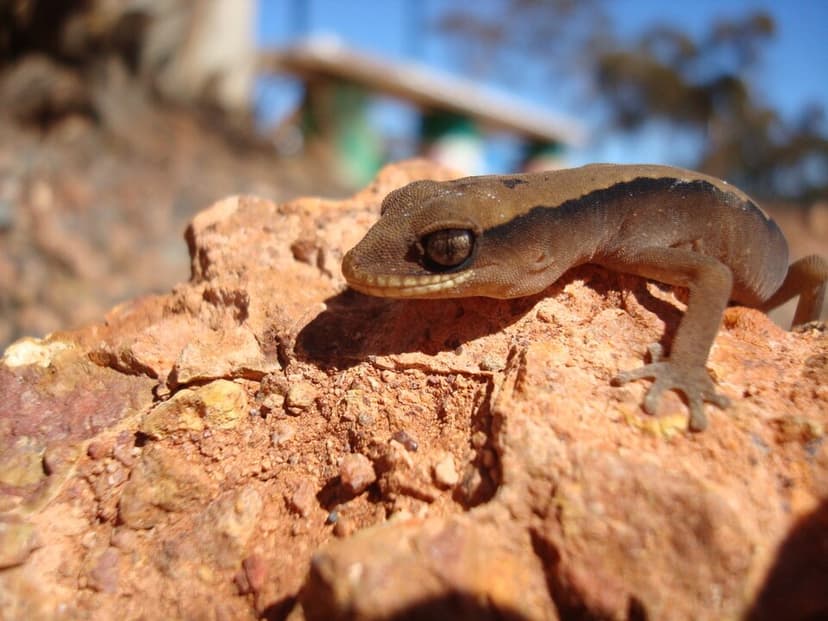
Crenadactylus ocellatus
Crenadactylus ocellatus, also known as the southwestern clawless gecko, is Australia's smallest nocturnal gecko. It is endemic to the southwestern part of the country, inhabiting stony ground, Triodia-dominated deserts, leaf litter, rubbish piles, and areas beneath rocks. Its small size and ground-dwelling habits are key characteristics.

Varanus caudolineatus
The stripe-tailed goanna (Varanus caudolineatus) is a semi-arboreal monitor lizard native to Western Australia. It is characterized by its relatively small size, reaching up to 32 cm in total length, and a lack of sexual dimorphism. This species inhabits grasslands, woodlands, and shrublands, often found in tree crevices or rock outcrops, and primarily feeds on small arthropods and geckos.

Varanus storri
Storr's monitor (Varanus storri) is a small, terrestrial lizard endemic to Australia, known for its dull coloration and colony-dwelling behavior. It inhabits rocky areas, open woodlands, and grasslands across the tropical regions of the continent. This species is characterized by its U-shaped burrows and a varied diet of invertebrates and smaller reptiles.