
Crenadactylus ocellatus
Crenadactylus ocellatus, also known as the southwestern clawless gecko, is Australia's smallest nocturnal gecko. It is endemic to the southwestern part of the country, inhabiting stony ground, Triodia-dominated deserts, leaf litter, rubbish piles, and areas beneath rocks. Its small size and ground-dwelling habits are key characteristics.
Key Facts
- ›Smallest nocturnal gecko species found in Australia.
- ›Endemic to the southwestern region of Australia.
- ›Inhabits stony ground, Triodia deserts, leaf litter, and under rocks.
- ›First described by John Edward Gray in 1845.
- ›Also referred to as the southwestern clawless gecko.
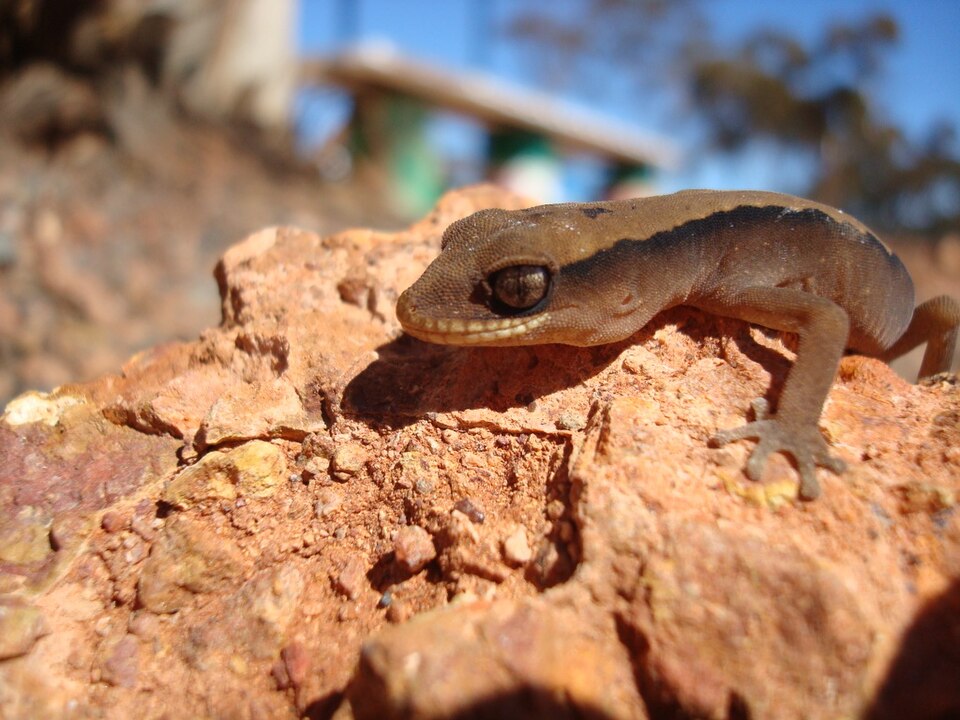
Southwestern Clawless Gecko, Western Clawless Gecko
Australia
Stony Ground, Triodia-Dominated Deserts, Leaf Litter, Rubbish Piles, Beneath Rocks, Hummock Grass
Smallest Species of Nocturnal Gecko., Ground-Dwelling.
Nocturnal
About Crenadactylus ocellatus
Crenadactylus ocellatus: The Southwestern Clawless Gecko
Crenadactylus ocellatus, also known as the southwestern clawless gecko, holds the distinction of being Australia's smallest nocturnal gecko species. This small reptile is endemic to the southwestern regions of Australia, where it has adapted to a ground-dwelling existence in arid and semi-arid environments.
Habitat and Distribution
The natural range of Crenadactylus ocellatus is confined to the southwestern part of Australia. It thrives in habitats characterized by stony ground and deserts dominated by Triodia grasses. Its preferred microhabitats include the shelter provided by leaf litter, accumulations of rubbish, and the undersides of rocks. Occasionally, individuals can be found in the lower sections of hummock grass.
Taxonomy and Discovery
The species was first formally described in 1845 by John Edward Gray, who was revising specimens at the British Museum. Gray initially placed the species within the genus Diplodactylus, noting that the type specimen had been preserved in alcohol and collected in Western Australia by Buchanan. Another specimen, collected by John Gilbert at "Houtman's Abrollos" and initially identified as Diplodactylus bilineatus, was later recognized as belonging to the same taxon as Crenadactylus ocellatus.
The genus Crenadactylus has seen taxonomic revisions over time, with previously recognized subspecies being elevated to distinct species. The vernacular names Gray assigned reflected specific characteristics; 'the eyed diplodactyle' for ocellatus, referring to its spotted pattern, and 'the two-lined diplodactyle' for bilineatus.
Source: Wikipedia ↗
Frequently Asked Questions
What is Crenadactylus ocellatus commonly known as?
Crenadactylus ocellatus is commonly known as the southwestern clawless gecko or the western clawless gecko. However, the name 'western clawless gecko' is also used for another species, Crenadactylus occidentalis.
Where is Crenadactylus ocellatus found?
This gecko species is endemic to Australia, specifically found in the southwestern part of the country. Its habitat includes stony ground and deserts dominated by Triodia grass.
What type of habitat does Crenadactylus ocellatus prefer?
Crenadactylus ocellatus is a ground-dwelling gecko. It prefers habitats such as leaf litter, rubbish piles, and areas beneath rocks. It can also be found in the lower parts of hummock grass.
When was Crenadactylus ocellatus first described?
The species was first described by John Edward Gray in 1845. He placed it in the genus Diplodactylus and noted the specimen was collected in Western Australia.
Is Crenadactylus ocellatus a large gecko species?
No, Crenadactylus ocellatus is notable for being the smallest species of nocturnal gecko found in Australia.
Related Lizards

Ctenophorus fordi
The Mallee dragon (Ctenophorus fordi) is a small lizard native to the arid regions of southern Australia, characterized by its reddish-orange coloration and pale, black-bordered stripes. It inhabits shrubland and hummock grass environments, particularly in Mallee woodlands and spinifex areas, often near vegetated sand dunes. This species is primarily an ant specialist, employing a sit-and-wait strategy to ambush its prey.
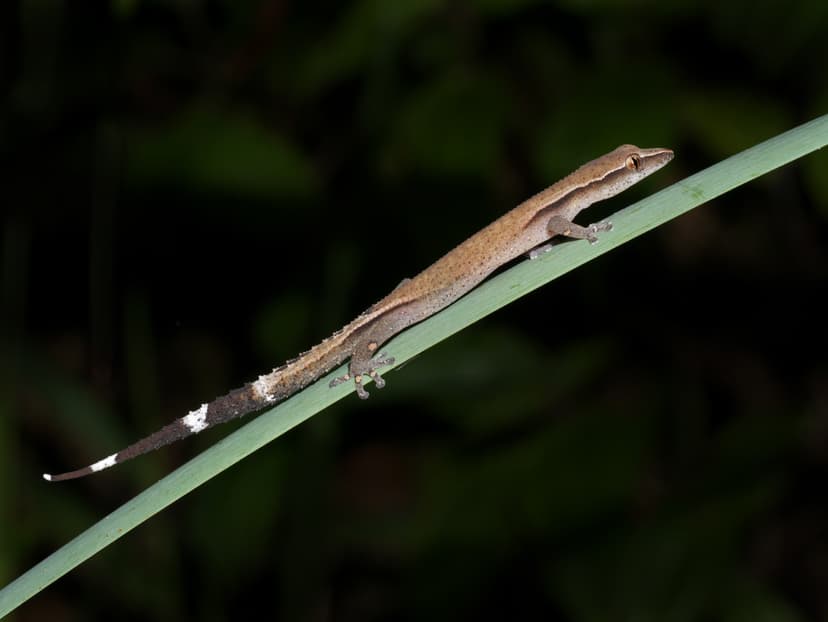
Ebenavia inunguis
The Madagascar clawless gecko (Ebenavia inunguis) is a small, nocturnal lizard native to the Indian Ocean islands of Madagascar, Mauritius, the Comores, and Pemba Island. During the day, they seek shelter under the bark of large rainforest trees or within leaf litter. Notably, despite their common name, female individuals do possess claws.
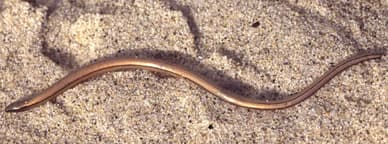
Anniella pulchra
Anniella pulchra, commonly known as the California legless lizard, is a limbless reptile often mistaken for a snake. It features a silver-bronze dorsal side with a yellow underside, separated by black stripes, and is adapted for a burrowing lifestyle. This species inhabits sandy soils and leaf litter along the Pacific coast, feeding primarily on invertebrates found underground.