
Ctenophorus pictus
Ctenophorus pictus·Agamidae·Not specified in text
The painted ground-dragon, Ctenophorus pictus, is a medium-sized lizard endemic to the drier regions of southern and central Australia. This species is known for its highly variable coloration, particularly in males, which can range from reddish-brown to orange and yellow, with breeding males displaying bright blue and yellow markings. They are swift, diurnal reptiles that inhabit shrublands and grasslands, employing a sit-and-wait hunting strategy for arthropods.
Key Facts
- ›Endemic to drier areas of southern and central Australia.
- ›Exhibits extreme color variation, especially in males, with different color morphs (red, orange, yellow).
- ›Diet primarily consists of arthropods, including ants, and sometimes supplemented with plant matter.
- ›Diurnal and ectothermic, relying on basking to regulate body temperature.
- ›Uses visual communication such as head bops, arm waving, and tail lashing.
- ›Adults typically reach 18-25 cm in total length.

Painted Ground-Dragon, Painted Dragon
Australia
Shrublands, Hummock Grasslands, Sandy Soils, Saline Soils, Arid Regions, Semi-Arid Regions
- Medium-Sized Terrestrial Lizard With A Short, Deep Head.
- Uniform Body Scales, Smooth To the Touch.
- Appearance Is Extremely Variable In Color Combinations.
- Adult Males Can Be Brown, Yellowish-Brown, Orange, Or Reddish-Brown With Dark-Edged Pale Bars, Blotches, Or Spots.
- Flanks Are Spotted, Variegated, Or Reticulated With Dark Brown.
- Breeding Males Exhibit Bright Blue Flush On Lower Lips, Throat, and Limbs, and Yellow To Orange Flush On the Anterior Chest and Shoulders.
- Adult Females and Juveniles Are Duller, Commonly Rusty Brown, Lacking Bright Blue and Yellow Pigment.
- A Low Crest On the Back of the Neck Is Often Present and Raised When Alarmed.
- Distinct Vertebral Series of Slightly Enlarged Scales Along the Back.
- Exposed Ears With Conspicuous Eardrums.
- Tail Accounts For About 65% of Total Body Length.
Arthropods, Ants, Plant Matter
- Swift-Moving, Capable of Impressive Sprints.
- Diurnal .
- Ectothermic, Spends Considerable Time Basking.
- Prefers To Rest On Low Branches.
- Employs A Sit-and-Wait Hunting Technique.
- Alert With An Upright Stance and Acute Vision.
- Communicates Visually With Stylized Head Bops and Dips, Arm Waving, and Tail Lashing.
- Retreats Quickly To Burrows When Disturbed Or Alarmed.
- Males Exhibit Territorial Behavior and Aggression, Especially Red Morphs.
About Ctenophorus pictus
Ctenophorus pictus: The Painted Ground-Dragon
Ctenophorus pictus, commonly known as the painted ground-dragon or painted dragon, is a distinctive lizard species found exclusively in the arid and semi-arid regions of southern and central Australia. This medium-sized reptile is characterized by its highly variable coloration, particularly among adult males, which can display a striking array of browns, oranges, and yellows. During the breeding season, males develop vibrant blue and yellow markings, believed to be indicators of their health and genetic fitness.
Habitat and Ecology
The painted dragon thrives in shrublands and hummock grasslands situated on sandy and saline soils. As a diurnal and ectothermic species, it relies on external heat sources, spending significant time basking to regulate its body temperature. These lizards are swift runners, often utilizing a sit-and-wait hunting strategy to capture their prey, which primarily consists of arthropods, including ants. They are known to seek refuge in short burrows, often concealed at the base of shrubs, and prefer to perch on low branches rather than elevated spots.
Physical Characteristics and Behavior
Adult painted dragons typically measure between 18 to 25 cm in total length, with their tails accounting for approximately 65% of this measurement. They possess a short, deep head and relatively uniform, smooth body scales. A low crest on the back of the neck is often present, which males may raise when alarmed. Communication among painted dragons is largely visual, involving stylized head movements, arm waving, and tail lashing. The remarkable color polymorphism in males, with distinct red, orange, and yellow morphs, is thought to be maintained by a balance between sexual selection favoring brighter colors and natural selection favoring the energetic efficiency of less brightly colored individuals.
Source: Wikipedia ↗
Frequently Asked Questions
What is the scientific name of the painted ground-dragon?
The scientific name for the painted ground-dragon is Ctenophorus pictus. This binomial nomenclature is used to classify the species within the scientific community.
Where are painted dragons found?
Painted dragons are found throughout the drier parts of southeastern Western Australia, across South Australia to northwestern Victoria, and into central-western New South Wales. They prefer semi-arid to arid regions.
What do painted dragons eat?
Painted dragons primarily eat arthropods, employing a sit-and-wait hunting technique. Notably, ants often feature prominently in their diet, which is unusual for many other lizard species.
How large do painted dragons grow?
Adult painted dragons typically grow to a total length of around 18 to 25 cm (7.1 to 9.8 inches). The tail usually constitutes about 65% of their total body length.
What is unique about the coloration of male painted dragons?
Male painted dragons exhibit extreme color polymorphism, with variations in reddish-brown, orange, and yellow. Breeding males develop bright blue and yellow markings on their throat, chest, and limbs, which are thought to indicate their underlying health and anti-oxidation capacity.
What kind of habitat do painted dragons prefer?
They prefer semi-arid to arid regions, favoring shrublands and hummock grasslands that grow on sandy and saline soils. They often reside in short burrows concealed at the base of shrubs.
Related Lizards

Ctenophorus maculatus
Ctenophorus maculatus, also known as the spotted military dragon or spotted sand-dragon, is a species of agamid lizard found in the semi-arid and arid shrublands and hummock grasslands of Western Australia and a small part of South Australia. It is characterized by its spotted pattern, which aids in camouflage within its natural habitat.

Ctenotus leonhardii
Ctenotus leonhardii, commonly known as Leonhardi's ctenotus or Leonhardi's skink, is a small, slender lizard native to arid and semi-arid regions of mainland Australia. This diurnal species is characterized by its brown to ochre-brown coloration with distinctive pale and dark stripes along its body and tail. It inhabits open grasslands, sandplain deserts, and shrublands, where it actively forages for insects and other invertebrates.
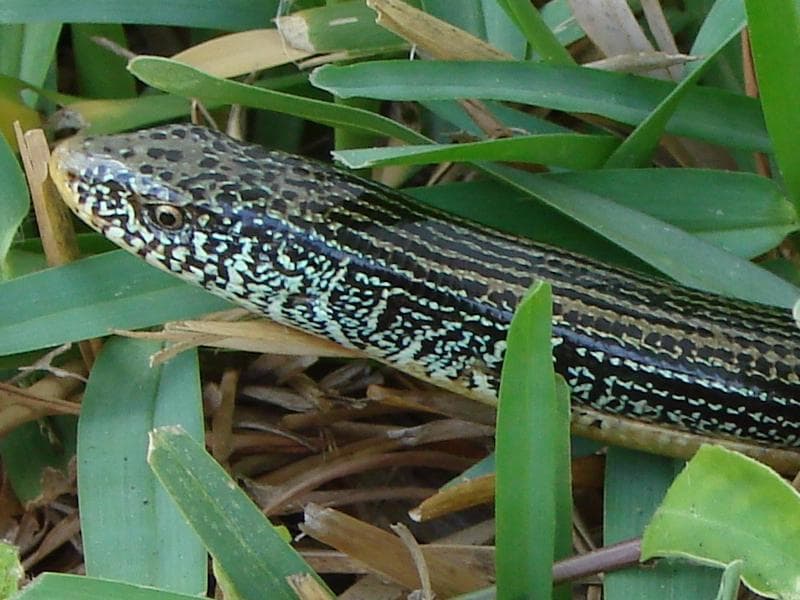
Eastern glass lizard
The Eastern glass lizard (Ophisaurus ventralis) is a legless lizard found in the Southeastern United States, often mistaken for a snake due to its appearance. It is distinguished from snakes by its movable eyelids, external ear openings, and a lateral groove separating its scales. This species inhabits wetlands, moist soils, and coastal areas, and is an opportunistic omnivore.