
Ctenophorus maculatus
Ctenophorus maculatus, also known as the spotted military dragon or spotted sand-dragon, is a species of agamid lizard found in the semi-arid and arid shrublands and hummock grasslands of Western Australia and a small part of South Australia. It is characterized by its spotted pattern, which aids in camouflage within its natural habitat.
Key Facts
- ›Occurs in semi-arid to arid shrublands and hummock grasslands.
- ›Found in Western Australia and a small part of South Australia.
- ›Commonly known as spotted military dragon, spotted dragon, or spotted sand-dragon.
- ›Belongs to the agamid family of lizards.
- ›Its coloration features a spotted pattern.

Spotted Military Dragon, Spotted Dragon, Spotted Sand-Dragon
Western Australia, South Australia
Characterized By A Spotted Pattern., Agamid Lizard.
About Ctenophorus maculatus
Ctenophorus maculatus, more widely known by its common names such as the spotted military dragon, spotted dragon, or spotted sand-dragon, is a species of lizard native to Australia. Its natural range encompasses the semi-arid and arid shrublands, as well as the hummock grasslands, primarily located within Western Australia. A small extension of its distribution also reaches into the neighboring state of South Australia.
Key Characteristics
The defining physical characteristic of Ctenophorus maculatus is its distinctive spotted coloration. This pattern serves as a crucial form of camouflage, allowing the lizard to blend effectively with its surroundings in its natural habitat. As a member of the Agamidae family, it shares characteristics common to this diverse group of reptiles.
Habitat and Distribution
This species thrives in environments that are characterized by dryness and sparse vegetation. The semi-arid and arid shrublands provide the ideal conditions for its survival, offering both shelter and hunting grounds. The hummock grasslands also form a significant part of its ecological niche. Its presence is most notable across Western Australia, with its range extending into the western parts of South Australia, indicating a preference for the drier inland regions of these states.
Source: Wikipedia ↗
Frequently Asked Questions
What are the common names for Ctenophorus maculatus?
Ctenophorus maculatus is commonly referred to as the spotted military dragon, the spotted dragon, or the spotted sand-dragon. These names reflect its physical appearance and habitat.
Where does Ctenophorus maculatus live?
This lizard species is found in the semi-arid to arid shrublands and hummock grasslands of Western Australia. It also extends into a small portion of South Australia.
What does Ctenophorus maculatus look like?
Ctenophorus maculatus is distinguished by its spotted pattern, which helps it blend into its environment. It is a species of agamid lizard.
Related Lizards

Ctenophorus salinarum
The claypan dragon, scientifically known as Ctenophorus salinarum, is a species of agamid lizard found in the arid and semi-arid regions of southern Western Australia. It typically inhabits chenopod shrublands surrounding salt lakes and claypans, as well as adjacent sandy heaths.

Ctenophorus pictus
The painted ground-dragon, Ctenophorus pictus, is a medium-sized lizard endemic to the drier regions of southern and central Australia. This species is known for its highly variable coloration, particularly in males, which can range from reddish-brown to orange and yellow, with breeding males displaying bright blue and yellow markings. They are swift, diurnal reptiles that inhabit shrublands and grasslands, employing a sit-and-wait hunting strategy for arthropods.
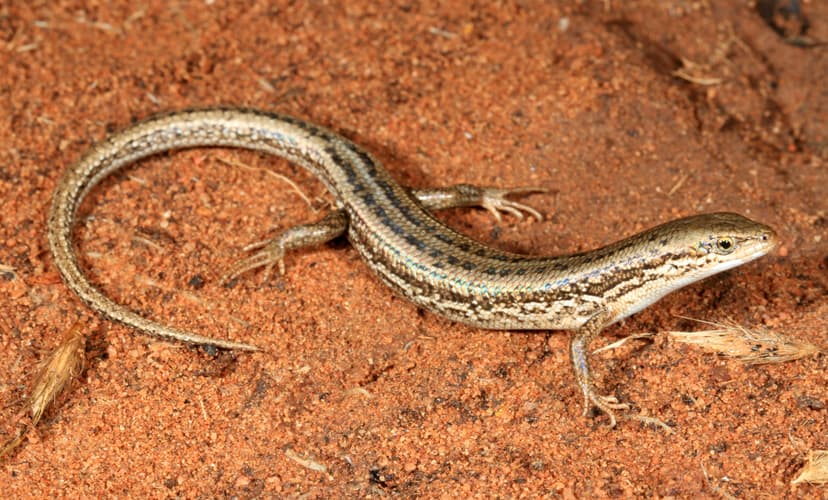
Morethia adelaidensis
The saltbush skink (Morethia adelaidensis) is a small skink species endemic to Australia, known for its transparent eye discs and specialized limbs for sand dune traversal. Primarily inhabiting arid shrublands, particularly those with saltbush chenopod shrubs, these diurnal lizards are insectivorous and exhibit a high tolerance for saline environments. They reproduce by laying eggs, with males developing distinctive orange markings during the breeding season.