
Ctenotus brooksi
Ctenotus brooksi, also known as Brooks' wedge-snouted ctenotus, is a skink species endemic to semi-arid Australia. This fast-moving, diurnal lizard is characterized by its smooth scales, well-developed limbs, and a notable variation in color and pattern across its fawn to reddish-brown body. It inhabits desert sand ridge habitats, often associated with spinifex, and feeds primarily on insect prey.
Key Facts
- ›Ctenotus brooksi is a skink species found in semi-arid regions of Australia.
- ›It has a total length of 10-12 cm, with a snout-to-vent length of 5 cm.
- ›The species exhibits significant variation in color and pattern, ranging from fawn to reddish-brown.
- ›Ctenotus brooksi prefers desert sand ridge habitats, often associated with spinifex vegetation.
- ›It is a diurnal and fast-moving lizard that feeds on a variety of insect prey.
- ›The species is classified as 'Least Concern' on the IUCN Red List but is considered vulnerable in New South Wales.

Brooks' Wedge-Snouted Ctenotus, the Wedgesnout Ctenotus, the Sandhill Ctenotus
Australia, South-Eastern Western Australia, South Australia, Northern Territory, South-Western Queensland, North-Western New South Wales, North-Western Victoria
Semi-Arid Regions, Desert Sand Ridges, Loose Sand With Vegetation, Spinifex Habitats
- Total Length: 10-12 cm .
- Snout-To-Vent Length : 5 cm.
- Coloration Varies Widely, From Fawn, Orange, Pink, To Reddish-Brown.
- Tail Color May Be Slightly Grey-Green.
- Underside Is A Lighter Color.
- May Have A Narrow Pale-Edged Black Vertical Stripe From Nape To Tail.
- May Have An Additional Black Stripe Or Dark Flecks On Each Side of the Vertebral Stripe.
- Some Individuals Have A White Mid-Lateral Stripe From Groin To Ear.
- Supralabials Are Usually Whitish With Faint Barring.
- 24 To 28 Mid-Body Scale Rows.
- Nasals Separated Or Narrowly Contacting.
- Smooth Scales.
- Ear Openings With Anterior Lobules.
- Well-Developed Limbs With Five Digits Each.
- Lower Eyelid Is Movable, But Lacks A Transparent Palpebral Disc.
- Comb-Eared Skinks With A Row of Small Scales On the Anterior Edge of the Ear.
Ants, Beetles, Bugs
Diurnal, Surface Active, Fast Moving, Elusive and Rarely Observed
Feral Cats
- Feral Cats
- Feral Foxes
- Climate Change
- Uncapped and Abandoned Opal Mining Shafts
- Grazing By Introduced Herbivores Degrading Habitat
- Stock Trampling Degrading Habitat
- Habitat Fragmentation
About Ctenotus brooksi
Ctenotus brooksi, also commonly known as Brooks' wedge-snouted ctenotus, the wedgesnout ctenotus, and the sandhill ctenotus, is a species of skink found exclusively in Australia. This lizard inhabits the semi-arid regions of the continent, preferring desert sand ridge environments interspersed with vegetation, particularly areas containing spinifex.
Physical Characteristics
Ctenotus brooksi typically reaches a total length of 10–12 cm, with a snout-to-vent length (SVL) of approximately 5 cm. A notable feature of this species is the significant variation in its coloration and pattern, which is more pronounced than in other species within the Ctenotus genus. Its body color can range from fawn, orange, pink, to a reddish-brown, often transitioning to a more grey-green on the tail. The underside is typically a lighter shade. Some individuals may display a narrow, pale-edged black vertical stripe running from the nape to the tail, and may also have additional black stripes or dark flecks. A white mid-lateral stripe from the groin to the ear is present in some individuals.
Like other members of the Ctenotus genus, C. brooksi possesses smooth scales, well-developed limbs with five digits each, and ear openings equipped with anterior lobules. The lower eyelid is movable, though it lacks a transparent palpebral disc. These lizards are often referred to as "comb-eared skinks" due to a characteristic row of small scales on the anterior edge of their ear.
Distribution and Habitat
The species is endemic to Australia, with populations found in south-eastern Western Australia, South Australia, the Northern Territory, south-western Queensland, north-western New South Wales (including Sturt National Park), and north-western Victoria. While its distribution is widespread, populations are believed to be isolated by areas of stony or clayey terrain. Ctenotus brooksi is specifically adapted to desert sand ridge habitats, favoring areas with loose sand and vegetation around dune crests, and is often restricted to habitats where spinifex grass (Triodia) is present.
Ecology and Behavior
Ctenotus brooksi is a diurnal species, meaning it is active during the day. It is known for being fast-moving but also elusive, making it rarely observed. Its diet is generalist, consisting of various insect prey such as ants, beetles, and bugs.
Reproduction
All species within the Ctenotus genus, including C. brooksi, are oviparous, reproducing by laying eggs. Egg-laying typically occurs between September and January, which is noted as being earlier than many other Ctenotus species. The average clutch size for C. brooksi is 2.2 eggs.
Conservation Status and Threats
On a global scale, Ctenotus brooksi is classified as 'Least Concern' on the IUCN Red List, reflecting its abundance and generally stable populations. However, it was listed as vulnerable by the New South Wales Government in 2004, indicating a risk of becoming endangered in that state if threatening factors are not managed. Key threats to the species include predation by feral cats and foxes, habitat degradation caused by grazing from introduced herbivores and stock trampling which alters soil structure and promotes weed invasion. Uncapped and abandoned mining shafts pose a direct hazard, and modeling suggests that climate change is expected to reduce the species' range size by 2050.
Taxonomy and Etymology
First described in 1933 by British herpetologist Loveridge as a subspecies, Sphenomorphus leae brooksi, it was named in honor of American ornithologist Winthrop Sprague Brooks, who collected reptiles in Western Australia between 1926 and 1927. Australian herpetologist Harold Cogger elevated the taxon to species status and assigned it to the genus Ctenotus in 1983. The genus Ctenotus is the largest reptile genus in Australia and contains 104 species, often presenting identification challenges.
Management in New South Wales
Given its vulnerable status in New South Wales, management strategies focus on identifying key conservation sites and implementing cost-effective actions. These include controlling feral goats, pigs, rabbits, foxes, and cats near dense populations, promoting livestock management that improves habitat, and conducting regular monitoring of ecological parameters. Efforts also involve determining population extent, identifying critical protection areas, developing optimal fire regimes, and researching the species' ecology and habitat requirements. Retention of spinifex and leaf litter is encouraged, with recovery efforts targeting specific populations over time, applying adaptive management strategies, and incorporating operational guidelines into fire management plans for national parks to protect the species from fire.
Source: Wikipedia ↗
Frequently Asked Questions
What is Ctenotus brooksi?
Ctenotus brooksi, commonly known as Brooks' wedge-snouted ctenotus, is a species of skink belonging to the family Scincidae. It is endemic to Australia and found in semi-arid environments.
What does Ctenotus brooksi look like?
This lizard can reach a total length of 10-12 cm, with a snout-to-vent length of 5 cm. Its color varies from fawn, orange, pink, to reddish-brown, sometimes with a grey-green tail and a lighter underside. There can be pale-edged black stripes and occasionally a white mid-lateral stripe.
Where does Ctenotus brooksi live?
Ctenotus brooksi is found across south-eastern Western Australia, South Australia, the Northern Territory, south-western Queensland, north-western New South Wales, and north-western Victoria. It prefers desert sand ridge habitats with loose sand and vegetation, often in areas with spinifex.
What does Ctenotus brooksi eat?
Ctenotus brooksi is a generalist feeder, consuming a variety of insect prey. Its diet includes ants, beetles, and bugs.
Is Ctenotus brooksi endangered?
Globally, Ctenotus brooksi is categorized as 'Least Concern' on the IUCN Red List due to its abundance and stable populations. However, it was listed as vulnerable in New South Wales in 2004 due to potential threats.
What are the threats to Ctenotus brooksi?
Threats include predation by feral cats and foxes, habitat degradation from grazing by introduced herbivores and stock trampling, and hazards like uncapped mining shafts. Climate change is also modeled to reduce its range size by 2050.
How does Ctenotus brooksi reproduce?
Like other species in its genus, Ctenotus brooksi is oviparous, meaning it reproduces by laying eggs. Egg-laying typically occurs between September and January, with an average clutch size of 2.2 eggs.
Related Lizards
Diporiphora winneckei
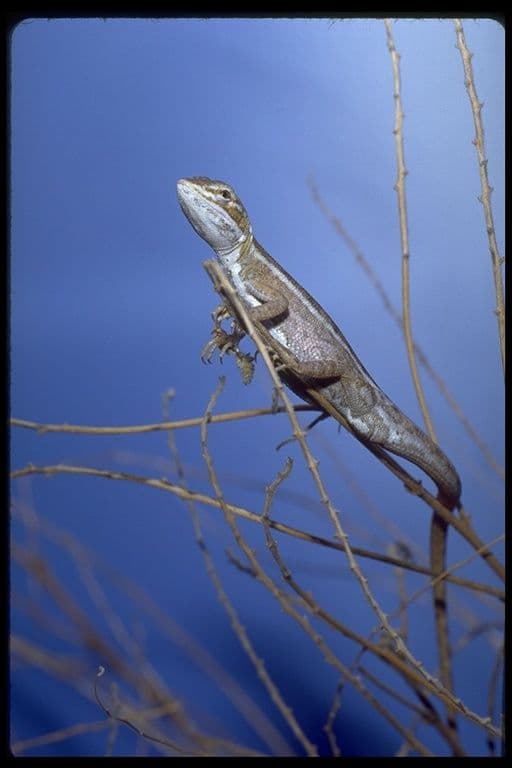
The Canegrass Dragon (Diporiphora winneckei) is a small, terrestrial lizard endemic to the arid zones of Australia. Characterized by its slim build, long tail and limbs, and distinctive grey or pale brown coloration with prominent ventral and lateral stripes, this diurnal species is well-camouflaged within its sandy habitat. It is an insectivore, though it may occasionally consume plant matter, and plays a role in the food web of its environment.

Varanus exanthematicus
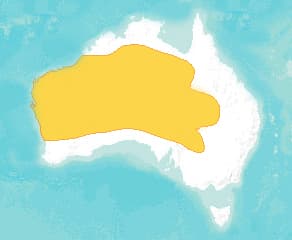
The savannah monitor, scientifically known as Varanus exanthematicus, is a medium-sized lizard native to Africa, recognized for its stout build, short limbs, and powerful jaws adapted for crushing hard-shelled prey. Commonly called Bosc's monitor in Europe, it inhabits a wide range of sub-Saharan African environments and plays a role in both ecological systems and international trade.
Central Netted Dragon
The Central Netted Dragon is a medium-sized lizard native to arid and semi-arid regions of Australia, characterized by a distinctive net-like pattern on its reddish-brown to orange-brown body. It is a diurnal, terrestrial species known for its burrowing behavior and a diet that includes insects and vegetation. These dragons are popular pets and are commonly found in zoos.